
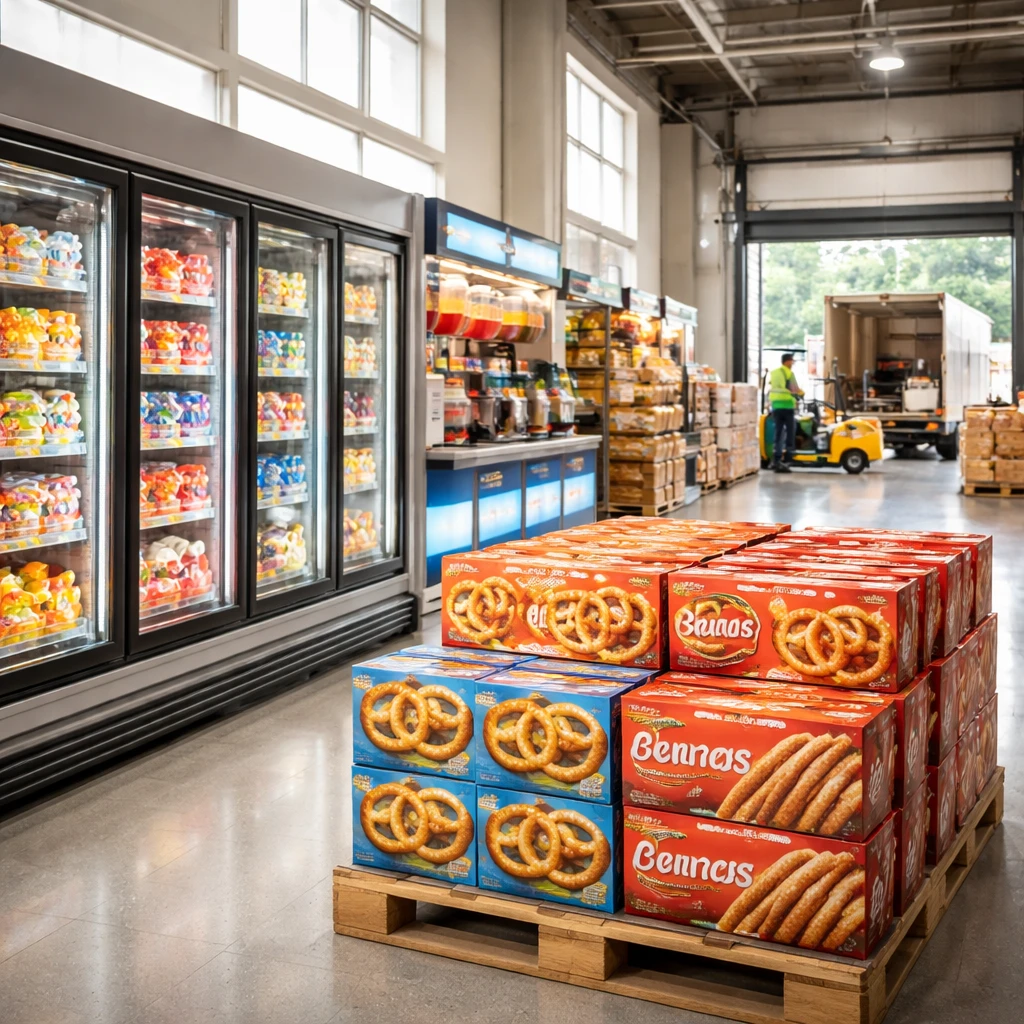
J&J Snack Foods is in the midst of a structural shift that combines the winding down of legacy volume, an aggressive cost program and efforts to manage rising transportation expenses. The company reported a mixed operating quarter with sales down but margin metrics moving in the right direction.
Q3 results in context
For the third quarter, revenue declined 6.2% year over year to $426 million. Despite that top-line decline, gross profit rose by roughly $1 million to $151 million and gross margin expanded by 240 basis points to 35.5%, even as material, fuel and freight costs increased. Management attributes the margin improvement to operational changes rather than transient market effects.
Project Apollo: a margin protection lever
Central to the company’s results is Project Apollo, a broad efficiency program originally targeted to deliver $20 million in annualized savings and since revised upward. The initiative is now expected to generate $25 million per year in run-rate savings. "The bigger picture is that Project Apollo is doing exactly what we designed it to do," the CEO said, adding that "It has protected our margins." Management went further to note that absent the headwinds from higher material, fuel and freight costs, the company would have exceeded last year’s EBITDA.
Those Apollo savings are presented as durable cost reductions that give the company flexibility to absorb pricing pressures. Management emphasized that continuous operational improvements provide room to manage cost inflation without relying on a single corrective action.
Bakery volumes and the path back to growth
One of the larger drags on revenue this year was planned reductions in bakery volumes. Executives say those reductions are tapering in the fourth quarter and should be "largely behind us" as the company enters fiscal 2027. As bakery-related headwinds fade, management expects to pivot more decisively toward its core branded products, naming Dippin' Dots, ICEE, SuperPretzel and churros as focal points.
That repositioning is coupled with efforts to add new customers and partnerships. Management believes the combination of a leaner cost base and renewed emphasis on these signature products will leave the business in a better position to reaccelerate revenue growth.
Retail performance and promotional strategy
Retail measured sales increased 1.7% in the quarter, but management cautioned that this headline figure understates underlying demand because of slotting-fee increases tied to innovation rollouts. The company estimates that if not for those slotting-fee changes, retail sales would have grown in the mid-single digits.
Management also highlighted a deliberate increase in promotional activity designed to drive volume. "We made a deliberate choice to increase our promotions and that is driving volumes," the CEO said, and the company pointed to momentum carrying into the fourth quarter and fiscal 2027.
Several smaller or newer growth businesses are cited as early sources of upside. Dogsters retail sales rose more than 30% in tracked channels, Luigi’s grew by more than 20%, and Dippin' Dots posted particularly strong early results after its retail launch. The company said the retail rollout of Dippin' Dots plus two additional sundae flavors has driven the brand to more than 100% growth with nearly $4 million in retail measured sales.
Frozen Beverage business showing lift
The Frozen Beverage segment also gained traction, with beverage net sales up 5.9%. Strength in theaters and mass merchandising channels contributed to that performance. Management emphasized that familiar, nostalgia-driven brands remain a key company advantage, noting that these products are "a part of their core memories" for many consumers and that J&J is "leaning into the categories where [it] already has an advantage."
Freight and fuel costs remain a near-term headwind
Despite margin gains, higher fuel and freight costs continue to present a material near-term challenge. Management expects pressure from these logistics costs to carry into the fourth quarter. The company has implemented offsetting measures such as surcharges and increases to minimum order requirements, but executives acknowledge those steps have only covered a relatively small portion of the additional expense so far.
Project Apollo is presented as a complementary response to these inflationary pressures. By reducing structural costs across the business, management says it creates "more room to absorb these costs without leaning too hard on any single lever."
Capital allocation and acquisition strategy
J&J Snack Foods has preserved flexibility in capital allocation. The company returned approximately $120 million to shareholders this year through dividends and share repurchases while maintaining investment in operations and continuing to evaluate acquisition opportunities.
Executives described M&A interest as focused on brands that would naturally complement J&J’s existing portfolio. "We are always evaluating growth opportunities, and for us that means brands that are natural and synergistic fits with our existing portfolio that carry the same resonance and affinity as our core," management said. At the same time, management says it will continue to optimize plant footprint and selectively invest in upgrades that boost productivity and efficiency.
Distribution channels and consumer access
Although the company’s portfolio includes well-known brands that operate across foodservice and entertainment venues, much of its revenue still flows through those channels and partnerships. Management highlighted ongoing opportunities to expand brand presence into additional channels and to find new ways for consumers to enjoy the products. They pointed to a strong pipeline of new business across the company’s core operations and expressed optimism about continued traction as distribution expands.
Outlook
Heading into fiscal 2027, J&J Snack Foods says it will carry a leaner cost structure and more strategic focus. With Project Apollo delivering ahead of plan and bakery volume reductions subsiding, management believes the company has room to concentrate on product-led growth. The persistence of freight and fuel inflation, however, is a clear near-term uncertainty the company expects to manage through a combination of operational improvements, selective pricing actions and distribution tactics.
Note: Financial figures and management comments are reported as provided by company leadership.