
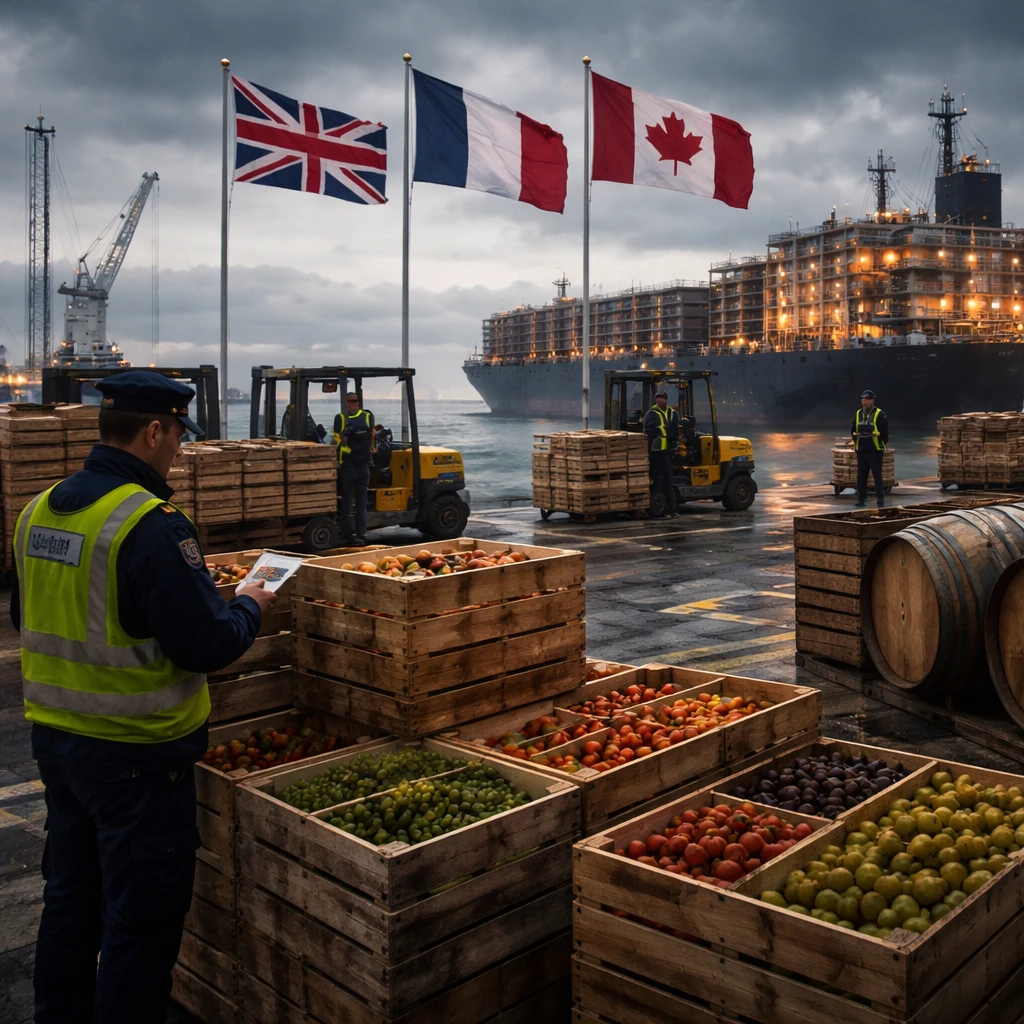
Britain on Tuesday introduced a ban on imports of goods produced in Israeli settlements in the occupied West Bank, taking the step alongside France and Canada, officials said. The move is the latest in a series of measures aimed at settlements as Israel faces increasing diplomatic pressure.
In the House of Commons, Foreign Minister Ed Miliband said the United Kingdom could no longer merely "call out" injustice and suffering and that it must "act" to oppose further settlement expansion. He said the government would no longer be a bystander in the face of what he described as mounting harm and the erosion of prospects for a two-state solution to the Israeli-Palestinian conflict.
Miliband reiterated Britain’s long-standing support for a two-state outcome and stated that London views the West Bank occupation as unlawful. He added that the British government believes there is ethnic cleansing of Palestinians in parts of the West Bank.
Diplomatic fallout and Israeli response
The announcement produced an immediate and angry response from senior Israeli officials. Finance Minister Bezalel Smotrich demanded the expulsion of the British ambassador in Tel Aviv, while National Security Minister Itamar Ben-Gvir called on Prime Minister Benjamin Netanyahu to close the British Consulate in East Jerusalem, which is accredited to the Palestinian Authority in the West Bank.
President Isaac Herzog accused Britain of attempting to influence Israel’s upcoming national elections, scheduled for late October. At the same time, Israeli authorities continued to advance settlement projects: Smotrich announced plans for the development of 1,000 new homes across two settlements in the West Bank.
International and policy context
Miliband identified the E1 settlement project near Jerusalem as a central concern, saying it would cut through territory Palestinians claim for a future independent state and endanger the viability of a two-state arrangement. The United Nations, the Palestinians and a majority of countries consider the settlements illegal under international law; Israel rejects that characterisation.
Britain in 2025 joined other nations in recognising a Palestinian state as a means to advance a two-state solution. In June, London imposed sanctions on networks accused of financing, enabling and carrying out violence in the Israeli-occupied West Bank. Miliband noted that Britain, France and Canada were joining a group of countries including the Netherlands, Ireland, Belgium, Spain and Norway that have banned or are planning to ban goods originating in West Bank settlements.
Reactions from the United States and business implications
The U.S. ambassador to Israel criticised the new sanctions. Ambassador Mike Huckabee told the BBC that the measures amounted to "discrimination against the Jewish people" and warned they might hinder the United Kingdom’s ability to operate in some U.S. states. He said certain American states restrict contracts, procurement or public investment involving companies that participate in boycotts of Israel.
Officials said the direct economic impact on the roughly 6 billion ($8.12 billion) in annual bilateral trade between Britain and Israel is likely to be small. Goods produced in West Bank settlements account for only a tiny share of Israel’s overall exports and are mainly agricultural products such as fresh produce and wine. Authorities have not yet specified how they will differentiate between products originating in settlements and those made in Israel proper.
At the time of the announcement, the Israeli prime minister’s office and foreign ministry had not provided an immediate response to requests for comment.
What this means going forward
The sanctions mark a coordinated Western effort to curb settlement expansion through trade restrictions, while prompting immediate diplomatic friction with Israeli leaders and a rebuke from the U.S. envoy. Questions remain about enforcement details and the practical effect on trade flows, given the relatively small economic footprint of settlement-made goods within Israel’s total exports.