
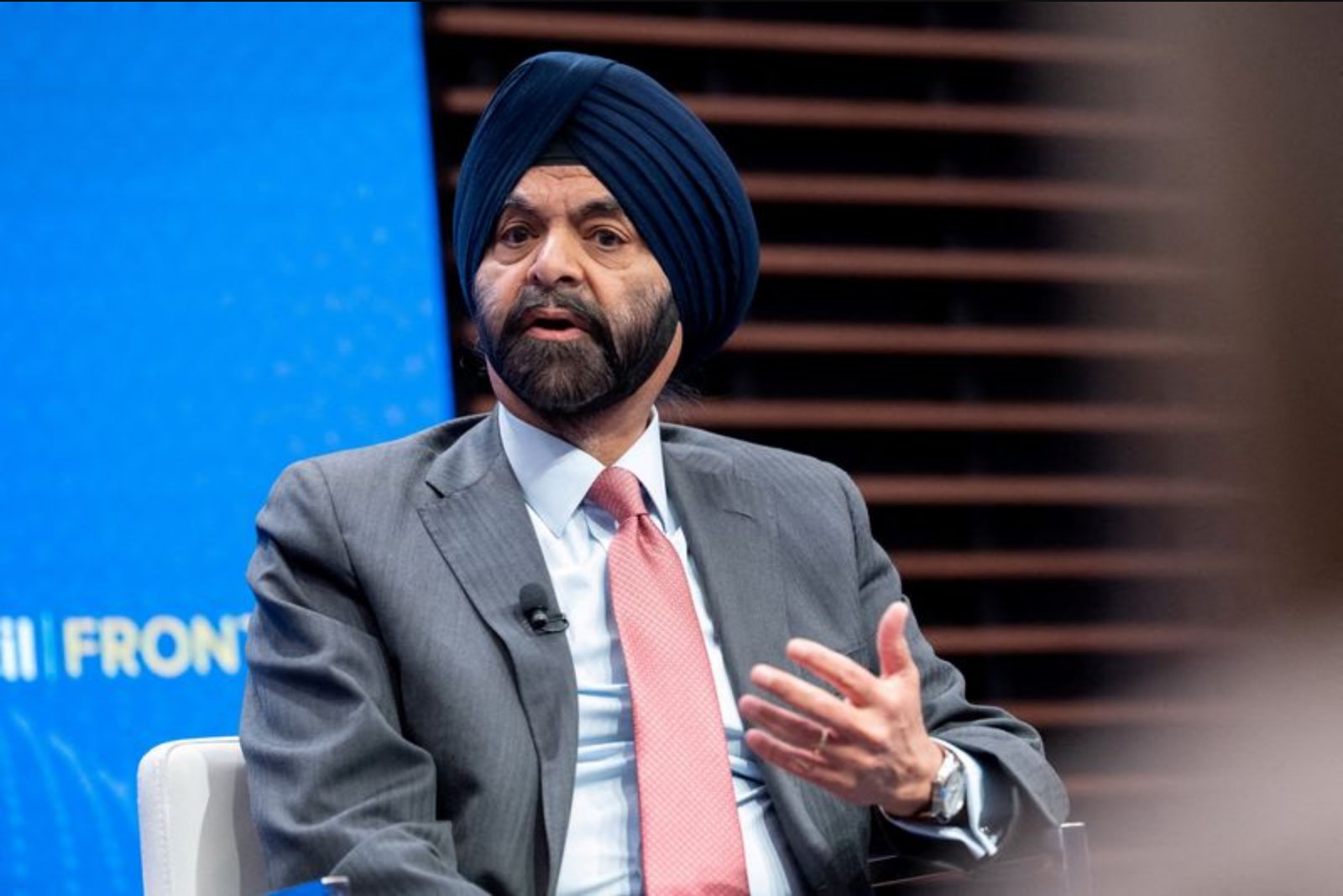
World Bank President Ajay Banga said on Tuesday that the institution can marshal between $80 billion and $100 billion in support over the coming 15 months for countries severely affected by the war in the Middle East. The estimate, provided on the sidelines of the spring meetings of the International Monetary Fund and World Bank, would exceed the roughly $70 billion the bank mobilized during the COVID pandemic.
Banga outlined a staged approach to funding. In the near term, the bank could provide $20 billion to $25 billion through a crisis response window that permits countries to withdraw up to 10% of funds earlier than scheduled from previously approved programs. About six months out, he said another $30 billion to $40 billion could be freed by repurposing existing programs.
Addressing a Bretton Woods Committee event, Banga said the package would be additive to the bank's usual lending operations. He warned that if the conflict persists and needs expand beyond the $80 billion to $100 billion range, the bank would need to draw on its balance sheet and available headroom to secure additional resources.
"I am trying to create a toolkit that has a tiered response capacity, depending on how this continues, to at least be able to bring adequate firepower to do something about it," he said, describing an approach that links response size to evolving needs.
Banga also noted meetings with other international officials at the spring gatherings, including a discussion with the head of the International Energy Agency and with IMF Managing Director Kristalina Georgieva. He cautioned that even if hostilities cease and there is no further structural damage to energy infrastructure, it will take time for the energy market to stabilize.
Georgieva, speaking separately at the same event, said the global economy can rebound quickly if the conflict ends within weeks, but that the situation deteriorates if it carries on into the summer. She added that the IMF was engaging with countries facing elevated energy costs and supply chain disruptions to assess their financial needs.
The IMF on Tuesday reduced its global growth outlook, citing energy price spikes driven by the war. The IMF presented a set of scenarios that all point to lower growth and higher inflation because of the conflict. It also noted that, absent the war, it would have upgraded its growth outlook by 0.1 percentage point to 3.4%.
Both Banga and Georgieva urged governments to favor narrowly targeted, temporary measures to blunt the immediate impact of higher energy prices. They warned against broader energy subsidies, saying such policies risk further stoking inflation.
Context and implications
- The bank's proposed $80 billion to $100 billion in mobilized funds is intended to support economies hit by the war and would be additional to routine World Bank lending.
- Immediate liquidity would come through a crisis response window that allows accelerated withdrawals up to 10% from existing approved programs, while medium-term funding would rely on repurposing current programs.
- If the conflict's duration or scale pushes needs beyond the estimated range, the World Bank would consider drawing on its balance sheet and headroom to supplement financing.
These measures reflect concerns about the war's drag on global growth and upward pressure on inflation, with developing countries expected to face the greatest strain from higher energy prices and disrupted supply chains.