
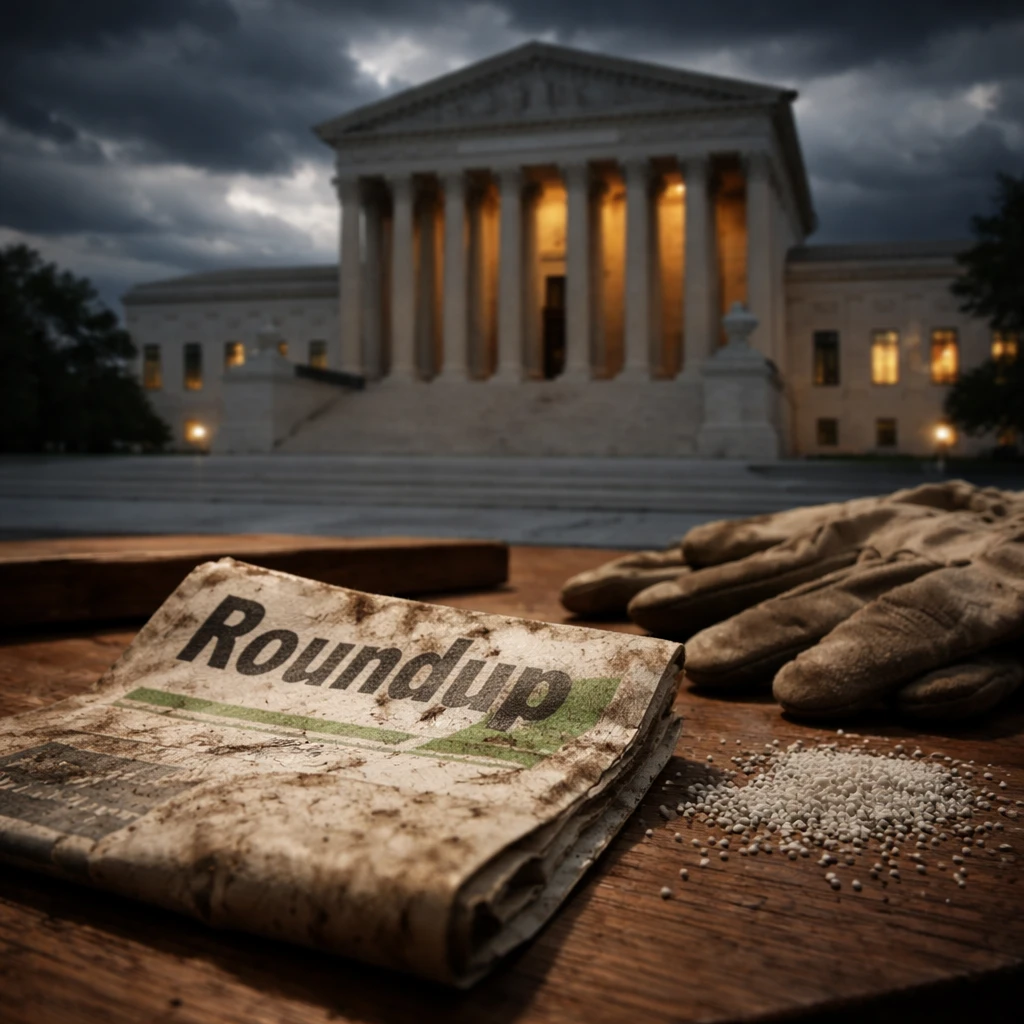
Shares of Bayer AG NA (ETR:BAYGN) declined by over 2% on Tuesday following oral arguments Monday before the Supreme Court of the United States in a case that may reshape litigation related to the company’s Roundup weedkiller.
The dispute before the high court involves a $1.25 million jury verdict from Missouri in favor of a plaintiff who claimed that Roundup, a glyphosate-based herbicide, caused his non-Hodgkin lymphoma. Bayer is asking the justices to overturn that judgment on the grounds that federal law supersedes state-level failure-to-warn claims.
Bayer’s legal strategy rests on the contention that the Environmental Protection Agency approved the sale of Roundup without requiring cancer warnings after an exhaustive regulatory review. At Monday’s hearing, Bayer attorney Paul Clement told the court:
"It’s probably the most like studied herbicide in the history of man and they’ve all reached the conclusion based on more data and the kind of expert analysis they can do that there isn’t a risk here. You shouldn’t let a single Missouri jury second-guess that judgment."
The company has resolved a substantial volume of litigation related to the product since acquiring Monsanto in 2018, spending more than $10 billion on settlements tied to Roundup claims, a fact highlighted in filings and argument.
During the Supreme Court proceedings, the Trump administration filed a brief supporting Bayer’s position and emphasized the importance of consistent national labeling standards. Deputy Solicitor General Sarah Harris argued that allowing states to impose divergent warnings would erode federal uniformity, stating:
"Iowa says maybe this causes cancer. California says absolutely causes cancer. Some other state says this doesn’t cause cancer at all, so put that on your label too. It completely undermines the uniformity of the labeling."
Opposing counsel cautioned the justices against accepting federal review as definitive. Ashley Keller, representing the plaintiff Durnell, told the court that federal oversight can miss problems, arguing that "things slip through the cracks" at the EPA and that agency conclusions should not be the final word on product safety.
Bayer also pointed to international regulatory reviews in New Zealand, Japan, Australia, the European Union, and Canada as part of its defense. Those references were made alongside the acknowledgment that the World Health Organization’s International Agency for Research on Cancer classifies glyphosate as a probable human carcinogen - a characterization in the record before the court.
At argument, Bayer warned that without federal preemption the company could face crippling liability and that such an outcome could undermine interests of farmers who rely on federally registered pesticides. Paul Clement urged the court to consider those broader consequences, saying failure to ensure preemption would "open the door for crippling liability and undermine the interest of farmers who depend on federally registered pesticides for their livelihood."
The Supreme Court is expected to issue a decision by June or early July. The ruling will have bearing on thousands of similar pending lawsuits that contend the company failed to warn users about possible health risks from glyphosate-based products.
Market note: The legal proceedings and potential ruling are a focal point for investors assessing Bayer’s exposure to mass litigation and the implications for its chemicals and agricultural product lines.