
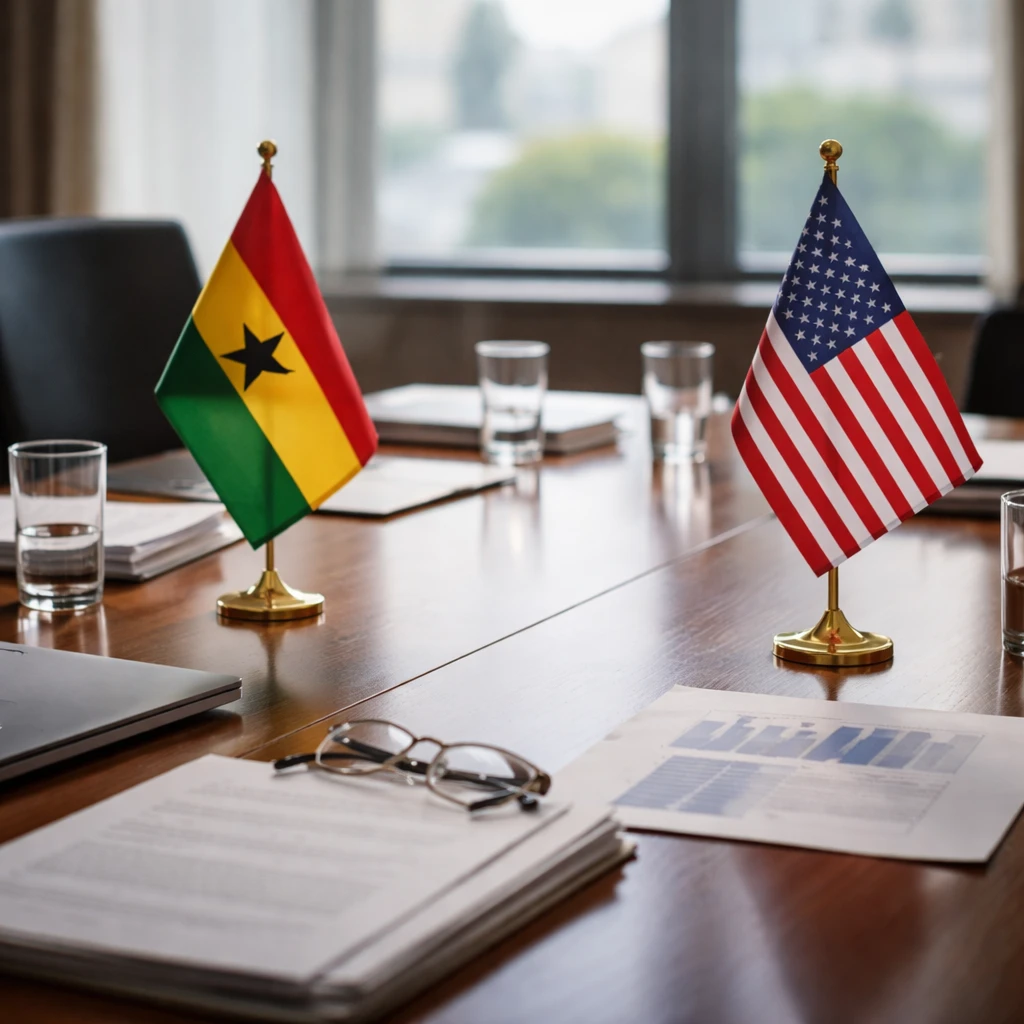
Ghana has refused to sign a bilateral health arrangement proposed by the United States, a source familiar with the negotiations told Reuters, citing objections to language that would have required the sharing of sensitive health data. The refusal represents the latest hurdle for the Trump administration as it seeks to reconfigure how Washington provides foreign health assistance.
According to the source, discussions between Accra and Washington began in November. At first the talks proceeded along normal diplomatic lines, the source said, but they later intensified as the U.S. pressed for completion on specific terms. The source added that Washington set an April 24 deadline to conclude the negotiations. Ghana ultimately informed the U.S. that it could not accept the proposed conditions.
Spokespeople for Ghana's foreign ministry and for the government did not respond to requests for comment on the decision. The U.S. State Department declined to disclose details of bilateral negotiations but said in a statement: "We continue to look for ways to strengthen the bilateral partnership between our two countries."
Context within a broader U.S. policy shift
The Trump administration announced in September a new "America First Global Health Strategy" aimed at encouraging poorer countries to assume a larger role in combating HIV/AIDS, malaria, tuberculosis and polio, with a stated longer-term goal of transitioning recipient countries toward self-reliance. As part of this policy shift, the U.S. Agency for International Development was dismantled earlier this year.
Within that framework, the State Department said it has signed 32 agreements representing a combined $20.6 billion in funding - $12.8 billion provided by the United States and $7.8 billion described as co-investment from recipient countries - and that additional memorandums of understanding are expected to be signed soon.
Financial figures cited in negotiations
Government foreign assistance data show that the U.S. disbursed $219 million in aid to Ghana for 2024, including $96 million earmarked specifically for health, the year before the Trump administration’s cuts to foreign aid. The proposed bilateral deal under discussion would have provided $109 million in U.S. assistance for health over five years, the source said. It was not clear from the information provided how much financing Ghana would have been required to contribute under the proposed arrangement.
Related negotiations in the region
The source added that the question of data sharing has also been a sticking point elsewhere. Talks with Zimbabwe earlier in the year collapsed over similar concerns, and a court in Kenya suspended the implementation of that country’s deal while hearing a case filed by a consumer protection group challenging the terms.
Source account and next steps
The individual familiar with the Ghana negotiations characterized the latter stages of the discussions as involving heightened pressure from the U.S. side to accept the proposed text. After evaluating the terms by the April 24 target date, Accra determined it could not agree to the data provisions and communicated its position to the U.S. government, the source said.
At this stage, the public record contains no indication that Ghana has filed legal action or that further rounds of negotiation are scheduled. The State Department continues to publicly promote the new global health strategy and to report ongoing progress on signing pacts under that initiative.
Summary
Ghana rejected a U.S. health agreement over concerns about sharing sensitive health data, after negotiations that began in November and concluded around an April 24 deadline. The decision reflects broader regional pushback on similar terms and takes place against the backdrop of the Trump administration’s new global health policy and institutional changes to U.S. aid machinery.
Key points
- Ghana declined a proposed U.S. health pact because it objected to clauses requiring sharing of sensitive health data.
- The proposed agreement would have provided $109 million in U.S. health assistance over five years; U.S. aid to Ghana in 2024 totaled $219 million, including $96 million for health.
- Negotiations in the region have faced similar obstacles - talks with Zimbabwe collapsed and Kenya’s deal was suspended by a court while a case is heard.
Risks and uncertainties
- Uncertainty over whether other recipient countries will accept comparable data provisions could slow or alter implementation of the U.S. "America First Global Health Strategy" - this affects the health sector and international aid flows.
- Legal challenges, such as the court suspension in Kenya, introduce judicial risk that can delay or block agreements and impact program rollout in health-related sectors.
- The lack of clarity on recipient-country financial commitments in proposed deals creates fiscal uncertainty for budgeting and planning of joint health initiatives.