
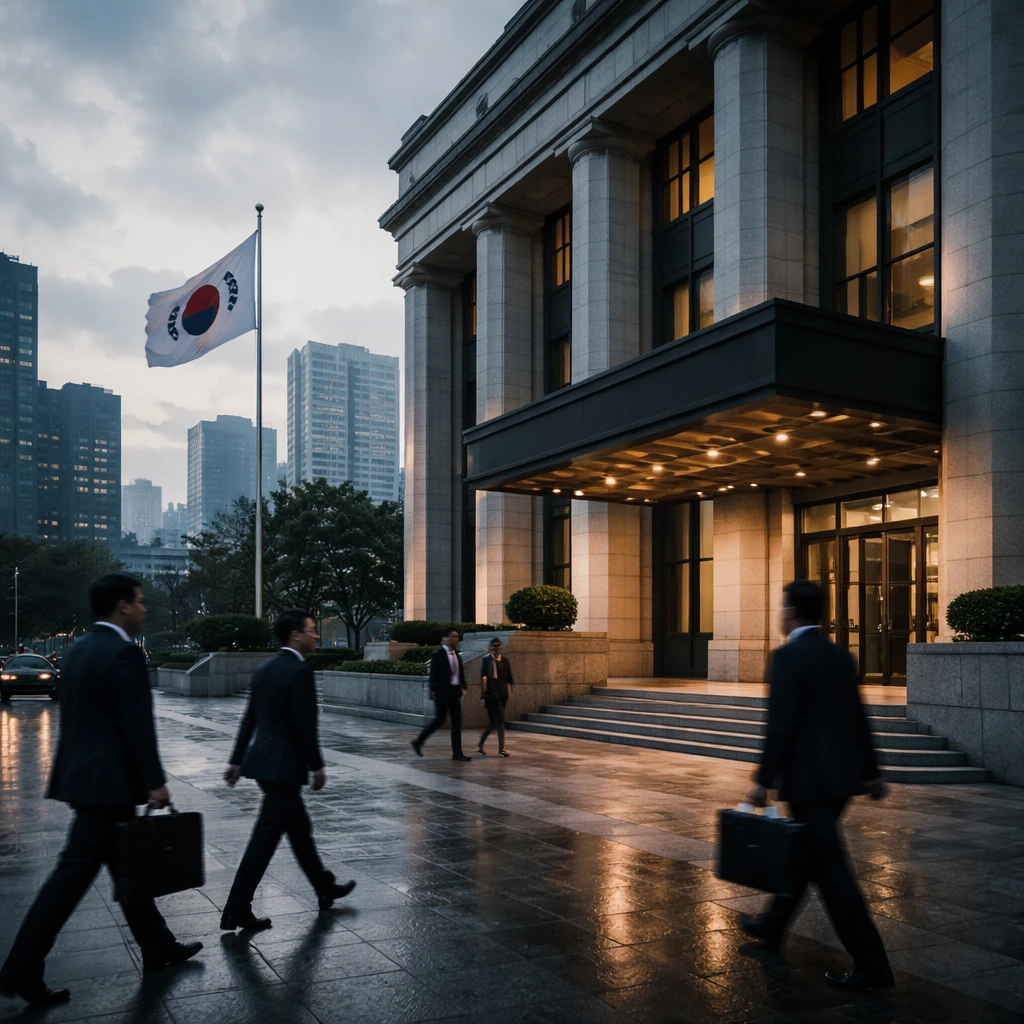
Minutes released from the Bank of Korea's previous monetary policy meeting, published on Tuesday, indicate the central bank's monetary policy board judged a cautious, wait-and-see approach to be appropriate for now. Policymakers signaled that greater uncertainty stemming from the Iran war requires additional monitoring to assess potential implications for both growth and inflation.
One board member was quoted directly in the minutes saying: "While the focus has been on financial stability until the beginning of the year, I believe we should shift our focus to alleviating inflationary pressure for the time being." The comment underlines a pivot in priority among at least some members of the board, from safeguarding financial stability earlier in the year to giving more attention to inflation dynamics.
On April 10 the monetary policy board voted to keep the benchmark interest rate unchanged at 2.50%. That decision had been anticipated by all 31 economists polled ahead of the meeting. The hold on rates reflects the difficult policy trade-offs the central bank faces - the economy is navigating growth headwinds while also confronting the possibility of an inflationary energy shock that could complicate any effort to tighten policy further.
The minutes and related polling results highlight the range of expectations among market observers. In a separate poll of 30 analysts, 26 expected no change to the benchmark rate through the end of the year. Three analysts expected the policy rate to rise to 2.75% by year-end, while one forecast a rise to 3%. These responses suggest a majority view toward policy stability, with a smaller group anticipating further tightening should conditions warrant it.
Taken together, the minutes portray a central bank that is reluctant to act preemptively in the face of uncertain external developments tied to the Iran war, yet remains conscious of inflation risks - particularly those that could be driven by energy prices. The board's deliberations, as recorded in the minutes, emphasize monitoring and a measured stance rather than immediate policy shifts.
Contextual takeaway - The Bank of Korea's approach is one of guarded observation: preserving current policy settings while staying ready to respond if inflationary pressures emerge or growth conditions deteriorate further.