
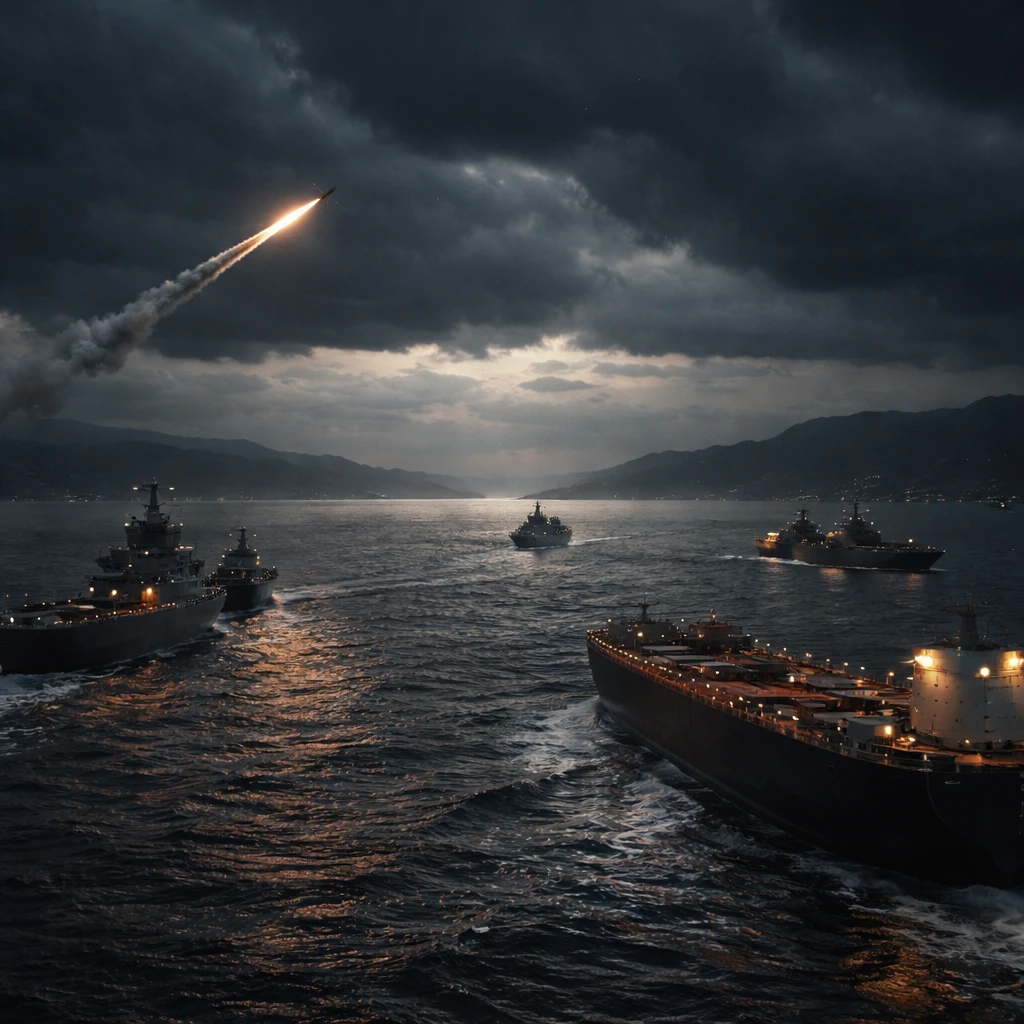
Iran has warned that it will respond to what it described as U.S. "economic warfare" by establishing a maritime exclusion zone that would extend across the Persian Gulf, officials said, a move that comes amid a surge in regional attacks and countermeasures affecting energy and shipping routes.
Official statements and operational posture
Mohsen Rezaei, secretary of Iran's Supreme National Security Council, wrote on the social platform X that Washington had received a "clear warning" from Iran's new missiles and that any economic warfare would be countered by a maritime exclusion zone running to the perimeter of what Iran described as the U.S. blockade. He said Iran's operational posture toward U.S. warships and bases had been "fundamentally recalibrated."
Rezaei said on state television that the proposed restricted zone would start where Iran says the U.S. blockade of its waters ends and would project into the Gulf. Iranian officials indicated that vessels entering the designated zone could be subject to placement on an Iranian sanctions list. Tehran also plans to publish maps for a proposed new shipping corridor through the Strait of Hormuz.
Parallel escalation: Houthi attacks and missile exchanges
At the same time, Iranian-backed Houthi militants launched a series of attacks on Saudi Arabia on Tuesday that Saudi authorities said injured 73 people. The strikes targeted multiple sites within the kingdom and prompted concern that the confrontation could widen to include other Gulf states that host U.S. military assets.
The rise in tensions followed U.S. strikes on three Iranian oil tankers on Saturday. Iranian state media reported that Iran fired the Qassem Basir missile at several U.S. vessels near the Strait of Hormuz, while the U.S. military said its warships evaded the missile attacks.
Separately, Iranian Parliament Speaker Mohammad Bagher Qalibaf warned that U.S. oil and gas companies and energy infrastructure across the Gulf would be vulnerable to retaliation if Washington were to strike Iranian oil and gas facilities.
Market implications and strategic chokepoints
The series of threats and attacks has increased concern over the stability of energy supplies. Brent crude rose 1% to $98.01 a barrel by 01:48 ET on Tuesday. Analysts and market participants have noted the centrality of the Strait of Hormuz to global energy flows: before the current conflict, roughly one-fifth of global oil and liquefied natural gas shipments transited the strait, making any further disruption a significant risk for energy markets.
As officials in Tehran outline both kinetic and regulatory measures - including a potential exclusion zone, sanctions lists for vessels, and a mapped alternate corridor through the strait - shippers, energy companies, and governments are left weighing the operational and market consequences of a region in which maritime access and security are now in contention.