
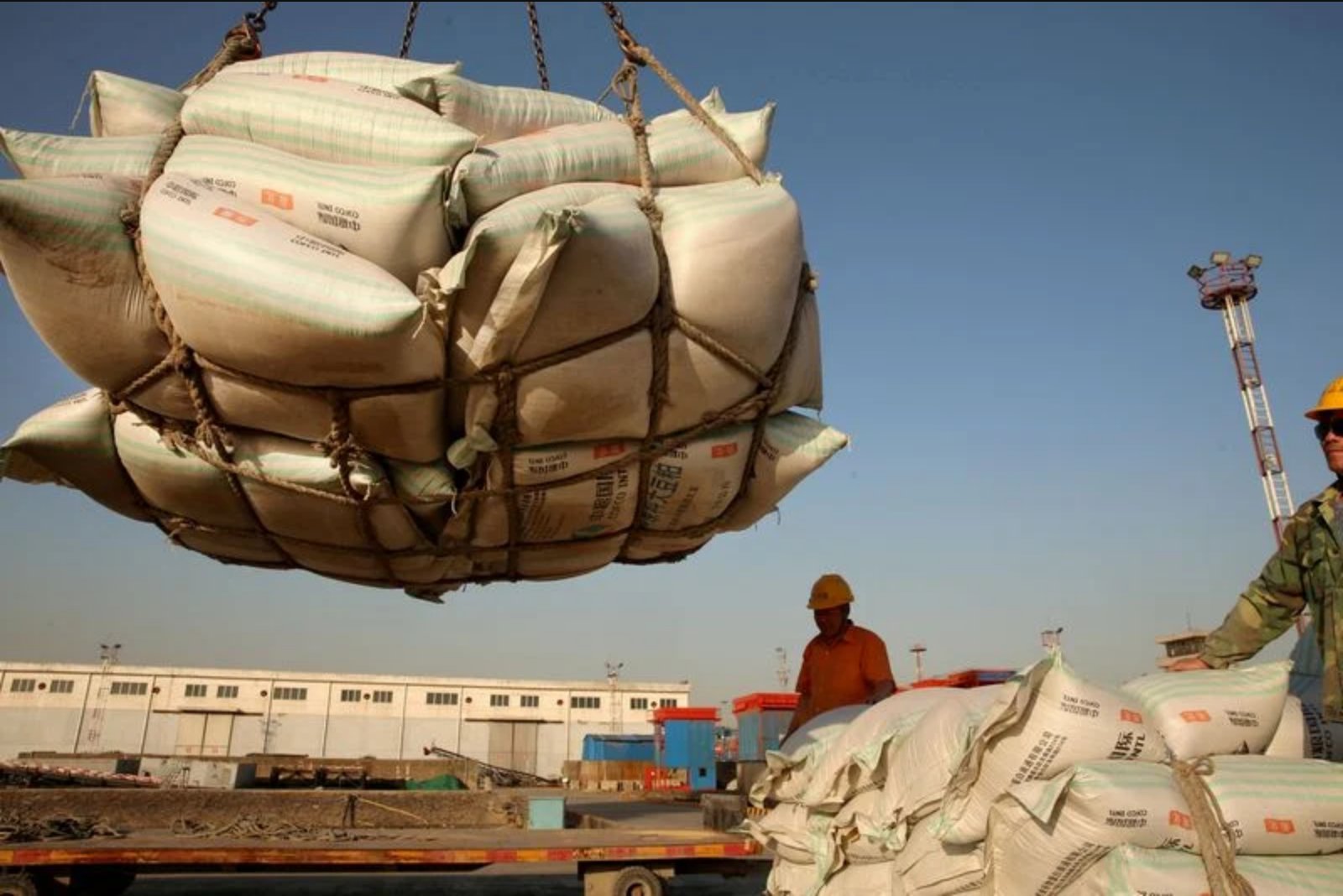
China’s privately run soybean crushing industry is preparing for a difficult fourth quarter as global supply dynamics tighten and domestic demand softens. Inventories in top exporter Brazil are constrained, while a 10% import tariff on U.S. soybeans has left North American cargoes mostly inaccessible to private buyers. At the same time, weakening feed demand tied to a shrinking pig herd has pushed processing margins into the red.
Industry participants are looking to President Xi Jinping’s scheduled visit to the United States this month for potential relief. Private processors hope that Beijing might reduce the 10% tariff on U.S. agricultural imports or that state actions - such as reserve auctions by Sinograin, the government stockpiler - could supply feedstock to keep plants running.
U.S. Trade Representative Jamieson Greer said both countries would make "some announcements on agriculture and non-tariff barriers" during the summit, without providing specifics. The prospect of announcements has given processors a measure of hope, but outcomes and timing remain unclear.
Johnny Xiang, founder of Beijing-based AgRadar Consulting, noted the urgency facing private crushers: "As South America nears the end of its marketing season, private crushers will need access to U.S. soybeans. That will depend either on tariff reductions or, failing that, on Sinograin reserve auctions to keep their plants operating."
That calculus is complicated by current price levels. Benchmark U.S. soybean futures have climbed nearly 12% from June lows on the back of adverse U.S. weather, state buying from China and concerns that El Nino conditions could constrain global supplies. Traders quoted November shipment Brazilian soybeans at a premium of $3.15 to $3.20 a bushel relative to the Chicago Board of Trade November contract, including cost and freight to China. Comparable offers for U.S. Gulf cargoes were reported at $3.20 to $3.25 a bushel, excluding tariffs.
Although U.S. cargo prices sit at or above Brazilian offers, buyers expect the U.S. harvest in the coming weeks to raise availability and exert downward pressure on prices. Still, any large-scale, sustained buying inquiries from China had not yet materialized at the time of reporting. "The ultimate price of U.S. soybeans remains highly uncertain, as large-scale buying inquiries from China have yet to emerge," said Xiang.
Crush economics look unattractive under current price scenarios. Analysts and traders estimated that theoretical crush margins for both Brazilian and U.S. soybeans - excluding an additional 10% tariff - were between 150 and 230 yuan per ton in the red for October-December shipments. Rosa Wang, an analyst at Shanghai JC Intelligence Co., highlighted that even without applying the tariff, imports for October through January would produce negative crush margins at present prices.
Private crushers have largely avoided U.S. shipments because of the tariff barrier. One China-based processor was explicit: "We are not considering U.S. soybeans because of the tariffs. If tariffs are reduced, we will recalculate crush margins to assess whether U.S. cargoes would be profitable." In contrast, state-owned trading firms have been active: following Xi’s May meeting with U.S. President Donald Trump, state-owned buyers reportedly purchased about 11 million metric tons of U.S. soybeans.
Demand-side pressures are adding to the strain. China’s pig herd is expected to contract in the fourth quarter as authorities intensify efforts to trim inventories and cap hog weights to stabilise a market that remains over-supplied. That outlook points to weaker feed demand precisely as crushers confront tighter, more expensive input supplies.
Import timing and coverage also leave crushers exposed. Importers have largely completed purchases for October and have booked roughly 4.8 million tons for November - about 60% of projected demand - while procurement for December and January has barely begun, according to two Asia-based traders. That pattern could intensify a late-year scramble for deliverable cargoes if buyers do not secure additional supplies soon.
Brazil’s capacity to increase shipments to China in the fourth quarter is limited. Analysts cited demand from other markets and vigorous domestic crushing activity as constraints. Safras & Mercado analyst Rafael Silveira reported that farmers had sold 82% of the 2025/26 crop by the end of July, up from 78% a year earlier, and suggested that sales were likely close to 85% at the time of reporting. In some cases, domestic crushers in Brazil have competed with exporters for supplies, paying prices that exceeded typical export parity.
Data reviewed by industry strategists showed shifts in Brazil’s flows: loadings to China through August 25 were down about 2.6 million tons year-on-year, while shipments to other destinations rose by approximately 6 million tons, according to Eduardo Vanin, senior agriculture strategist at Marex in Curitiba.
Argentina has also played a role in supplying China. Chinese customs data indicated Argentina supplied an additional 7.9 million tons of soybeans to China in 2025, an increase of 92.4% from 2024. However, analysts warned that this buffer could shrink in 2026 without similar policy incentives that underpinned the surge.
Requests for comment were directed to China’s commerce ministry.
Currency conversion used in some market comparisons: $1 = 6.7106 yuan.
Implications for the market
- Private processors face elevated input costs and negative crush margins, creating pressure on processing margins and cash flows.
- Domestic feed demand is weakening as the pig herd contracts, which reduces short-term offtake for soybean meal.
- Supply-side constraints in Brazil and limited appetite for U.S. cargoes because of tariffs heighten the risk of supply tightness into year-end.