
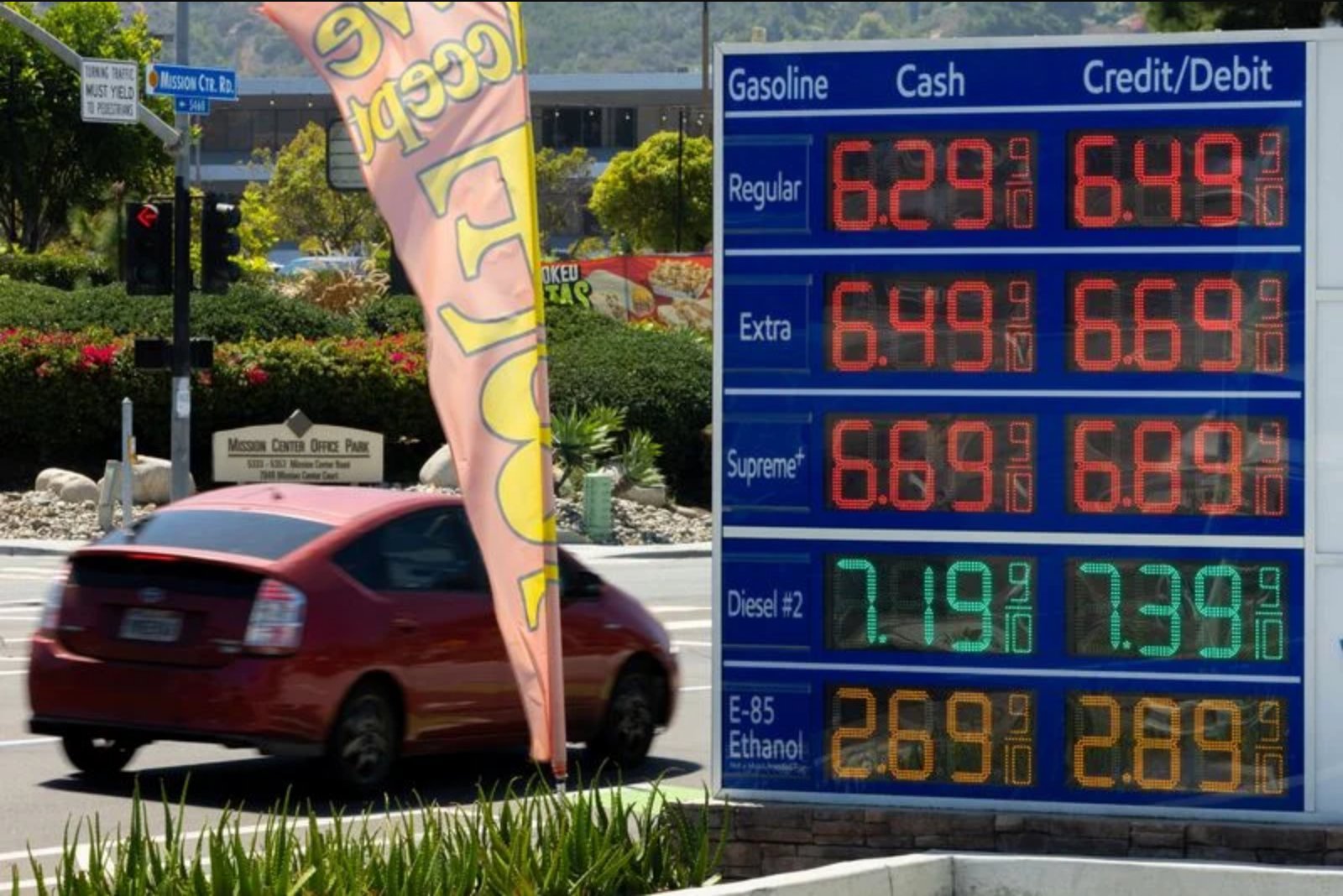
Americans are confronting record retail gasoline prices as they head into the Labor Day holiday weekend, with energy market strains tied to renewed Middle East military activity and other refining disruptions pushing pump costs to levels not previously seen at this point in the year.
GasBuddy analyst Patrick De Haan said the national average price of gasoline is likely to reach $4.03 on Labor Day, eclipsing the prior late-summer record of $3.83 per gallon set in 2012. In a recent blog post, De Haan noted that while overall gasoline has not hit all-time highs, it is at its highest level ever recorded this late in the calendar year - creating the possibility that the national average could exceed $4 per gallon on Labor Day for the first time.
As of Thursday, the national average stood at about $4.13 per gallon, according to GasBuddy, roughly $1 higher than the average a year earlier. Analysts and market observers say $4 per gallon is a psychological threshold for many consumers and a driver of broader economic perceptions.
Fuel prices are moving alongside crude oil, which this week returned above $90 a barrel after a resurgence of military activity between the U.S. and Iran rekindled fears about potential disruptions to global crude deliveries. That spike in crude costs, combined with concerns about refining capacity, has also lifted prices for distillates - a category that includes diesel and heating oil - following attacks on Russian refining facilities that market participants say have tightened global fuel inventories.
Retail fuel costs and crude oil generally trend together because crude comprises the primary raw material cost for producing gasoline and other refined products. Higher crude and stronger refining margins typically translate into elevated pump prices.
Voices from the pump
Motorists across the country are feeling the pinch. At a Phillips 66 station in Evergreen, Colorado, 57-year-old Randi O'Brien described the situation as “completely out of control” while filling her truck. Colorado and other inland Western states - including Utah, Idaho, Montana, Wyoming and North Dakota - have shown some of the steepest price increases since the onset of the conflict in the Middle East.
O'Brien said she can only afford about $15 worth of gas at a time and that she drives roughly a 40-minute round trip daily to work at Home Depot. She also pointed to the rise in U.S. crude and fuel exports since the conflict began, noting with frustration that domestic production is being shipped abroad even as domestic pump prices climb. Federal data cited in market commentary shows refined product exports are up more than 10% compared with last year, according to the U.S. Energy Information Administration.
Houston resident Madison Moore, 28, reported scaling back traditional Labor Day travel plans as pump prices rise. She described how a routine trip to Galveston for a beach day and cookout, once a simple plan, has become less attractive as costs mount. Moore said people are growing reluctant to travel as freely and suggested that more government action could be expected to aid households during price spikes.
Supply dynamics and policy responses
Market analysts identify supply strains as the main factor behind persistently high gasoline prices. Kuan Dosmuratov, a research analyst at consultancy Wood Mackenzie, said concerns about potential disruptions to energy shipments through the Strait of Hormuz and attacks on refineries have both lifted crude prices and tightened product inventories, reducing available slack in the system.
Available levers to increase fuel supplies are limited. U.S. refinery utilization is running at about 98% - the highest level since 2018 - leaving little operational capacity to raise output materially. Policymakers have taken several steps aimed at easing the situation: the government extended a Jones Act waiver to facilitate fuel shipments between U.S. ports and ended summer-blend gasoline requirements early in an effort to mitigate price pressures.
Despite these measures, inventories have tightened. The Energy Information Administration reported U.S. gasoline stocks fell by 1.2 million barrels last week to 205.7 million barrels. That level compares with a five-year average for August of 217.6 million barrels, indicating a material drawdown relative to typical seasonal stockpiles.
Broader fuel market impacts
Price increases have extended beyond gasoline. Diesel prices in the U.S. reached new highs this week, and air travelers face higher fares for the holiday - AAA projects ticket prices will be about 20% higher than a year earlier over the Labor Day weekend. Market observers warn retail diesel could challenge its prior record, and Gulf Oil chief energy adviser Tom Kloza said he sees a better-than-even chance retail diesel prices will surpass the all-time peak of roughly $5.82 per gallon recorded in June 2022, calling that prospect “worrisome.”
The convergence of higher crude, robust exports, refinery disruptions and depleted inventories has created a squeeze that so far leaves little operational elbow room to cool wholesale or retail fuel prices quickly.
Political attention
High gasoline costs are attracting political scrutiny as the midterm congressional campaigns ramp up. Gasoline prices are a highly visible economic indicator that can shape voter perceptions about the broader economy. President Donald Trump has made lowering energy costs a campaign pledge and in recent weeks has intensified criticism of refiners and fuel retailers, accusing them of benefiting from sustained high pump prices.
On August 14, President Trump said Americans should be willing to pay a “tiny little bit more” for gasoline to help prevent Iran from obtaining a nuclear weapon - a comment that was part of broader public remarks linking national security considerations and energy costs.
What consumers face this holiday
With gasoline averaging more than $4 a gallon for much of the year and the possibility of a record high for Labor Day, households grappling with tighter budgets are already adjusting behaviors - cutting back on discretionary travel and weighing alternatives. The combination of supply constraints, geopolitical risk and limited short-term policy options means pump prices are likely to remain a prominent issue for consumers and policymakers through the holiday and into the start of the fall season.