
European natural gas benchmarks are trading at levels that Citi believes may overstate the combined risks of disruptions linked to the Strait of Hormuz and an unusually cold winter. Using a set of scenarios rather than a single base case, the bank produced a probability-weighted winter price that comes in well below current market quotes.
In Citi's framework, the probability-weighted price for the upcoming winter is roughly €61 per megawatt-hour. At the time of the bank's analysis, that sits below an October 2026 TTF contract quoted at €72.90/MWh and under the November-through-March strip priced around €70.90/MWh. The difference indicates that traders are paying a notable premium to cover potential supply disruptions and harsher-than-expected winter weather.
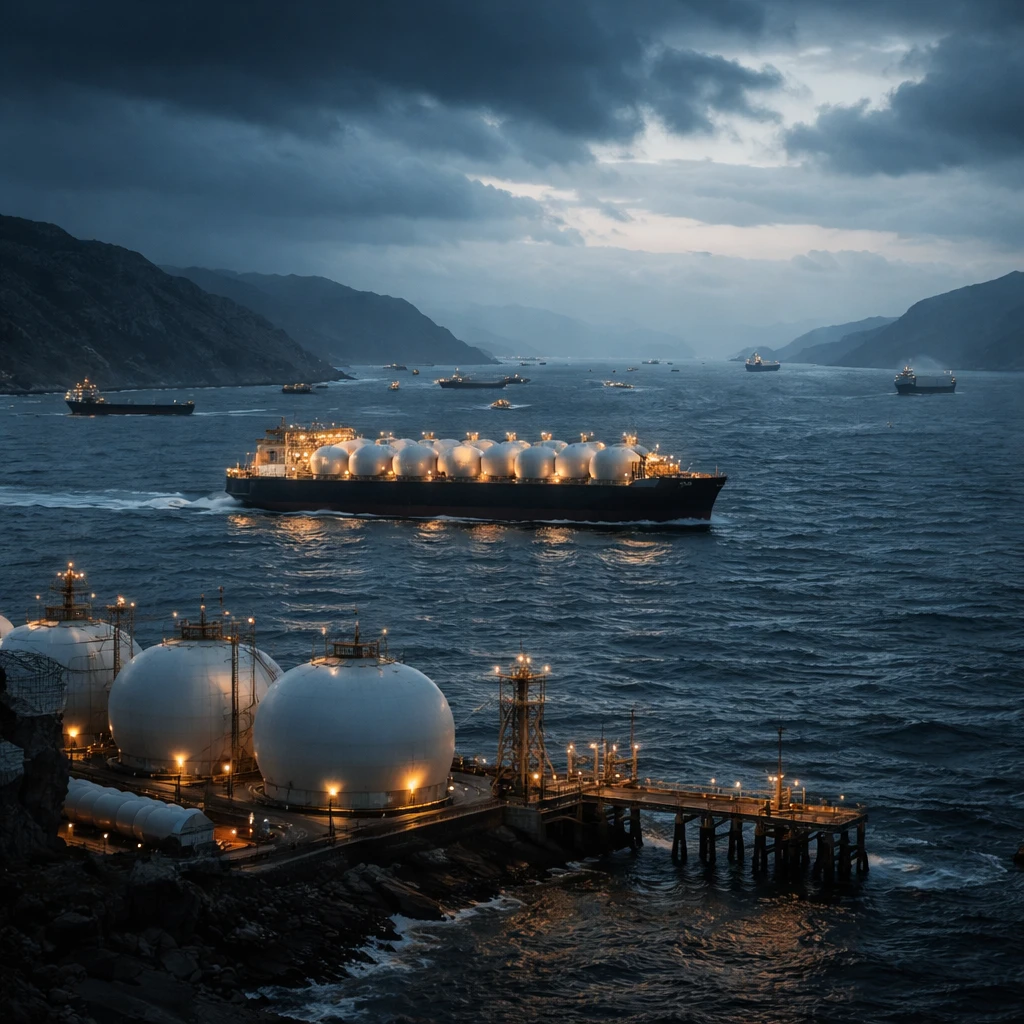
The market's elevated and volatile profile reflects the simultaneous uncertainty over two variables: the timing of a return to normal transit through the Strait of Hormuz and how cold the winter will be. Those twin unknowns are magnified because European gas inventories are relatively low as the season approaches, making the system especially sensitive to interruptions in liquefied natural gas shipments.
Asian LNG pricing has also moved higher, and because global LNG cargoes arbitrage between regions, those pressures feed back into European prices. Citi emphasizes that the combined effect of geopolitical transit questions and weather-driven demand could push prices materially higher in adverse scenarios, but its central calculation suggests the market already embeds a large share of those possibilities.
Rather than rely on a single forecast, Citi constructed multiple timelines for when transit via the Strait of Hormuz might resume along with varying winter-weather outcomes. It then assigned probabilities across those paths and aggregated the resulting price outcomes into the cited probability-weighted winter figure. That methodology is intended to reflect a range of plausible states rather than a lone baseline.
One feature of the current rally is the composition of buyers. Citi notes that positioning across the market does not appear as stretched as it was in March 2026 or in 2024, despite prices being notably higher. This implies that the recent gain has not been driven solely by traders already committed to long positions; instead, fundamental buyers and investment funds appear to be playing an outsized role.
The bank's review of the past three years finds that investment funds have become a more prominent driver of European gas prices, especially relative to the period immediately following the first shock from the Russia-Ukraine conflict. That greater presence of financial buyers increases the potential for abrupt reversals if the underlying supply fears abate, a vulnerability Citi highlights by recalling how energy markets have unwound sharply when perceived supply risks faded in other episodes.
Reflecting its view that current levels are richer than its probability-weighted scenarios warrant, Citi has adjusted its price outlook: it now projects €60/MWh for the third quarter of 2026, €56/MWh for the fourth quarter of 2026, and €41/MWh for 2027. The bank makes clear these are central estimates and that prices could climb considerably under worse-than-expected circumstances; the salient question for market participants is whether those downside risks are already baked into today's prices.
Impacted sectors: energy markets, commodity traders, inflation-sensitive sectors and investors tracking energy-related inflation dynamics.
Bottom line: Citi's scenario-weighted analysis suggests current TTF gas levels include a meaningful risk premium for Hormuz transit uncertainty and winter weather, with investment fund flows amplifying volatility and the potential for sudden price corrections.