
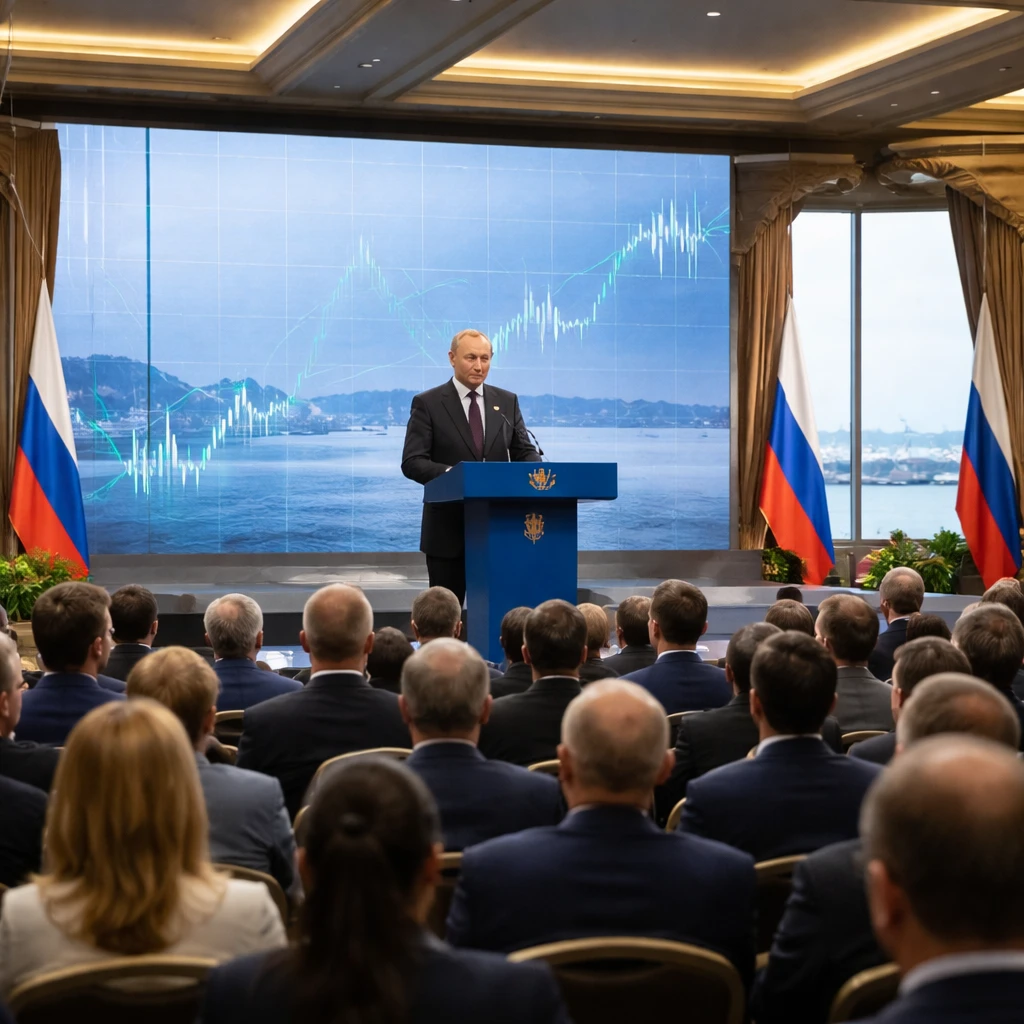
Vladivostok, Sept 3 - President Vladimir Putin addressed concerns over Russia's expanding budget shortfall on Thursday, arguing the increase is manageable and does not pose a critical risk to the national economy.
Putin noted that the budget deficit rose by 40% between January and July of this year, reaching 2.8% of gross domestic product, above the official target of 1.6% of GDP. He attributed the rising fiscal costs to the prolonged conflict in Ukraine, which he said has driven up government spending and prompted tax increases and additional borrowing.
Speaking at an economic forum in the Russian Far East city of Vladivostok, the president emphasized the country's relatively low public debt as a buffer. "Considering that we have one of the lowest levels of national debt in the world, there is nothing critical here," he said, stressing confidence in the state's capacity to manage the gap.
Fiscal strain and economic slowdown
The Russian economy, Putin acknowledged, slowed sharply last year. To sustain financing for the government's priorities, authorities have turned to higher taxes and increased borrowing. The growing deficit reflects those choices as well as the costs tied to the ongoing 4-1/2-year conflict in Ukraine.
Putin also addressed concerns from businesses about credit access in a high-rate environment. He said the government has put in place several loan programs intended to support firms despite elevated interest rates.
Inflation pressures and infrastructure attacks
The president linked new inflationary pressures to a string of Ukrainian drone strikes on Russian economic targets. Those attacks have hit oil refineries and logistics sites, including warehouses owned by online retailers Wildberries and Ozon, producing fuel shortages, higher prices and financial losses for small enterprises.
Monetary policy dilemma ahead of central bank meeting
The central bank's board is due to meet on September 11 to evaluate its key policy rate, currently set at 14%. Businesses have urged the bank to reduce borrowing costs below 12% to help revive growth, but officials face a trade-off: the larger budget deficit and emerging inflation risks are important considerations for policymakers.
Analysts polled this week expected the central bank to hold the rate steady in order to further assess those risks. Putin said it was important not to overcool the economy but added that current monetary policy was not too tight.
Outlook
Putin framed the situation as manageable, pointing to low sovereign debt and government measures to support business credit. Nonetheless, the interaction between fiscal deficits, infrastructure disruptions and monetary policy choices will be central to policy decisions in the near term.