
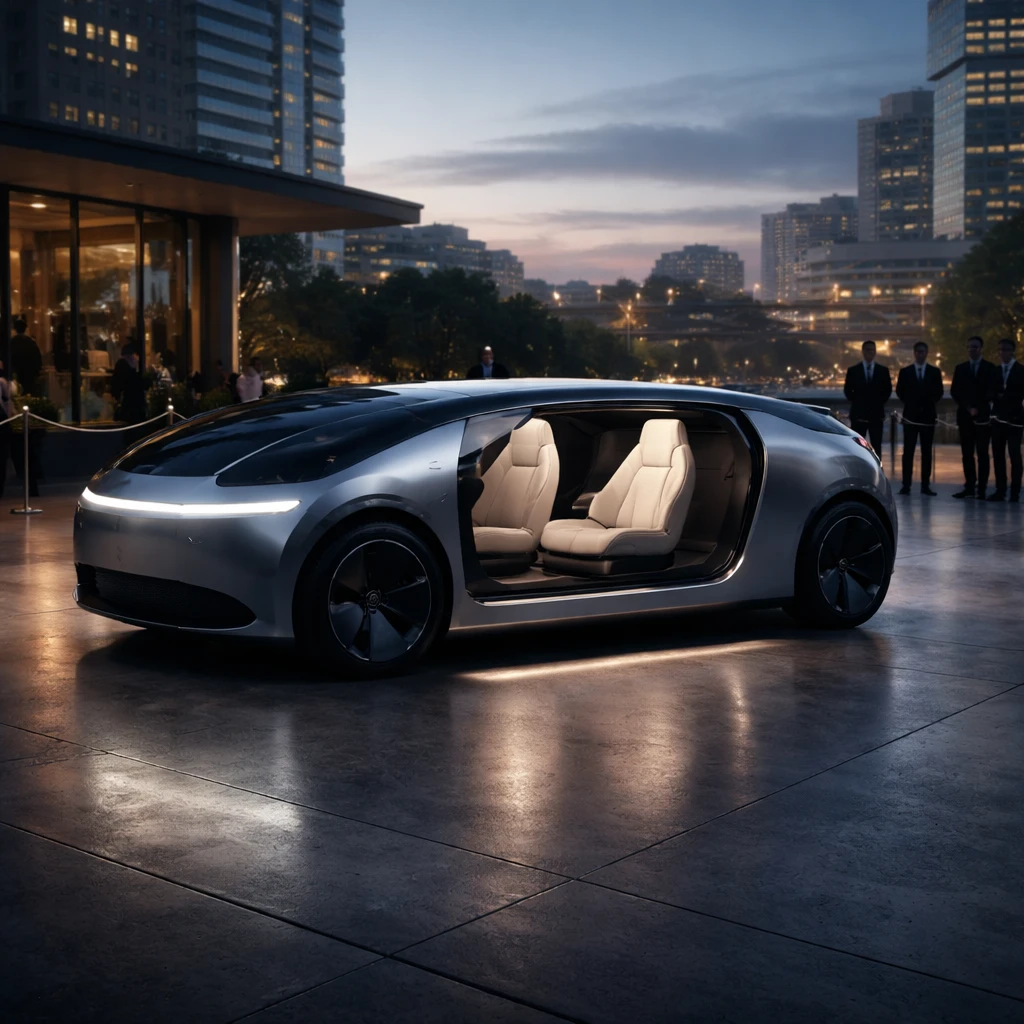
Tesla Inc is scheduled to present its two-passenger Cybercab at an event in Texas today, bringing the company’s steering-wheel-free vehicle into sharper public view. CEO Elon Musk has characterized the Cybercab as a core element in Tesla's strategy to build a significant driverless transportation business.
The automaker currently operates a limited robotaxi ridehailing program using autonomous Model Y vehicles. Those operations include vehicles fitted with human safety monitors and others reportedly running without onboard safety drivers. Tesla has said the Cybercab - which lacks a steering wheel - is intended to serve as the principal autonomous vehicle in its growing robotaxi network.
Company communications about the Texas event have been minimal. Tesla is referring to the gathering as the "Cybercab Launch Event." Cybercab engineer Eric Earley posted on X that the event will begin at 5:45 pm ET today in downtown Austin, adding that invited attendees will receive further details at the venue.
Musk first showed the Cybercab in October 2024 at a movie studio near Los Angeles. Since then, the rollout of Tesla’s robotaxi service has not followed the timelines Musk previously outlined. Analysts have noted the expansion has been slower than anticipated in recent months.
Tesla initiated a small pilot robotaxi program in Austin, Texas, in June 2025, and the company has expanded the service to multiple cities in Texas and Florida. The operations have largely concentrated on outlying suburban or less complex areas, rather than dense urban centers where navigation challenges are greater.
Tesla’s market capitalization, valued at about $1.4 trillion and larger than that of any other automaker, is in part supported by investor expectations for a successful driverless vehicle business. At the same time, the company's conventional electric vehicle business faces intensifying competition from global rivals, with particular pressure noted from Chinese manufacturers.
Musk has said the Cybercab is intended to be Tesla's highest-volume model, designed to populate a worldwide robotaxi network. He has also described a model under which private owners could choose to include or exclude their vehicles from a Tesla-operated, driverless ridehailing fleet. Tesla indicated production of the Cybercab began in April 2026, though Musk cautioned in April that initial production "will be very slow."
There remains uncertainty over how quickly Cybercabs will be deployed. Federal regulations limit the number of vehicles without steering wheels and pedals that manufacturers are permitted to sell. While companies may be able to test unlimited numbers of such vehicles, regulatory limits would prevent manufacturers from charging fares for vehicles sold in excess of the allowed number.
California poses additional regulatory constraints for Tesla: the company does not hold permits in that state to operate a robotaxi service or to test driverless vehicles without a safety driver present.
Earlier predictions for rapid growth have been adjusted. In July 2025 Musk forecast the robotaxi network would expand at a "hyper-exponential rate" and reach half the U.S. population by the end of 2025. Those projections did not come to fruition, and Musk and other Tesla executives have recently taken a more cautious tone, citing safety concerns as they temper earlier expectations.
State vehicle registration records in Texas show Tesla had 420 autonomous vehicles registered as of Wednesday evening, of which 45 are Cybercab vehicles. For comparison within Texas, Alphabet’s Waymo had 988 vehicles registered in the state.
Summary
Tesla will present the two-seat, steering-wheel-free Cybercab at an Austin event today. The vehicle is positioned as central to Tesla’s driverless ridehailing plans, though the company has provided few details about the launch. Production began in April 2026 but initial output is expected to be slow. The broader robotaxi rollout has progressed more slowly than previously projected, and regulatory caps on saleable steerless vehicles plus a lack of California permits create additional constraints. As of Wednesday evening, Texas records showed 420 autonomous Tesla vehicles registered, including 45 Cybercabs, versus 988 Waymo vehicles registered in the state.
Key points
- Tesla will unveil the two-seat Cybercab in Texas today; the company has released scant details about the event and the vehicle. (Sector impact: Automotive, Technology)
- Production of the Cybercab began in April 2026 but initial manufacturing is expected to be very slow, according to Musk. (Sector impact: Automotive, Manufacturing)
- Regulatory limits and the absence of California permits for driverless operations without a safety driver constrain how quickly Tesla can scale a paid robotaxi service. (Sector impact: Transportation, Regulatory)
Risks and uncertainties
- Regulatory caps on vehicles without steering wheels and pedals could prevent Tesla from selling large numbers of Cybercabs and charging fares for additional vehicles, limiting revenue potential. (Affected sectors: Automotive, Mobility)
- Tesla does not currently hold California permits to operate robotaxis or to test vehicles without safety drivers, restricting operations in a major U.S. market. (Affected sectors: Transportation, Regional markets)
- Slower-than-expected production and deployment rates, including Musk’s warning that early production will be "very slow," add uncertainty to Tesla’s timeline for achieving its robotaxi ambitions. (Affected sectors: Manufacturing, Investment)