
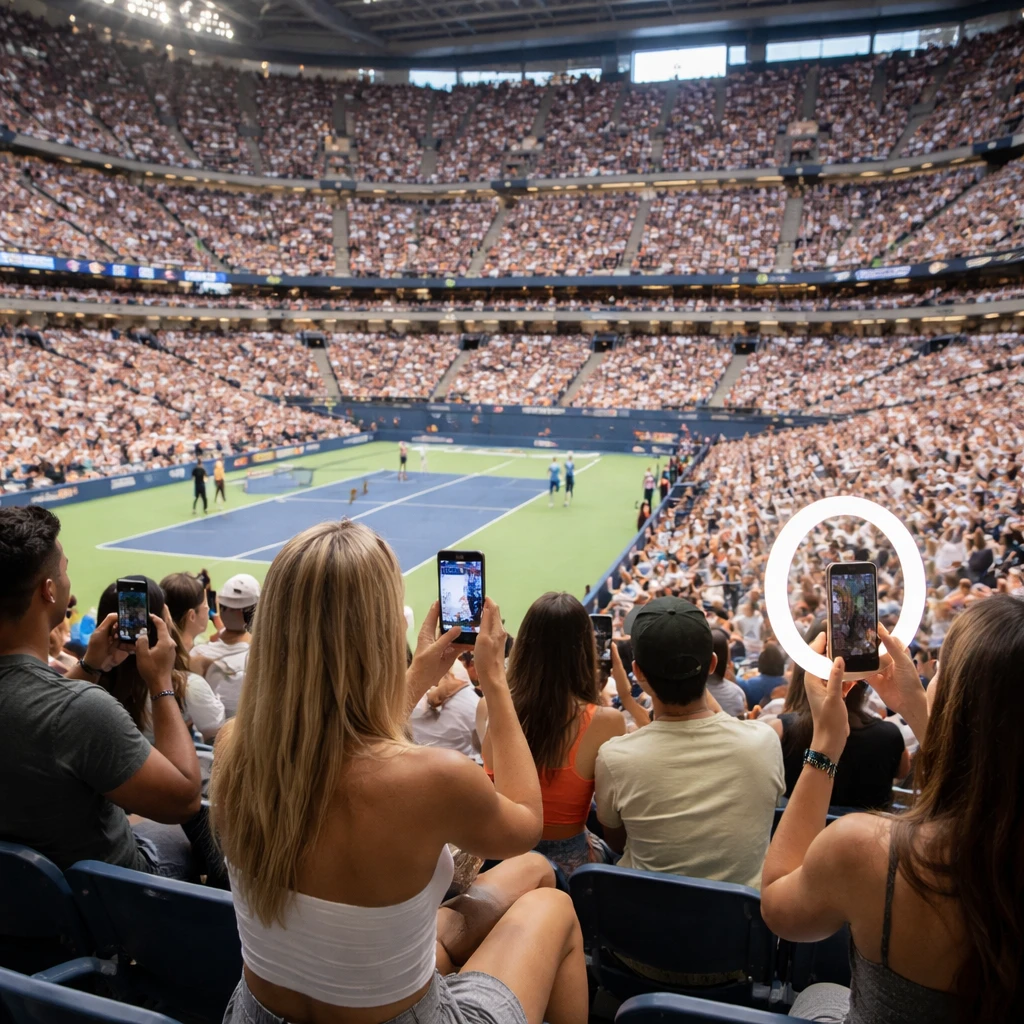
Influencers equipped with smartphones and ring lights have become a highly visible presence at this year’s U.S. Open, drawing attention both on social feeds and in the stadium aisles as they document the event. Tournament organisers said they issued credentials to around 100 content creators, with about 20 focused solely on covering the food and beverage offerings - items such as caviar-topped chicken nuggets and the signature "Honey Deuce" cocktail that are expected to generate viral moments.
Beyond the credentialed cohort, thousands of amateur social media users have taken their seats throughout the plaza and stands after purchasing tickets, intensifying the competition for camera time in what has long been one of New York’s most prominent summer sporting attractions.
"I feel like every slam kind of has their own identity and the U.S. Open has kind of always been the 'big-show Grand Slam'," said Madison Keys, the 2017 finalist, reflecting on the tournament’s public image.
But the rising visibility of influencers has brought friction. In one notable episode, a chair umpire intervened to reprimand a group of patrons who staged a disruptive photo shoot while Naomi Osaka was serving during her first-round match against Anastasia Zakharova. In a separate incident, a social media user posted photos taken inside Arthur Ashe Stadium while Keys was in the middle of playing a point against Alina Korneeva, an action that commentators noted violated basic tennis etiquette.
"I can appreciate the influencers coming and kind of showcasing the U.S. Open experience," said Jessica Pegula, the 2024 runner-up. "But I do think that it’s tough when you see videos like that when they’re taking pictures and using the selfie lights. People are down there trying to perform, and it’s their career and their job. It seems like a bit disrespectful. I think it’s gotten a little maybe too much."
Players and officials have described the tension as a consequence of the tournament’s broad popularity. Organisers have responded to rising attendance by lengthening the main draw to 15 days and by staging the mixed doubles competition as a standalone event the week before the singles draws begin. Those scheduling changes were introduced as the tournament seeks to accommodate growing spectator demand.
At the same time, professional tennis’s commercial partnerships are evolving to capitalise on social engagement. The men’s ATP tour expanded its partnership with TikTok earlier this year, citing a greater than 25% increase in posts under #tennis during 2025. Proponents argue that increased online activity helps raise awareness of the sport and boosts its popularity.
"The more we try to raise awareness about tennis, the better it is, the more popular the sport is," said 2021 champion Daniil Medvedev. He acknowledged, however, that visible disturbances can be challenging: "For sure, if it disturbs during the play, like if you see the light or something, well, you always say to the referee, can be sometimes challenging, like if during the point this happens."
The incidents at the stadium illustrate the balancing act facing tournament organisers: encouraging new forms of engagement that grow the sport while protecting the conditions under which players perform. As credentialed creators and casual spectators with bright lights and cameras become more prevalent, the U.S. Open faces increased pressure to enforce existing etiquette and to adapt its spectator policies to prevent interference with live competition.
Context and implications
Organisers have clearly moved to monetise and showcase the matchday experience through credentialed content creators and expanded partnerships with social platforms, even as athletes and match officials confront the operational implications of more pervasive audience filming. The immediate effects are most visible in the players’ line of sight and match concentration; longer-term responses may include stricter enforcement of in-arena policies or revised credentialing practices.