
World April 25, 2026 10:21 PM

U.S. Forces Intercept Sanctioned Tanker in Arabian Sea, Directs Vessel Back to Iran

Central Command says the Sevan, part of a 19-ship sanctioned 'shadow fleet,' was turned back under U.S. escort amid a wider blockade of Iranian energy shipments

By Derek Hwang
U.S. Forces Intercept Sanctioned Tanker in Arabian Sea, Directs Vessel Back to Iran

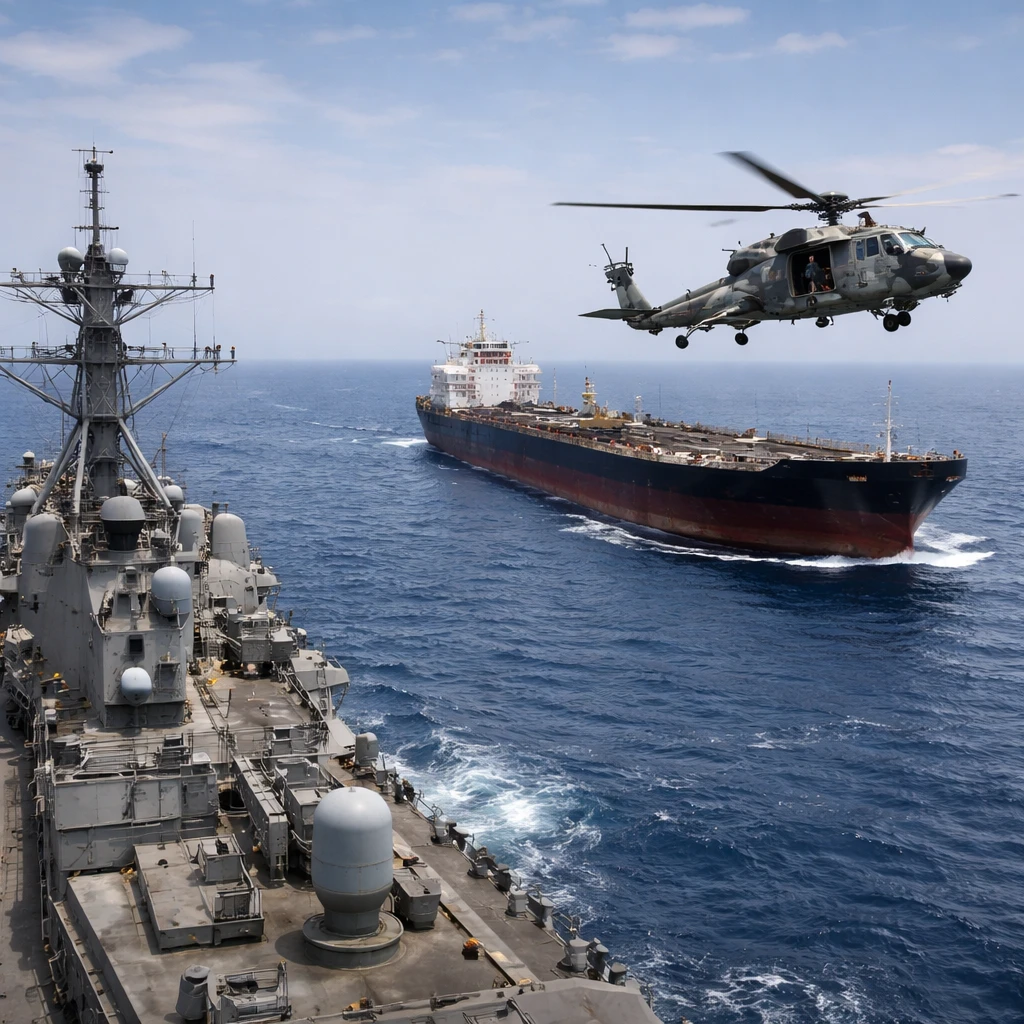
U.S. Central Command reports that a merchant vessel named Sevan, identified as a member of a 19-vessel 'shadow fleet' moving Iranian oil and gas products, was intercepted in the Arabian Sea. A helicopter launched from the guided-missile destroyer USS Pinckney approached the ship, which is complying with orders to return to Iran under escort. The fleet has been targeted by U.S. Treasury sanctions for transporting billions of dollars in Iranian energy products; since the blockade began, 37 ships have been redirected.

Key Points

  • A merchant ship named the Sevan was intercepted in the Arabian Sea and is complying with U.S. military direction to return to Iran under escort - impacts naval operations and maritime security monitoring.
  • U.S. Central Command identified the Sevan as part of a 19-vessel "shadow fleet" transporting Iranian oil and gas products to foreign markets - implications for the energy and shipping sectors that handle petroleum products.
  • The U.S. Treasury Department has sanctioned vessels in the shadow fleet for moving billions of dollars' worth of Iranian energy, including propane and butane, and the military reports 37 ships redirected since the blockade began - relevant to sanctions enforcement and trade compliance.

U.S. Central Command said on Saturday that forces at sea intercepted a merchant vessel attempting to transit through a blockade of Iran. The ship has been identified by the U.S. military as the Sevan, which Central Command says is part of a 19-vessel network described as a "shadow fleet" engaged in moving Iranian oil and gas products to foreign markets.

According to the military statement, the interception occurred in the Arabian Sea. A U.S. Navy helicopter operating from the guided-missile destroyer USS Pinckney approached the vessel. Central Command said the Sevan is "currently complying with U.S. military direction to turn back to Iran under escort."

Central Command characterized the 19-vessel group as a shadow fleet that has been the subject of Treasury Department sanctions. The U.S. military said those sanctions target the vessels for activities tied to the transportation of "billions of dollars' worth" of Iranian energy, including oil and gas products such as propane and butane, to foreign markets.

The military also provided an operational tally: since the blockade began, 37 ships have been redirected. Beyond those counts and the detail that the Sevan is under escort back toward Iran, Central Command's statement provided no additional operational specifics in the material cited.

This incident was presented by Central Command within the context of enforcement actions against maritime movements tied to Iranian energy exports. The description identifies the Sevan as a component of a targeted, sanctioned logistics chain and notes the use of a U.S. Navy helicopter embarked on the destroyer USS Pinckney in the interception operation.


Key facts reiterated:

  • The vessel involved is identified as the Sevan.
  • Central Command says the Sevan is part of a 19-vessel "shadow fleet" moving Iranian oil and gas products to foreign markets.
  • The ship was intercepted in the Arabian Sea by a U.S. Navy helicopter from the guided-missile destroyer USS Pinckney and is complying with direction to return to Iran under escort.
  • The shadow fleet vessels have been sanctioned by the U.S. Treasury Department for transporting billions of dollars' worth of Iranian energy products, including propane and butane.
  • Since the blockade began, 37 ships have been redirected, according to the U.S. military.

Reporting limitations

The information released by Central Command includes the identification of the vessel, the fleet designation, the location of interception, the platform used in the operation, sanctions status attributed by the Treasury Department, and the aggregate count of 37 redirected ships since the blockade began. The statement does not provide additional details on the timing of the interception beyond "Saturday," nor does it elaborate on destinations, cargo manifests beyond categories named, or subsequent movements after the escort direction.

Risks

  • Enforcement uncertainty - the available statement confirms interceptions and redirections but provides limited operational detail, creating uncertainty about the scope and predictability of future maritime enforcement actions (affects shipping and logistics firms).
  • Sanctions-related disruption - vessels tied to sanctioned transport of Iranian energy present compliance and operational risk for parties in the energy shipping chain, particularly those involved with petroleum product transport such as propane and butane (affects energy traders and maritime insurers).
  • Information gaps - the limited public details on timing, cargo specifics, and subsequent movements beyond the return-under-escort direction leave unresolved questions that could affect market assessments in energy and maritime sectors.

More from World

Family Re-detained Days After Court-Ordered Release, Lawyers Say Apr 25, 2026 Diplomatic Momentum Stalls as U.S.-Iran Talks Collapse and Strait of Hormuz Tightens Apr 25, 2026 Ukraine Marks 40 Years Since Chornobyl Under the Shadow of War Apr 25, 2026 Iran Rejects 'Maximalist' U.S. Terms as Pakistan Pushes to Cement Ceasefire Apr 25, 2026 China Protests EU Inclusion of Chinese Firms in 20th Russia Sanctions Package Apr 25, 2026