
The ongoing conflict in the Middle East has propelled the United States into a central role for global energy supply, lifting exports of crude oil, refined products and liquefied natural gas as buyers seek alternatives to disrupted routes and facilities.
According to the U.S. Energy Information Administration (EIA), combined exports of crude oil and petroleum products climbed to a record 12.9 million barrels per day last week. That surge reflects an international effort to replace flows interrupted by events focused on the Strait of Hormuz and by damaged processing facilities in Qatar.
Rising tanker volumes and near-term capacity limits
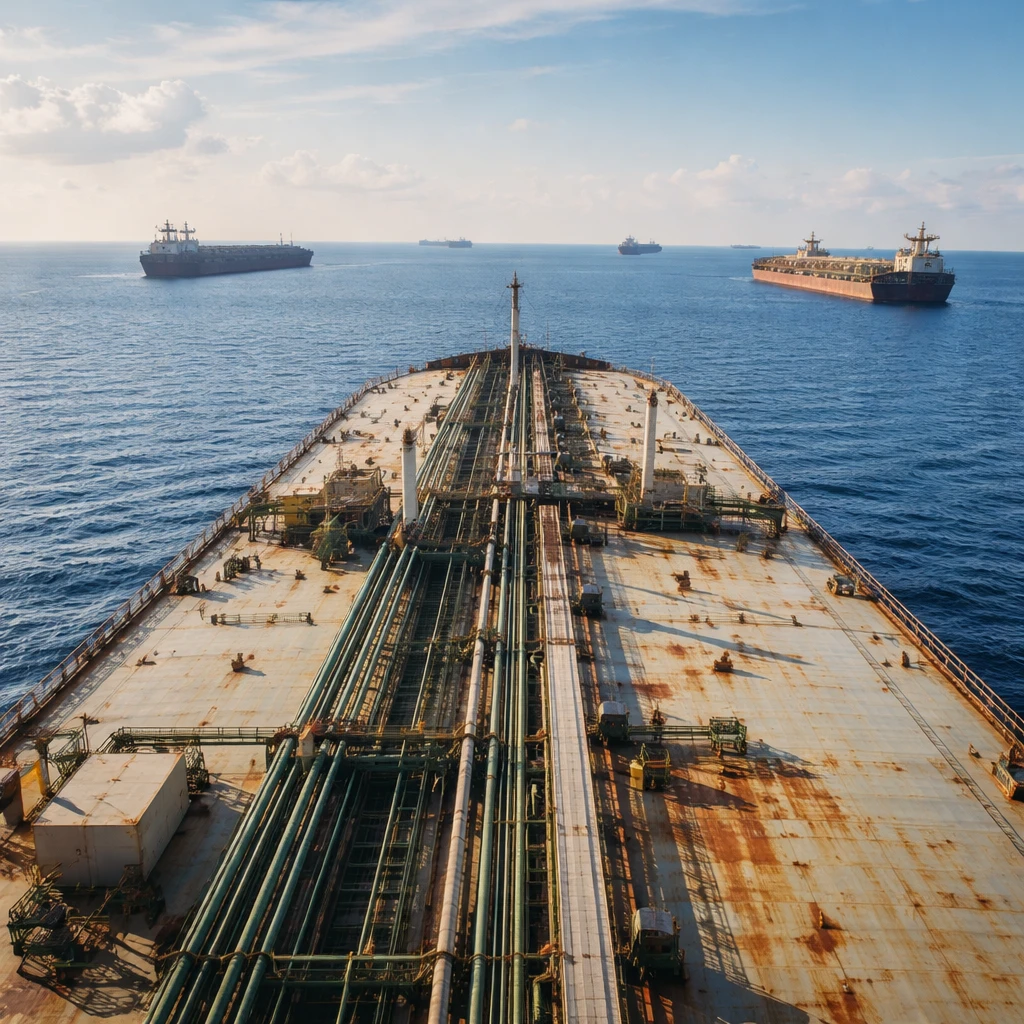
Market movements show a marked increase in shipping toward the U.S. Gulf Coast. Current data indicate that more than 60 empty crude supertankers are sailing toward U.S. refineries and export terminals - a level roughly three times what was typical before the outbreak of hostilities. That influx underscores the U.S. Gulf Coast's role as the marginal supplier able to meet urgent global demand.
Yet physical constraints are becoming visible. The U.S. Gulf Coast is approaching its throughput ceiling, meaning further export growth will be constrained until new terminal projects now under construction are completed. Those projects are expected to come online in roughly 18 to 24 months, which sets a timeline for any meaningful expansion of export capacity.
Structural challenges to a permanent market realignment
Energy analysts caution that elevated wartime demand does not automatically translate into a permanent commercial realignment in global supply chains. Significant structural barriers remain, especially in Asia. Many refineries in the region have been configured over decades to process heavier, sour crudes typical of Middle Eastern production. Adapting that infrastructure to handle the lighter American grades would require substantial capital expenditure and years of engineering work, creating a high hurdle for long-term adoption of U.S. barrels.
Europe presents a parallel challenge. The continent is increasingly dependent on U.S. liquefied natural gas to rebuild storage levels, and policymakers are openly expressing concern about simply replacing one source of dependence with another. Those political concerns add another layer of uncertainty around the durability of U.S. export gains beyond the immediate crisis.
Current market dynamics and the path forward
With the Strait of Hormuz - which normally handles about 10% of global oil shipments - effectively closed in the present disruption, global buyers have limited alternatives. As long as shipping channels remain constrained and regional facilities remain offline or impaired, the U.S. Gulf Coast will function as the principal marginal supplier to world markets.
Still, experts note that translating this temporary wartime role into a structural, long-term change in trade patterns faces both technical and geopolitical obstacles. The combination of refinery compatibility issues in Asia, near-term throughput limits on the Gulf Coast, and European political concerns over energy dependence frames a complex outlook for whether today's export highs will persist once the immediate crisis eases.