
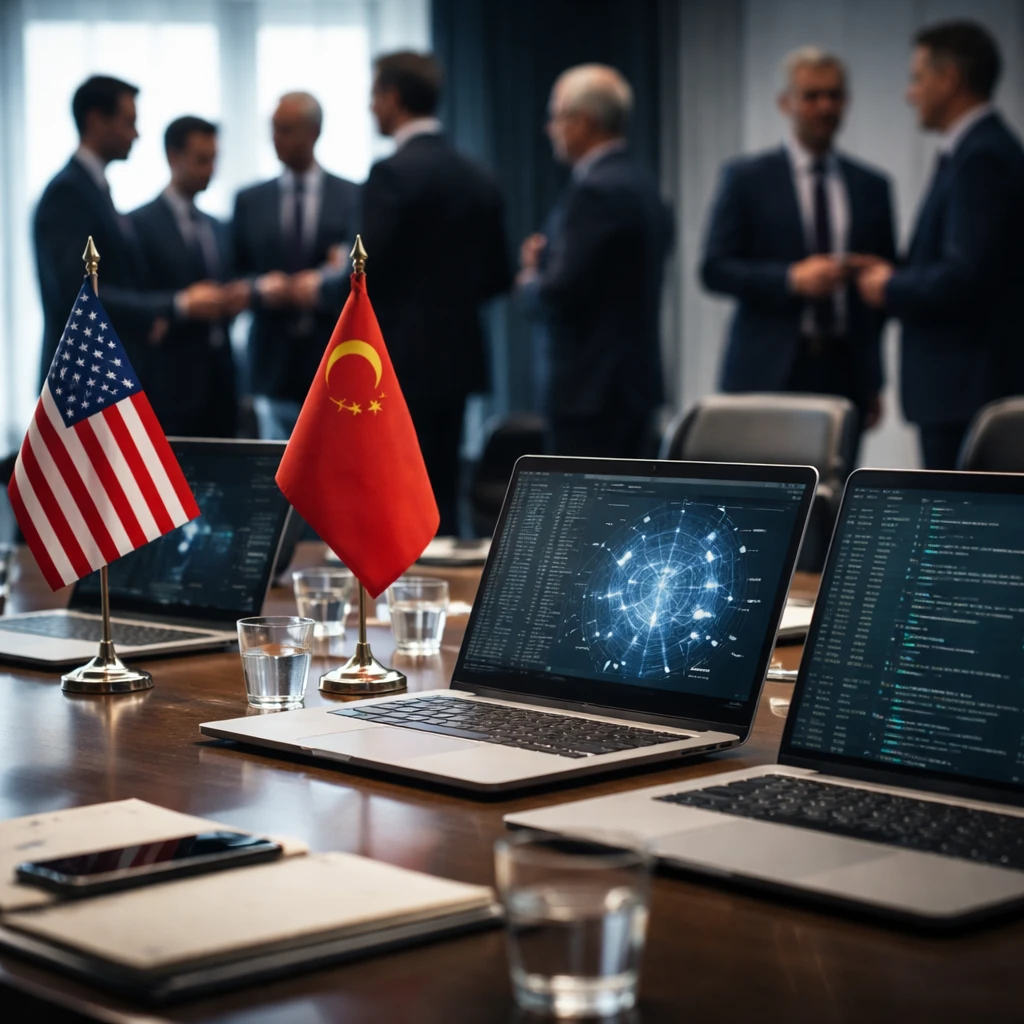
The U.S. State Department has launched a coordinated diplomatic effort to call attention to what it describes as industrial-scale attempts by Chinese artificial intelligence firms to appropriate intellectual property from U.S. research laboratories.
According to a diplomatic cable first reported by Reuters, Washington is increasingly worried that companies, including the startup DeepSeek, are employing illicit forms of "distillation" to reproduce the capabilities of sophisticated American systems. The cable, distributed to diplomatic and consular posts on Friday, directs U.S. missions to warn foreign counterparts about the risks tied to AI models that derive from proprietary U.S. research.
The term distillation, as described in the cable, refers to the practice of training smaller, less expensive models by using the outputs of larger, more powerful systems. The process itself is recognized as a legitimate technique when applied on its own. However, the State Department and the White House contend that certain Chinese actors are running large-scale campaigns that strip away security protections and recreate U.S. technological advances at a fraction of the original development cost.
The move represents a marked toughening of the Trump administration's posture on the international AI competition. The directive tells U.S. diplomats to raise concerns about the "extraction and distillation" of American models, and it includes a formal demarche request sent directly to Beijing. The step follows similar allegations issued by the White House earlier in the week.
Officials appear to be preparing to go beyond public statements. The diplomatic cable indicates Washington is setting the stage for potential subsequent actions and coordinated outreach with international partners. This push comes just weeks before President Donald Trump is scheduled to meet Chinese President Xi Jinping in Beijing, injecting fresh strain into a technological rivalry that had seen a brief easing last October.
Chinese authorities have rejected the allegations, calling them "baseless" and "pure slander." The diplomatic communication underscores the administration's desire to elevate concerns about particular methods used to replicate advanced AI capabilities.
Market participants and leading U.S. AI labs have already expressed alarm over what they view as actions that undermine proprietary protections. Anthropic, OpenAI, and other American research centers have previously warned that firms such as DeepSeek, Moonshot AI, and MiniMax allegedly used fraudulent proxy accounts to extract proprietary reasoning traces from frontier models.
For the broader AI and technology sectors, the episode highlights an increasing premium being applied to intellectual property protection. The U.S. government has emphasized safeguarding so-called "ideologically neutral and truth-seeking" security mechanisms that it says are being systematically bypassed by foreign distillation campaigns.
As diplomatic channels become the vehicle for these warnings, the cable suggests policymakers are weighing both reputational warnings and the possibility of coordinated international responses. Which specific measures, if any, might follow the outreach is not detailed in the cable.
Summary
The State Department has ordered a global diplomatic outreach warning that Chinese AI firms are allegedly using industrial-scale distillation to replicate U.S. AI models, with a formal demarche sent to Beijing and broader coordination signaled ahead of a summit between President Trump and Xi Jinping.
Key points
- Diplomatic action: A cable sent to posts worldwide instructs diplomats to warn foreign counterparts about risks from AI models derived from U.S. proprietary research.
- Allegations of industrial-scale distillation: U.S. officials say companies including DeepSeek are using distillation techniques at scale to recreate advanced U.S. systems while bypassing security protections.
- Market implications: The development reinforces a growing premium on intellectual property security across the AI and broader technology sectors.
Risks and uncertainties
- Geopolitical friction - Technology and international relations: The diplomatic outreach could heighten tensions between the United States and China ahead of a scheduled meeting between their leaders.
- Industry exposure - AI and tech firms: Leading U.S. labs allege that some foreign actors have used fraudulent accounts to siphon proprietary reasoning traces, posing competitive and security risks to model developers.
- Policy ambiguity - Regulatory and enforcement actions: While the cable signals preparation for potential follow-up measures, the specific responses and their timing remain unspecified.