
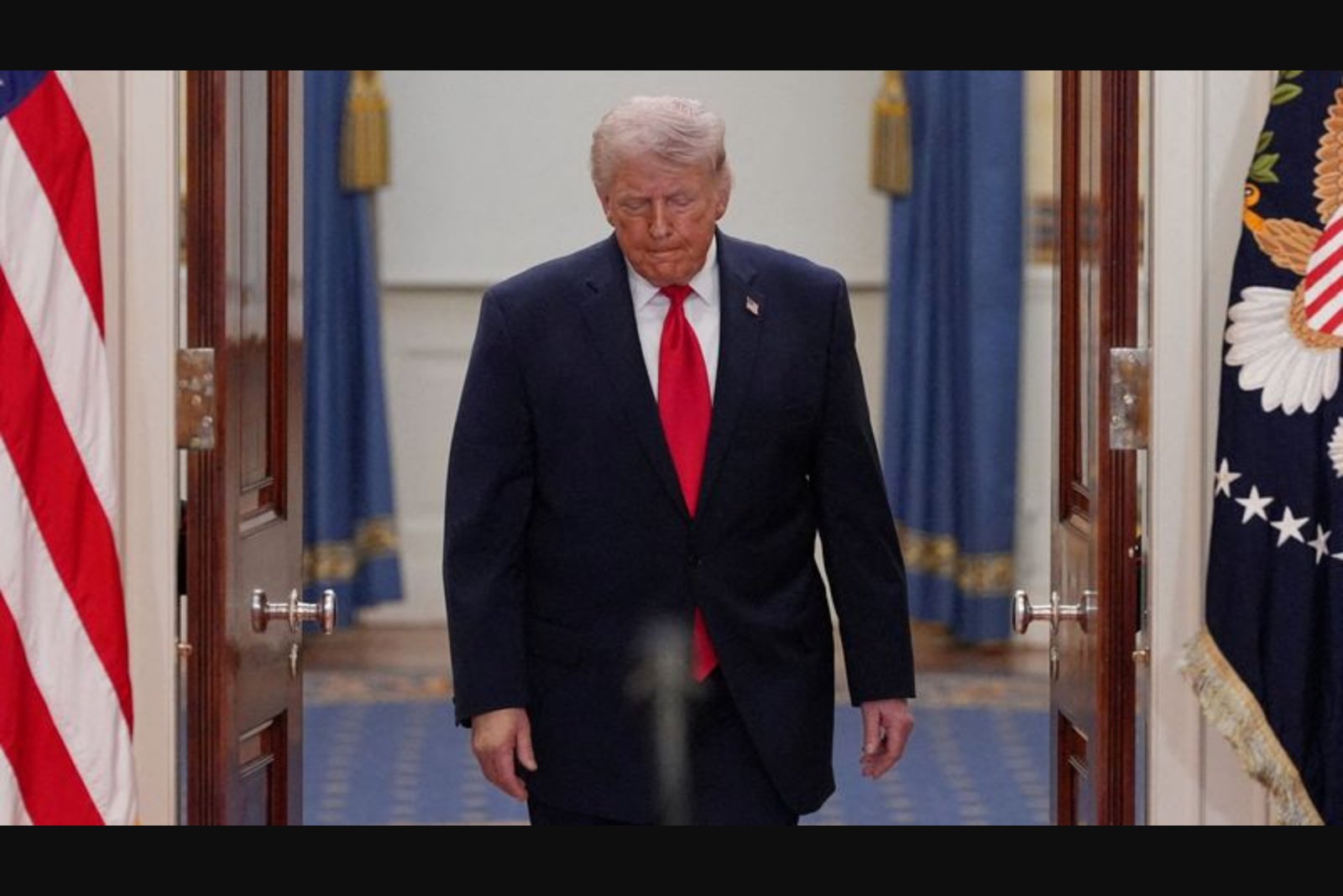
The top legal official at the U.S. State Department has presented a formal legal defense of the administration's military campaign against Iran, asserting that the operation was taken in self-defense and to protect the United States' ally Israel. The statement, issued in the days leading up to a May 1 deadline under the War Powers Act, characterizes the recent air strikes as part of an already ongoing conflict rather than the launch of a new war.
In the document, State Department Legal Adviser Reed Rubinstein set out the administration's position that the United States acted "at the request of and in the collective self-defense of its Israeli ally, as well as in the exercise of the United States’ own inherent right of self-defense." He cited what he described as "Iran’s malign aggression over decades" since the 1979 Islamic Revolution, and pointed to a series of actions by Tehran and its proxies, including attacks on U.S. forces and Israel, Iranian missile strikes against Israel in 2024, and what he characterized as Tehran's pursuit of nuclear weapons.
Rubinstein's remarks were published under the title "Operation Epic Fury and International Law" on the State Department's website. Unlike most departmental releases, this statement was not distributed to the media or posted on the department's official social media accounts.
Background to the legal filing
U.S. and Israeli forces began air strikes on Iran on February 28. The initial strikes killed Iran's then-Supreme Leader Ayatollah Ali Khamenei and a substantial portion of the country's leadership, according to the account provided in the legal statement. At the time the strikes were announced, President Donald Trump said they were intended to destroy Iranian missile capabilities, eliminate its navy, and prevent Tehran from acquiring a nuclear weapon. He also publicly urged Iranians to remove their government.
The administration's legal argument comes as a May 1 milestone approaches under the 1973 War Powers Act. That statute requires the president to halt any military engagement after 60 days unless Congress authorizes continued action. A president may seek a single 30-day extension by certifying in writing to Congress that further use of force is necessary. The legal filing by Rubinstein was seen by congressional aides as an attempt by the administration to present its legal position prior to that deadline.
International law concerns and expert criticism
The administration's position has met sharp legal criticism. Many international law scholars have said the strikes were not justified under the United Nations Charter, which generally forbids the use of force except when authorized by the U.N. Security Council or when employed in self-defense. More than 100 international law experts published a letter this month calling the initiation of the conflict "a clear violation" of the U.N. charter.
Those experts argued there was no evidence of an imminent threat from Iran sufficient to ground a self-defense claim. They pointed to several incidents they say undermine the administration's legal rationale, including what investigators believe was a U.S. strike that bombed a girls' school, killings of political leaders without clear military connection, and threats targeting Iranian civilian infrastructure.
Rubinstein's rebuttal and characterization of violence
Rubinstein rejected those conclusions in his statement, saying the United States' actions have been "well within the recognized contours of international law relating to the use of force and self-defense." He also argued it was unnecessary to determine whether an Iranian attack on the United States or an ally was imminent, because the United States was already engaged in what he described as a conflict with Iran that had been ongoing for years.
In his account, Iran's response to the U.S. and Israeli strikes included missile and drone attacks against U.S. targets, neighboring states, and commercial shipping, which he said disrupted the strategic Strait of Hormuz. He also said Iran had "lashed out against its neighbors, targeted Israeli civilians, murdered its own people, unlawfully closed the Strait of Hormuz, and wreaked havoc throughout the region."
Iran has repeatedly denied Western accusations that it is pursuing nuclear weapons. The legal statement nevertheless listed Iran's alleged long-term malign activity as part of the justification for U.S. action.
Political and economic fallout
The campaign and subsequent responses have produced significant geopolitical and economic consequences. Iran's retaliatory strikes with missiles and drones affected shipping and regional security and contributed to a spike in energy market volatility. The conflict has been linked to an energy shock and concerns about broader economic repercussions.
Fighting in the region was paused after a ceasefire took effect on April 8. Opinion polling indicates the conflict proved unpopular among the U.S. public, with many Americans noting rising costs for fuel, food, and other goods over the eight weeks since operations began. Recent polling showed a majority of Americans attributing rising gasoline prices to President Trump, a political factor weighing on his party ahead of upcoming midterm elections.
Congressional response and the War Powers Act
Democrats in both chambers of Congress, despite being in the minority, repeatedly introduced resolutions aimed at ending the conflict until the president secured congressional authorization. Most Republican lawmakers have voted to block those measures. The administration's legal filing arrived as a focal point in the broader congressional debate over whether the president should seek formal authorization for the campaign or wind it down in compliance with the War Powers Act.
Rubinstein's statement concludes that the United States has complied with its international legal obligations since operations began in late February, while portraying Iran's conduct as predictable and destabilizing. The document frames the campaign as an act of collective defense in which the United States and its ally acted within the bounds of international law, a position that remains contested by numerous international jurists and lawmakers.