
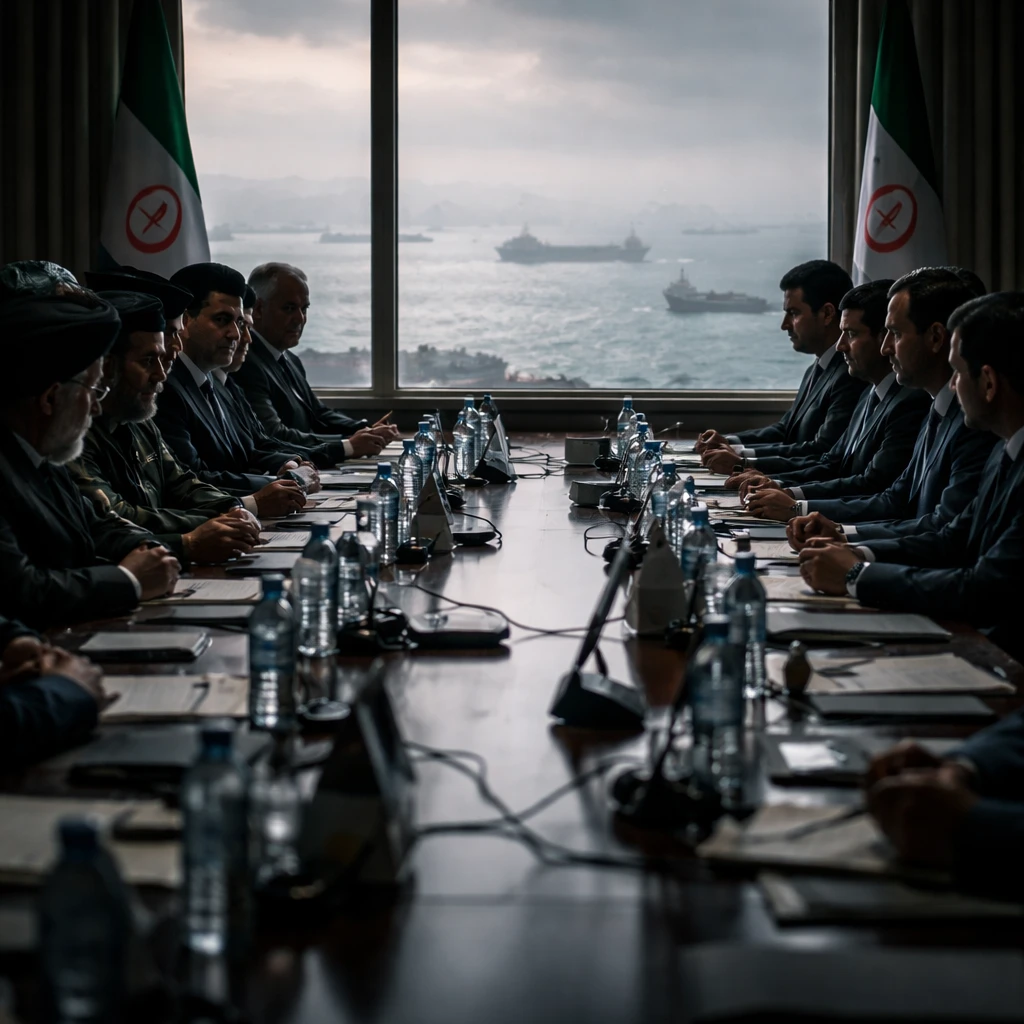
Internal political tensions in Tehran are increasingly clouding expectations for a prompt resolution to the Iran war, raising doubts about the ability of current diplomatic efforts to produce a swift ceasefire.
Officials in Washington, led by the Trump administration, have been pushing for a diplomatic breakthrough intended to stabilize global energy markets and bring an end to the conflict. Early rounds of talks had generated some momentum, but that progress is now under strain because of a widening split inside Iran between pragmatic elements of the leadership and more emboldened hard-liners.
Domestic divisions and concessions debate
At the center of the dispute is how far Tehran should go in offering concessions in exchange for sanctions relief. Delegation members from the more pragmatic wing have signaled a readiness to discuss critical topics, including aspects of the country’s nuclear program. Those diplomatic overtures, however, have been met with immediate and public pushback from ultraconservative factions and the Islamic Revolutionary Guard Corps (IRGC).
That domestic pressure has put negotiators in a precarious position. They are attempting to thread a narrow needle between safeguarding the regime’s economic survival and satisfying hard-line demands for ideological purity. Observers note a pronounced struggle to maintain coherence within the negotiating team as competing priorities and constituencies press their respective agendas.
Leadership vacuum and stalled decision-making
The negotiations are further complicated by the apparent isolation of Supreme Leader Mojtaba Khamenei. With his absence, there is no clear, authoritative arbiter to bridge the gap between the warring factions. Analysts cited in the reporting warn that, in the current environment, the decision-making process has ground to a halt.
Unlike past scenarios in which a single leader could compel agreement on contentious peace terms, the present power vacuum has fostered hesitation. Officials and power centers have increasingly resorted to what has been described as tactical "performative reluctance" as they jockey for leverage before formal talks resume.
Market implications and strategic choke points
Global markets interpret the lack of a unified Iranian position as a meaningful source of risk. That fragmentation is being priced as a risk premium into energy and shipping stocks. The United States continues to maintain a blockade of Iranian ports as a primary lever in the diplomatic and economic contest. As public internal debates in Tehran intensify, investors are preparing for an extended period of diplomatic volatility.
So long as Iran lacks a single, authoritative voice empowered to accept the difficult compromises necessary for a ceasefire, the Strait of Hormuz is likely to remain a flashpoint. That persistent instability is expected to keep energy prices elevated and to place ongoing strain on global supply chains.