
April 24 - Georgia officials announced a state of emergency for 91 counties as crews battled multiple wildfires across the state, with two particularly large blazes responsible for widespread property destruction. Authorities said the Highway 82 and Pineland Road fires - one started when an aluminum-coated party balloon landed on a transmission line and created an electrical spark, the other set off by a stray welding spark - were the most severe among dozens of fires burning in Georgia and neighboring Florida, South Carolina and Alabama.
State forestry officials reported that by Friday night the two principal fires had burned a combined area of more than 39,500 acres (16,000 hectares) and had incinerated at least 122 homes and other structures. Gov. Brian Kemp described the tally as the largest property loss from a single fire event in Georgia's history during a press conference, and said that nearly 1,000 additional homes remained under threat.
There were no reported fatalities in Georgia connected to the blazes. Outside the state, media reports indicated that a volunteer firefighter in northern Florida died on Thursday evening after suffering an unspecified medical emergency while engaged in fighting a brush fire.
Officials attributed the rapid spread and ferocity of the fires to a combination of environmental factors. After heavy vegetation growth last fall following Hurricane Helene, spring rainfall has been unusually light, leaving timber and brush extremely dry and creating a substantial fuel bed. "We are in extreme drought conditions, and wildfire activity has already surpassed our five-year average," Johnny Sabo, director of the Georgia Forestry Commission, said in a posted video message. He warned, "Right now conditions are so dry that even one small spark can quickly turn into a dangerous wildfire."
Fire behavior captured in news footage showed flames racing through stands of pine, in some places burning to tree tops and moving from one crown to another. Gov. Kemp described scenes of "fire that is burning to the top of trees and burning from one treetop to another." That pattern of crown fire complicates suppression efforts and allows flames to advance rapidly across the landscape.
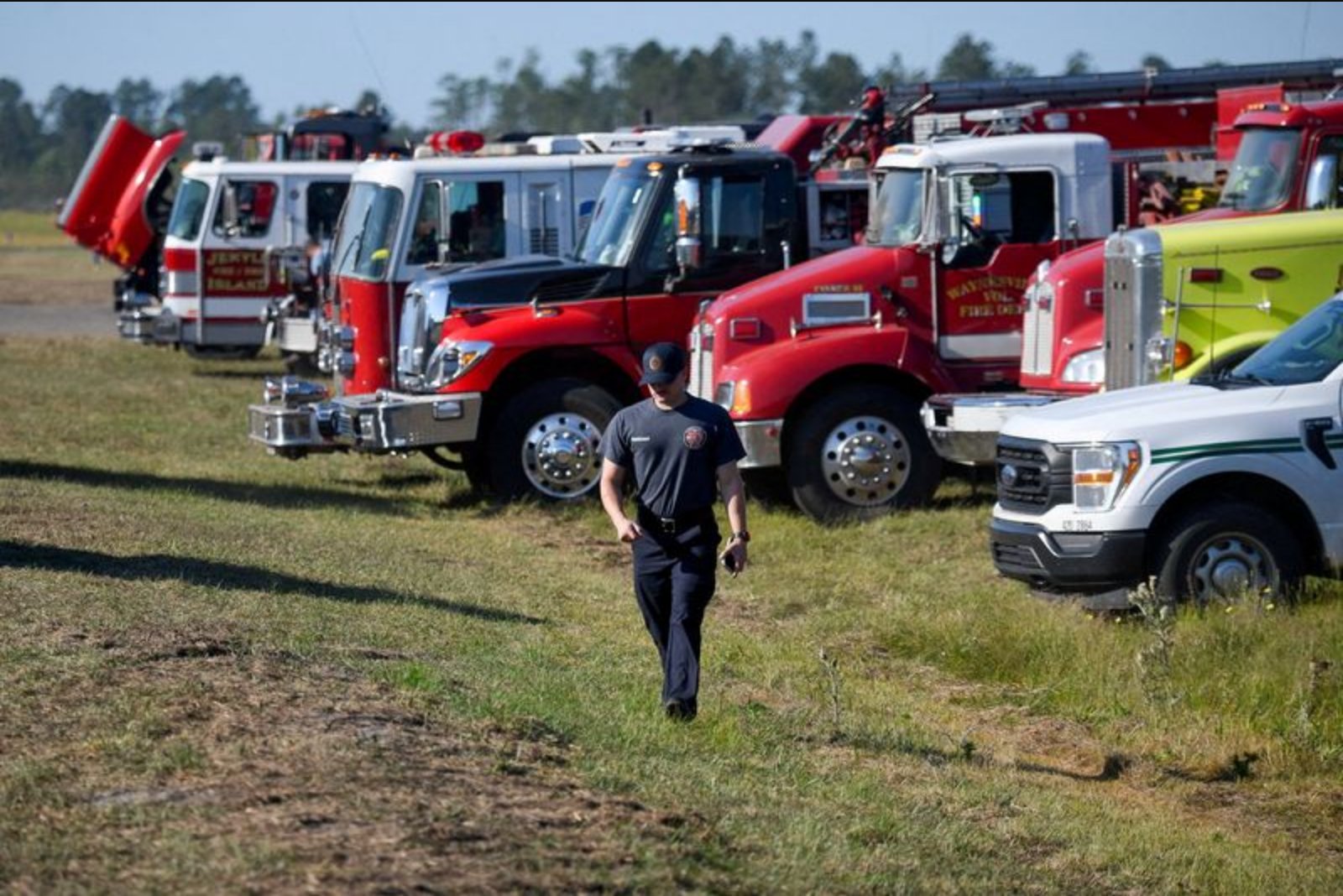
Firefighters on the ground, supported by water-dropping aircraft, were engaged in efforts to shield residences still in danger and to slow the spread of the conflagrations. Forestry authorities said crews had managed to establish containment lines around roughly 10% of the perimeter of each of the two major fires, indicating significant remaining work to bring the incidents under control.
In a bid to streamline and strengthen the state response, Gov. Kemp issued the emergency declaration for 91 of Georgia's 159 counties. In tandem, the Georgia Forestry Commission announced a 30-day ban in those same counties on outdoor burning of refuse, agricultural waste and campfires - the first such restriction in the state's history, officials said.
The two largest blazes are concentrated in southeastern Georgia - near the Florida border and approximately 250 miles (400 km) southeast of Atlanta - but fires are reported across the state. Video and still images have shown long columns of smoke and walls of flame moving through pine-dominated landscapes that provide ample ladder fuels from previous vegetation growth.
Investigations into the origins of the two principal fires highlighted how minimal ignition sources can spark catastrophic outcomes under the current conditions. Authorities determined the Highway 82 fire began when an aluminum-coated balloon came into contact with a transmission line, producing an electrical spark that ignited surrounding vegetation. The Pineland Road fire, burning since April 18, was traced to a stray welding spark that landed on the forest floor and ignited dry material.
Officials warned that extreme fire conditions were expected to continue through the weekend, with forecasts calling for gusty winds and little chance of rain. Those factors, combined with widespread dry fuels, are likely to sustain the elevated fire risk in the near term and keep suppression operations challenging.
Summary
Two major wildfires in southeastern Georgia, sparked by small ignition sources, have burned roughly 39,500 acres and destroyed at least 122 homes and other structures. State officials declared a 91-county emergency, imposed a 30-day outdoor burning ban in those counties, and warned that drought and forecasted gusty winds with little rain would keep conditions dangerous.
Key points
- Highway 82 and Pineland Road fires together have scorched more than 39,500 acres and destroyed at least 122 homes and other structures - the largest single-event property loss in Georgia history.
- Georgia Governor declared a state of emergency for 91 of 159 counties and the Georgia Forestry Commission enacted a 30-day ban on outdoor burning in those counties.
- Extreme drought, abundant dry fuel from last fall's vegetation growth following Hurricane Helene, and forecasted gusty winds with little rain are sustaining dangerous wildfire conditions.
Risks and uncertainties
- Continuing drought and forecasted gusty winds with a low chance of rain could prolong fire activity and hinder containment efforts, increasing risks to homes and infrastructure.
- Widespread property damage and the threat to nearly 1,000 additional homes may produce cascading economic impacts for local housing markets and insurers in the affected areas.
- The role of utility infrastructure and routine operations - exemplified by the balloon contacting a transmission line and a welding spark igniting fuels - highlights ongoing operational risks to utilities and to sectors reliant on outdoor agricultural and construction activities.