
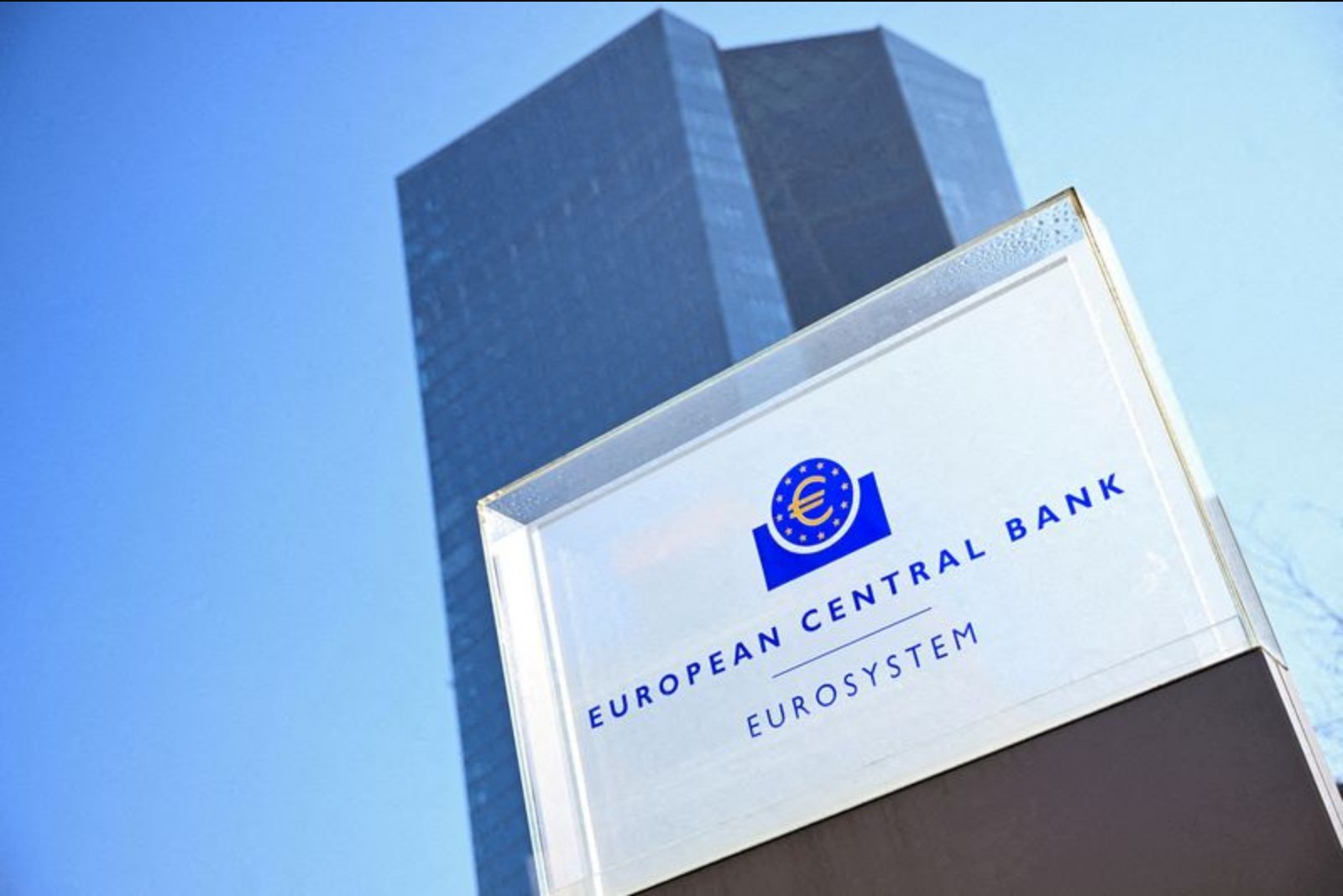
The European Central Bank is due to convene next Thursday, and developments tied to the Iran war ceasefire have reduced immediate pressure on policymakers to raise interest rates. Traders had been leaning toward a hike only weeks ago when oil climbed close to $120 a barrel, but a subsequent ceasefire has pushed prices down, easing the most acute inflation concerns. Still, oil trading around $100 a barrel remains above pre-war levels and uncertainty about when energy flows through the Strait of Hormuz might resume keeps markets expecting hikes later in the year.
What the ECB is likely to do
The most probable outcome at the April meeting is a decision to keep the policy rate at 2%. That represents a notable shift from market expectations just a few weeks earlier, when a spike in oil had many participants pricing in an imminent increase. Policymakers have publicly played down the chance of an immediate move, although they are expected to signal that future rate options remain open.
Deutsche Bank’s chief European economist, Mark Wall, captured the conditional nature of the choice, saying: "The ECB can afford to sit tight at the April meeting, collect more evidence, and decide whether it would be appropriate to lean against this shock come the June meeting."
Has the ceasefire altered the outlook for the ECB?
In the near term, yes. The retreat in oil prices has brought the trajectory of the economy closer to the ECB’s March baseline, which projects inflation peaking at roughly 3% this quarter. Combined with lower natural gas prices relative to that scenario, authorities have not reached the adverse case they feared, in which inflation would top 4% in the second half of 2026, ECB President Christine Lagarde has said.
Markets have trimmed their wagers on rate rises this year. Nonetheless, risks remain: "There are a lot of concerns about how long it will take to ramp up (oil) production and get the flow going again," said Anatoli Annenkov, senior European economist at Societe Generale.
What effect is the conflict having on the wider economy?
So far, the inflation increase has been driven principally by higher energy costs, while business activity has shown signs of weakening. Germany has already adjusted its outlook, cutting growth forecasts for 2026 and 2027 while raising inflation estimates in response to the war. It remains too early to see inflation broadening across the economy in a way that would alarm the ECB.
Headline inflation rose to 2.6% in March. At the same time, measures that exclude food and energy, along with services inflation, have eased. April data are due on Thursday and will provide further signals for policymakers.
On the activity side, euro zone business surveys indicated contraction in April, with services particularly affected. Manufacturing faces sharply higher production costs, and prices at the factory gate have advanced at their quickest pace in 37 months.
Why is this shock different from 2022?
The inflationary consequences of the current energy shock look more limited in both scale and scope than the spike seen in 2022. Citi economists note that the early-warning indicators that flashed prior to the 2022 surge are not signaling the same intensity now. The economy and labour markets are weaker than they were heading into 2022, when demand was buoyed by post-pandemic rebounds.
Crucially, inflation was close to the ECB’s 2% target before the Iran war broke out; by contrast, inflation was already well above target when Russia invaded Ukraine in 2022. Fiscal space is tighter now, limiting governments' ability to offer wide-ranging support to households and businesses. Monetary policy and financing conditions are not as loose as they were in the immediate post-pandemic period, and Europe is not urgently trying to replace supplies from a dominant supplier the way it did after the Russia shock.
The current shock is global rather than Europe-centered, and the euro has held up rather than plunging as it did in 2022, reducing amplification of the crisis.
Are rate hikes later in 2026 probable?
Yes. Market pricing implies the likelihood of at least two hikes later in the year, most likely beginning in June. That outlook remains finely balanced given the uncertainty over when flows through the Strait of Hormuz will normalise.
Investment houses are weighing different scenarios. Insight Investment characterises the outlook as a coin toss between two hikes versus no moves, contingent on oil remaining below $100. Analysts argue that a pair of increases would not materially strain the broader economy but would signal to wage-setters and help anchor inflation expectations.
David Zahn, head of European fixed income at Franklin Templeton, said: "They do need to put up rates a little bit just to make sure that secondary effects don’t kick in." Such a move would be aimed at preventing spillovers from energy price shocks into wages and broader inflation pressures.
The April meeting is therefore likely to be a tactical pause rather than a definitive end to policy tightening. Policymakers will collect fresh data in the weeks ahead and monitor oil and gas developments closely before deciding whether to lean against remaining inflation risks at subsequent meetings.