
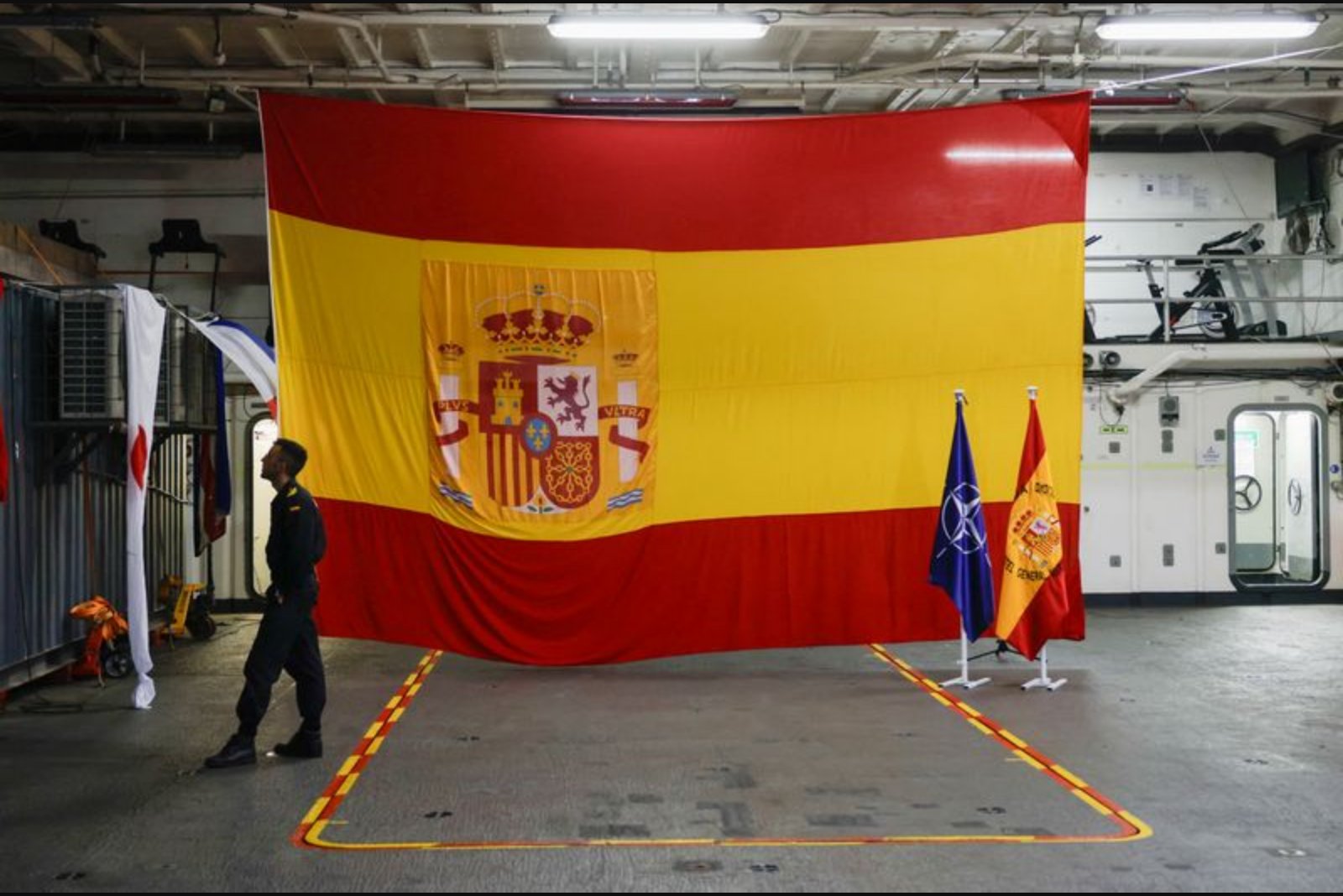
WASHINGTON, April 24 - An internal Pentagon memorandum details a range of possible responses the United States could deploy against NATO members it considers uncooperative during the U.S.-Israeli war with Iran, including a proposal to suspend Spain from the alliance, according to a U.S. official who described the email on condition of anonymity.
The note focuses on allies' denial or reluctance to grant basing, overflight and access rights - collectively referred to in the memo as ABO - for operations connected to the Iran conflict. The email states that ABO is "just the absolute baseline for NATO," and the official said the options in the memo are being discussed at high levels in the Pentagon.
Options outlined
Among the options the email proposes is removing "difficult" countries from important or prestigious roles within NATO structures. While the note suggests suspending Spain from the alliance as a symbolic step, the memo also contemplates other signalling measures meant to penalize perceived non-cooperation.
The official who described the contents said the option to suspend Spain would impose limited constraints on U.S. military operations but would carry substantial symbolic weight. The official did not detail the procedural route by which such a suspension would be pursued, and it is unclear from the note whether there exists a formal NATO mechanism for excluding a member in this manner.
The email does not recommend that the United States withdraw from NATO or that it close bases in Europe, the official added. The official also declined to say whether the options included a widely expected U.S. drawdown of some forces from Europe.
Context and U.S. leadership comments
President Donald Trump has publicly criticized NATO partners for not deploying naval forces to help reopen the Strait of Hormuz after the start of the air war on February 28. He has also signalled he is considering withdrawing the United States from the alliance. "Wouldn't you if you were me?" the President asked in an April 1 interview when asked about the possibility of a U.S. withdrawal.
Responding to queries about the internal memorandum, Pentagon Press Secretary Kingsley Wilson said: "As President Trump has said, despite everything that the United States has done for our NATO allies, they were not there for us. The War Department will ensure that the President has credible options to ensure that our allies are no longer a paper tiger and instead do their part. We have no further comment on any internal deliberations to that effect."
Allied responses and NATO cohesion
The war with Iran has intensified doubts among analysts and diplomats about the future cohesion of the 76-year-old alliance and has fueled concerns that the United States might be less willing to come to the defense of European partners in a future crisis if allies do not provide expected access and support now.
Several European governments, including Britain and France, have said they view joining a U.S.-led naval blockade as tantamount to entering the war, but those governments indicate they would participate in efforts to keep the Strait of Hormuz open once there is a lasting ceasefire or the conflict has ended.
Officials in the Trump administration have emphasized that NATO should not function as a one-way security arrangement. The memo specifically cites frustration with Spain, where the Socialist government publicly refused requests to allow U.S. bases or Spanish airspace to be used for strikes against Iran. The United States currently operates two significant bases in Spain: Naval Station Rota and Morón Air Base.
According to the internal note, the proposed policy measures are intended to deliver a clear signal to NATO allies with the overarching goal of "decreasing the sense of entitlement on the part of the Europeans," the official summarized.
Diplomatic leverage and territorial disputes
In addition to actions inside NATO, the memo suggests the United States might reassess its diplomatic posture toward several longstanding European territorial claims. The memo explicitly references reconsidering U.S. diplomatic support for European "imperial possessions," naming the Falkland Islands as an example.
The U.S. State Department’s website records that the Falkland Islands are administered by the United Kingdom but remain claimed by Argentina. The memo notes that Argentina’s Libertarian President Javier Milei is a political ally of President Trump. The note also references the 1982 conflict between Britain and Argentina over the islands, in which some 650 Argentine soldiers and 255 British troops died before Argentina surrendered.
Any reconsideration of U.S. diplomatic backing for such territories would be designed as part of a broader signaling strategy, according to the official describing the memo. How the United States might operationalize such a diplomatic reassessment was not detailed in the email, and there is no indication in the note of specific procedural steps to alter longstanding positions.
Allied military cooperation and operational choices
Relations with Britain are addressed in the memo and in related comments from senior U.S. officials. President Trump has publicly criticized British Prime Minister Keir Starmer for refusing to commit British naval assets to U.S. operations in the Iran war, calling him cowardly and saying he was "No Winston Churchill," and describing Britain’s aircraft carriers as "toys."
British authorities initially declined a U.S. request for permission to use two British bases to launch air attacks against Iran, but later allowed British aircraft to conduct defensive missions aimed at protecting civilians, including British nationals, amid Iranian retaliation.
Defense Secretary Pete Hegseth, addressing reporters at the Pentagon earlier this month, said the conflict had exposed vulnerabilities and questions about alliance reliability. He noted that Iran’s longer-range missiles cannot reach the United States but can strike targets in Europe. "We get questions, or roadblocks, or hesitations ... You don't have much of an alliance if you have countries that are not willing to stand with you when you need them," Hegseth said.
Implications and unanswered questions
The email appears to be designed more as a policy options paper than as a set of final decisions. It emphasizes symbolic and diplomatic levers that could be used to penalize allies perceived as unwilling to support U.S. operations in the Iran conflict, while stopping short in the text of advocating an American exit from NATO or the closure of European bases.
Key procedural details remain unspecified in the memo: how the United States would implement a suspension of a NATO member, what formal NATO mechanism would permit that action, and how reassessment of diplomatic support for contested territories would be carried out. Officials in the memo declined to provide further information on whether force posture changes in Europe were under consideration.
As the memo circulates within the U.S. defense establishment, it highlights the strain the Iran conflict has placed on allied coordination and underscores debates inside Washington over how to compel allied participation without crossing into formal ruptures in transatlantic security arrangements.