
Overview
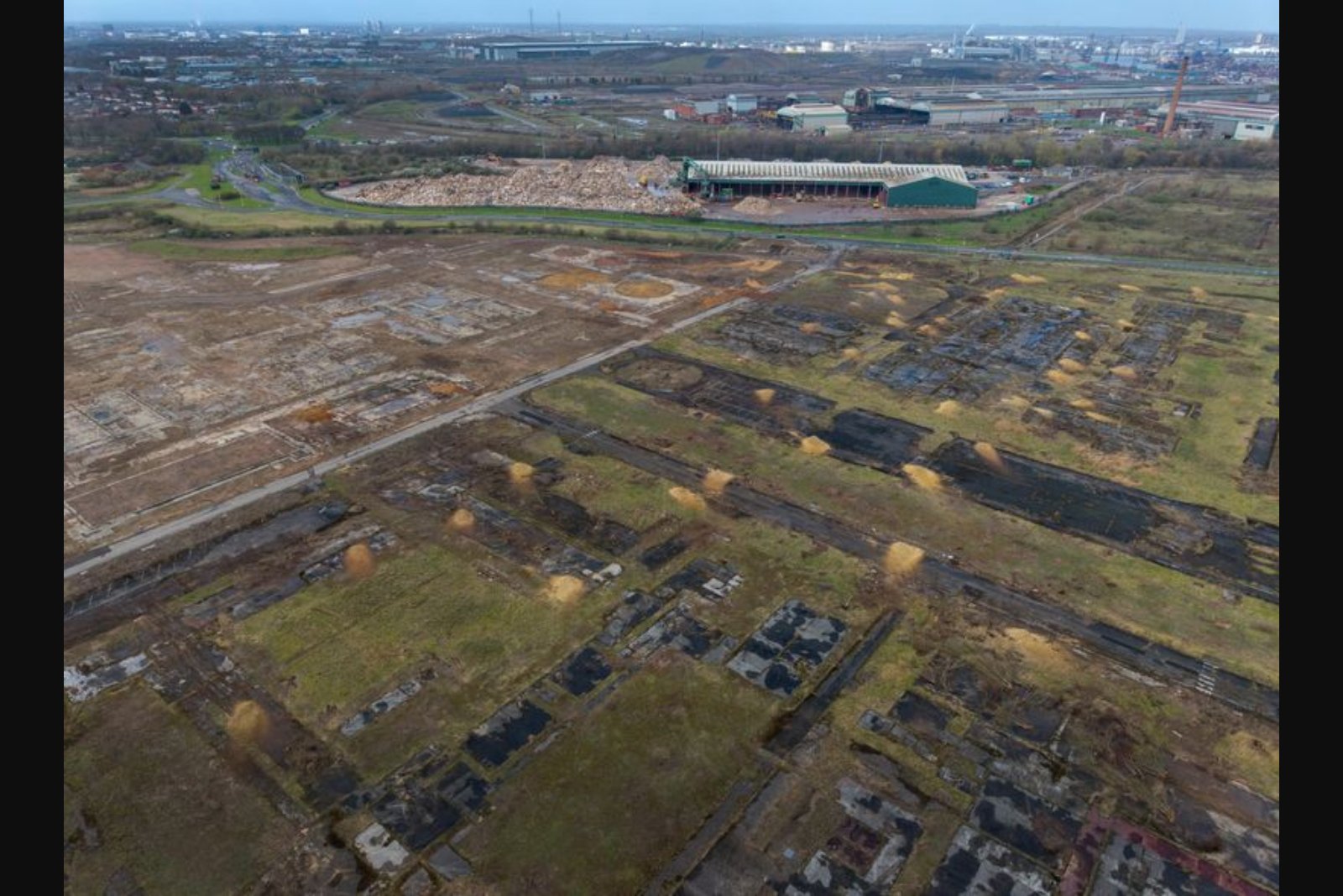
In northeastern England, parcels of land that once hosted chemical plants are being repositioned to accommodate modern AI data center campuses. These sites, attractive because they already sit next to power plants, water supplies and high-voltage grid connections, are being rebranded as suitable locations for the next wave of digital infrastructure. Developers, utilities and investors are competing to convert such leftover industrial acreage into facilities able to supply the immense computing capacity AI requires.
That trend is not isolated. Across Britain, plans have been filed for data centers on an array of previously unrelated properties - from a disused car plant and an old paint factory to a former Travelodge and a retail center near a major airport. Construction analytics firm Barbour ABI recorded 119 such submissions, reflecting broad interest from a diverse set of landowners and promoters.
Why powered land matters
For AI workloads the primary input is processing power. Unlike certain financial services firms that demand proximity to markets for speed, AI data centers can be located farther from urban cores as long as they can secure sufficient electricity and cooling. That distinction is creating demand for industrial land outside expensive metropolitan centers and has drawn interest from rural landowners who view data centers as a potentially more lucrative option than traditional uses such as farming.
Sites that already feature electricity generation or an existing high-voltage grid connection are being described as "powered land." Owners of such plots argue they can offer faster delivery times and lower development risk because they either have on-site generation capacity or a confirmed grid entry point - or both. In several cases these characteristics have become decisive selling points for data center developers seeking to attract major cloud providers known as hyperscalers.
One example is a former petrochemical complex in Teesside where the majority owner, Sembcorp UK, is collaborating with a data center developer to promote the location as capable of hosting a large-scale tenant. Executives at the site say its combination of a large grid connection and on-site power assets positions it to serve a major off-taker and could bring jobs and investment to an economically deprived region.
Speculation, elevated prices and a strained network
The rapid rise in interest for data center capacity has catalyzed a speculative market for land that can be touted as suitable for such projects. Real estate advisers report a surge of promoters and speculators renovating their land's credentials to capture higher returns. The premium for industrial land suitable for data centers has widened notably - figures cited by property advisers show sizeable jumps in per-acre prices when compared with generic London industrial land.
That premium has been reinforced by an explosion in applications to join Britain's high-voltage network. Developers and landowners without on-site generation have sought grid connections in order to convert ordinary industrial sites into viable data center locations. The mounting volume of connection requests and the need to upgrade transmission circuits have lengthened wait times dramatically - some projects now face delays of 12 to 15 years for grid access.
In the first half of 2025, demand to connect jumped sharply, with government figures indicating a 460% increase in requests over that six-month period. Those requests encompassed 96 gigawatts of capacity to join the high-voltage network and an additional 29 GW seeking entry to local networks. For perspective, Britain's total generation capacity is estimated at about 72 GW, while last year's peak demand was reported at just under 46 GW.
Officials tracking the queue found some 140 data centers in the main line for connection, representing roughly 50 GW of capacity. Observers warn that speculative activity - projects without confirmed tenants, planning permission or even power - is inflating demand well beyond what the network can sustain, creating both delays for feasible projects and potential friction with the pace of the energy transition.
"Zombie projects" and attempts to clean up the queue
Not all requests in the queue are for genuinely ready developments. Some landowners have submitted applications despite lacking power infrastructure, planning consent or committed users, prompting authorities to label such submissions as "zombie projects." These speculative entries are identified as clogging the system and increasing lead times for others.
Network operators have responded by revising their application process to discourage speculative up-front claims and to prioritise sectors deemed strategically important, including data centers. A prior intervention aimed at clearing the queue for clean energy projects cut requests by about half, demonstrating that administrative changes can materially affect the volume of applications progressing through the system.
Getting creative to secure power
Where power is absent, some developers have pursued unconventional routes to achieve a workable connection. In one case, the developer of a site north of London acquired a relationship with an entity that held a connection allocated for battery storage and then converted it into a demand connection suitable for a data center. For developers, obtaining a site with outline planning and a confirmed grid connection is viewed as a way to materially reduce project risk.
Major global operators are making sizable capital commitments where they can secure appropriate land and power. One U.S.-based data center company plans to invest 3.9 billion pounds into development in Britain - its largest investment outside its home market - with a target to begin construction in early 2027 and reach operations by 2031. For other developers, even a promised connection date is not risk-free; offers can be revised or deferred. One developer recounted that a portion of the contracted power for a London project was pushed back by more than a decade, forcing a reassessment of commercial feasibility.
Comparative progress and cost constraints
Data compiled by an industry tracker shows that projects in Britain are progressing to construction or completion at a lower rate than in some European peers. Of 61 projects tracked in Britain since late 2022, only 7% are under construction or finished. By comparison, the tracker reports 46% in Germany and 40% in France moving forward, while 24% of U.S. projects are underway or completed. Those disparities create concerns for policymakers and companies that view large AI-capable data centers as instruments to modernise the economy.
Another commercial constraint is Britain’s industrial electricity pricing, which ranks among the highest globally. These costs have tangible consequences: a developer paused plans to build a large data center in northeastern England due to worries about energy costs and regulation. High operating expenses can make some locations commercially unattractive despite having the required land and grid access.
The Wilton example and future ambitions
The Teesside site described earlier typifies both the promise and the scale of investment required to convert conventional industrial land into AI-ready campuses. That site currently holds a 240 MW grid connection and operates a mix of on-site generation, including gas, biomass and waste-to-energy plants. Operators there envision integrating nearby solar and wind generation over time with the goal of expanding available capacity to as much as 1 GW.
Estimates cited by one developer suggest reaching that scale would require very large capital commitments - on the order of several billion pounds over an extended timeframe. Conversations with potential data center operators at the site have reportedly been positive, although parties acknowledge questions remain about whether current enthusiasm represents a sustainable structural shift or a speculative cycle comparable to past technology-driven booms.
"Obviously there’s a lot of talk, is it a dot com? Is it a bubble?" one developer said. "But what we’re seeing is the adoption of AI - and it’s happening."
Implications for markets and regions
The shift toward repurposing powered or power-ready industrial land into data center campuses has several market effects. Land prices for sites with power characteristics are rising, which changes the economics of industrial real estate and can redirect investment into regions previously overlooked for high-tech development. For economically challenged areas with ready infrastructure, successful data center siting could bring employment and additional industrial activity.
At the same time, the backlog for grid connections constrains project timelines and is prompting the energy sector to consider prioritisation policies and system upgrades. The combined pressure of high electricity costs and limited network capacity is shaping which projects proceed and how quickly.
What remains uncertain
Industry participants broadly view demand for AI infrastructure as substantial, but multiple constraints - network capacity, high power prices and planning hurdles - complicate the pace of deployment. The pattern of speculative applications intensifies the uncertainty, with a mixture of viable projects and less credible proposals making it harder for policymakers and grid operators to plan effectively.
Where projects do move forward, developers and operators will need to reconcile short-term commercial objectives with long-term system integration - adding renewable capacity and grid upgrades alongside large-scale computing loads. How that balance is struck will determine whether powered land transforms regional economies or remains an arena of uneven outcomes dominated by speculative activity.
Data and figures cited in this report
- 119 data center planning submissions tracked by construction analytics.
- Grid connection demand rose 460% in the first six months of 2025, according to government figures.
- Requests to join the high-voltage network totalled 96 GW, with an additional 29 GW seeking local network connections.
- Britain's estimated total generation capacity is about 72 GW; last year’s peak demand was just under 46 GW.
- The main connection queue included about 140 data centers representing roughly 50 GW of capacity.
- Reported land price ranges: 4.5 to 6 million pounds per acre for general London industrial land; 8 to 15 million pounds per acre for land suitable for data centers, according to property advisers cited.
- A tracked sample of 61 projects in Britain since late 2022 showed 7% under construction or completed, versus higher completion rates in Germany, France and the United States.
- A cited investment plan by a U.S. operator totals 3.9 billion pounds for a UK development, with a planned ground-breaking in early 2027 and operation by 2031.
- A specific site has an existing 240 MW grid connection, with ambitions to reach 1 GW through integration of additional generation.
- Estimated investment to reach broader power ambitions at one site was cited as about 15 billion pounds over eight to 10 years.