
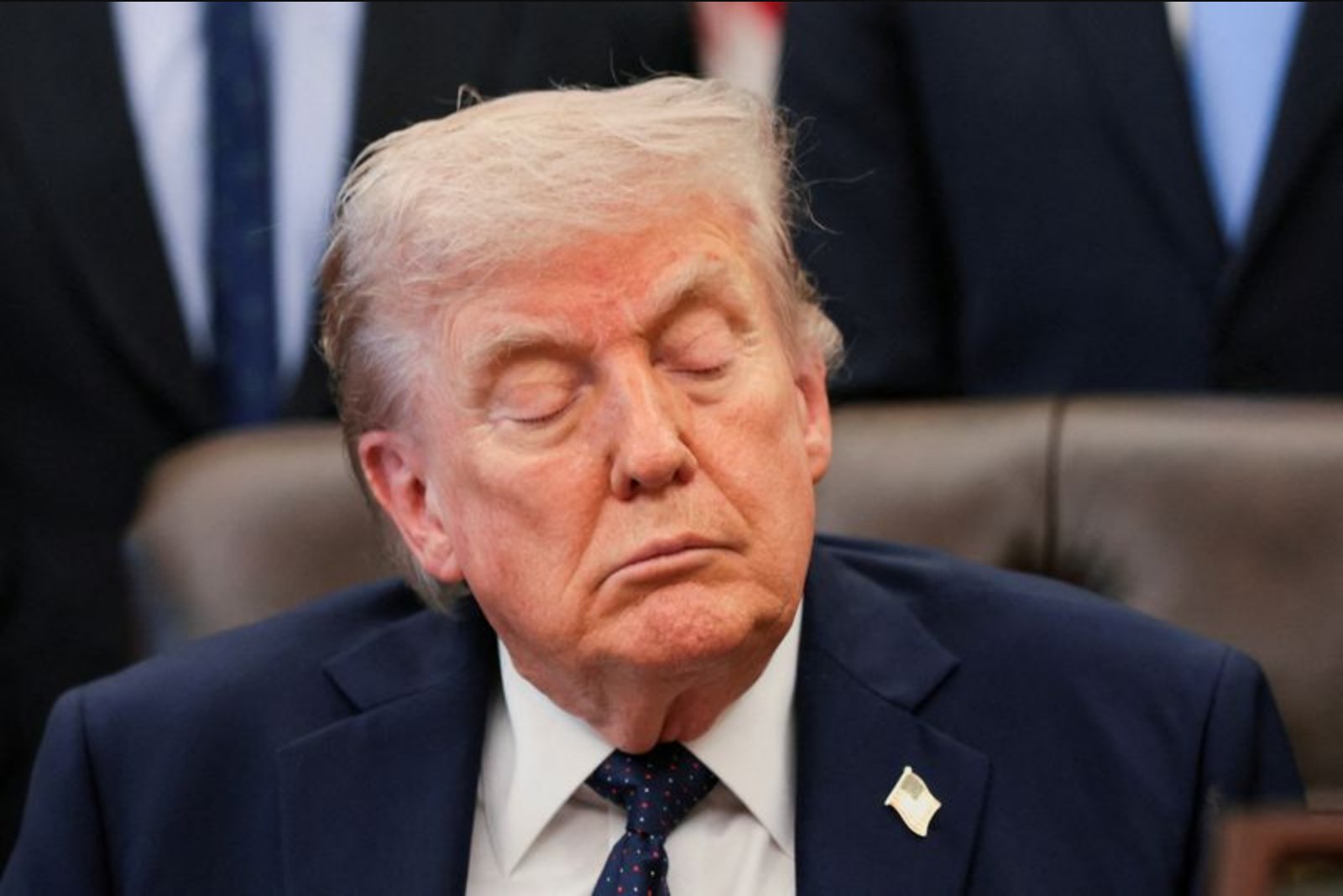
India strongly rejected comments that were shared by U.S. President Donald Trump on social media which used the term "hellhole" to describe some countries, including India. The remarks, made originally by conservative radio host Michael Savage, were posted in transcript form by the president on his Truth Social account without additional commentary.
The transcript of the radio episode quoted Savage as saying: "A baby here becomes an instant citizen, and then they bring the entire family in from China or India or some other hellhole on the planet." The posting also included Savage's follow-up line: "That there’s almost no loyalty to this country amongst the immigrant class coming in today, which was not always the case. No, they’re not like the European Americans of today and their ancestors." Attempts to contact the commentator were not immediately successful.
New Delhi's foreign ministry issued a sharp public response late on Thursday. In a statement, spokesperson Randhir Jaiswal described the reposted comments as "obviously uninformed, inappropriate and in poor taste." He added that the remarks "certainly do not reflect the reality of the India-US relationship, which has long been based on mutual respect and shared interests."
The U.S. embassy in New Delhi reiterated a conciliatory note, saying: "The president has said 'India is a great country with a very good friend of mine at the top'." China’s foreign ministry did not immediately respond to a request for comment.
The episode comes amid an active legal and political dispute in the United States over birthright citizenship. President Trump has issued a directive aimed at restricting birthright citizenship - a measure that has been challenged in the U.S. Supreme Court. Earlier this month, Trump attended a hearing on that challenge at the court.
India's principal opposition, the Congress party, characterized the "hellhole" wording as "extremely insulting and anti-India. It hurts every Indian" and urged Prime Minister Narendra Modi to raise the issue directly with the U.S. president and register a strong objection. The party posted its comments on X.
Demographic ties between the two countries add context to the diplomatic sensitivity. Indian government data cited by officials indicate that nearly 5.5 million people of Indian origin reside in the United States. Indian Americans and Chinese Americans are noted as the two largest Asian-origin groups in the U.S.
Relations between Washington and New Delhi have experienced fluctuations. President Trump and Prime Minister Modi maintained warm relations during Trump's first term, but bilateral ties cooled after India faced some of the highest U.S. tariffs last year. Many of those tariffs were rolled back this year. Officials in both capitals are engaged in negotiations on a trade agreement intended to prevent a renewed increase in tariffs and to expand sales between the two economies.
The share-posting of the radio transcript by a sitting U.S. president has provoked criticism in India across political lines and highlights how immigration policy debates and bilateral trade issues can intersect with diplomatic relations. The dispute over birthright citizenship continues to proceed through the U.S. legal system while trade discussions between India and the United States remain ongoing.