
Overview
Palestinians went to the polls on Saturday in local elections that for the first time in two decades included a Gazan locality, a symbolic development the West Bank-based Palestinian Authority (PA) presents as reinforcing its claim to governance over the territory. The ballot included the Gazan city of Deir al-Balah, where residents faced a combination of war damage, basic needs shortages and constrained public services as they voted.
What is at stake locally
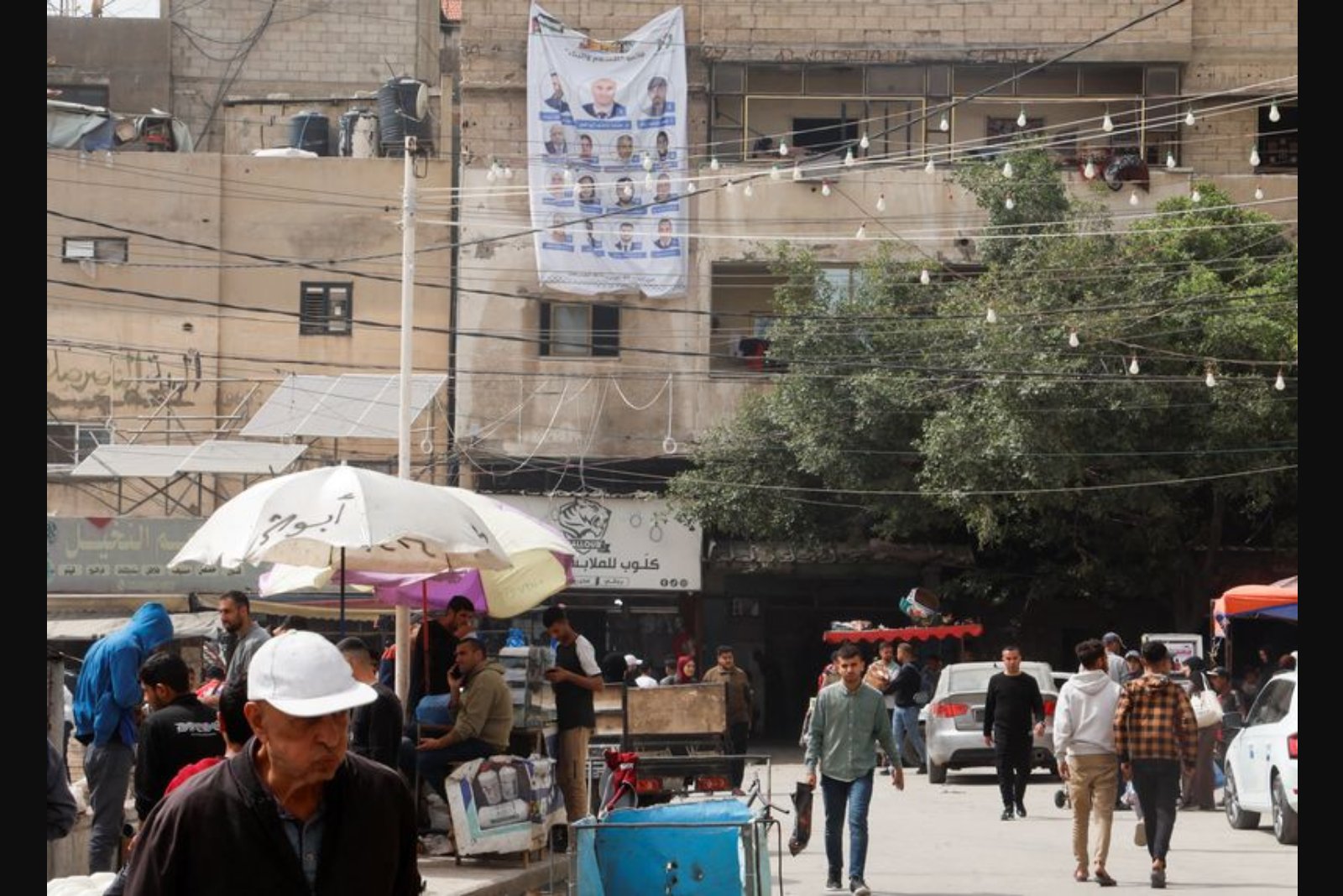
In Deir al-Balah, banners displaying candidate lists were visible on buildings and some polling was organised in tents. Voting there was scheduled to finish two hours earlier than planned because of electricity limitations. The Palestinian election committee explained that widespread destruction across much of Gaza prevented voting from being held more broadly in the territory.
Residents expressed eagerness to take part. One voter, Adham Al-Bardini, who was seated beside family cooking pots outside a tent home in the city, said: "I’ve been hearing about elections since I was born. We are eager to take part ... so we can change the reality imposed on us."
Political context and claims of authority
The PA is advancing the inclusion of Deir al-Balah as a symbolic step to reaffirm its claim to authority over Gaza, from which it was driven out by Hamas in 2007. Western diplomats have suggested that local polls could open a path to national elections - the first in nearly two decades - while supporting reforms aimed at increased transparency and accountability that the PA says are underway.
At the same time, the regional landscape remains complex. Since a United States-brokered ceasefire in Gaza took effect in October, intermittent U.S.-led talks have made little progress toward a settlement that envisages international supervision of Gaza. European and Arab governments broadly back an eventual return of PA governance in Gaza and the formation of an independent Palestinian state composed of Gaza, East Jerusalem and the West Bank, where the PA currently exercises limited self-rule under Israeli occupation.
Security, control and political fault lines
More than half of Gaza is described as controlled by Israel, with the remainder under Hamas rule. Hamas, which has governed Gaza for nearly two decades, did not formally nominate candidates for these local elections. One list in Deir al-Balah, however, is widely seen by residents and analysts as aligned with Hamas, and observers indicated that how candidates associated with the group perform could be a gauge of its popularity. Hamas said it would respect the results, and Palestinian sources indicated civil policemen linked to the group would be deployed to help safeguard polling stations in Gaza.
Some Palestinian factions are boycotting the elections in protest at the PA’s requirement that candidates endorse its agreements, which include recognition of the state of Israel. Most of the candidates who are participating are running under Fatah, the principal movement behind the PA, or as independents.
Economic pressures and governance challenges
The PA has faced difficulty in meeting payroll obligations as Israel withholds tax revenues it collects on the PA’s behalf, a policy that has raised fears of economic collapse. Israel defends the withholding of funds as a response to the PA’s welfare payments to prisoners and to families of those killed by Israeli forces, which Israel argues act as incentives for attacks.
Concurrently, the Israeli government has taken measures to facilitate settlers in acquiring West Bank land. Ultrantionalist Finance Minister Bezalel Smotrich has been quoted saying, "We will continue to kill the idea of a Palestinian state."
Scope and logistics of the vote
The Palestinian Central Elections Committee reported that more than one million Palestinians were eligible to vote in the local polls, including around 70,000 in Gaza. The committee anticipated that results would be known late on Saturday or on Sunday. The electoral process marks the first Palestinian elections held since the Gaza war began more than two years ago with a cross-border Hamas assault on southern Israeli communities; municipal elections in the West Bank were last conducted four years ago.
Concluding notes
These local elections represent a controlled resumption of electoral politics including a portion of Gaza, but they are taking place under conditions that reflect ongoing humanitarian, political and infrastructural constraints. Voter participation, the performance of candidates aligned with different factions, the PA’s ability to manage governance despite financial strain, and the logistical limits to wider voting in Gaza will be key observations as results are tallied.