
World April 19, 2026 12:59 PM

Exit Polls Put Rumen Radev’s Party Well Ahead in Bulgaria Vote, But Majority Is Not Assured

Early returns show a commanding lead for the pro-Russian former president’s list, yet coalition-building remains essential after years of political turbulence

By Ajmal Hussain
Exit Polls Put Rumen Radev’s Party Well Ahead in Bulgaria Vote, But Majority Is Not Assured

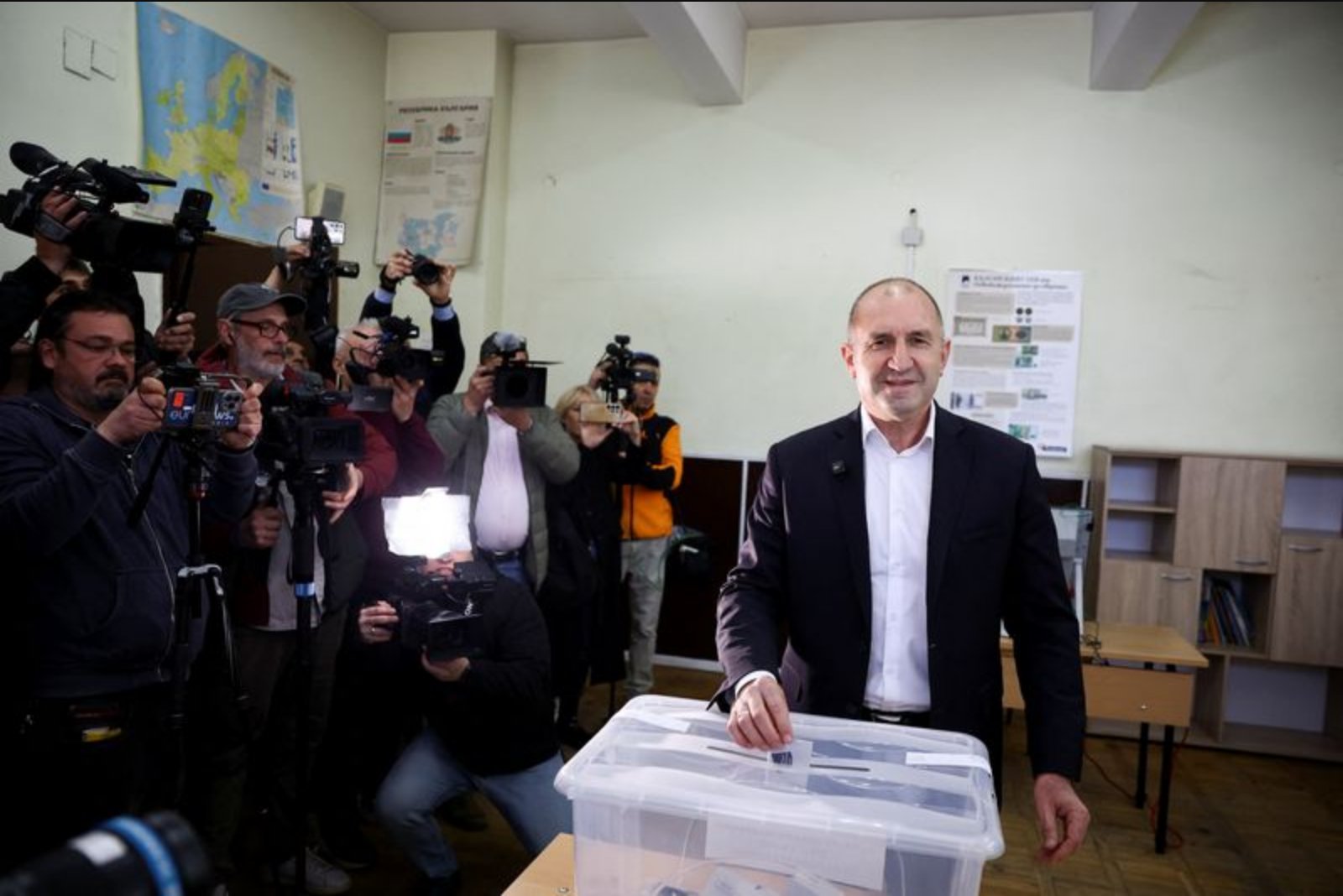
Exit polling by Sofia-based Alpha Research indicates that the party aligned with former President Rumen Radev led the parliamentary ballot with 37.5%, far ahead of the GERB party on 16.2%. Radev resigned the presidency in January to contest the vote, campaigning on promises to tackle corruption and end a pattern of short-lived governments. Despite the lead, his bloc will need partners to secure a working majority in a country weary of repeated elections.

Key Points

  • Exit polling by Sofia-based Alpha Research gave Radev’s Progressive Bulgaria 37.5% versus GERB on 16.2%; a lead that still falls short of an outright parliamentary majority - sectors affected: political stability, financial markets.
  • Rumen Radev resigned the presidency in January to run for parliament; he is described as a eurosceptic and opposes military support for Ukraine - sectors affected: defense policy, international relations.
  • The election followed mass protests that toppled the previous government in December and is the eighth national vote in five years in a country of about 6.5 million people, underscoring voter fatigue and governance challenges - sectors affected: public administration, investment climate.

Exit polls released on election night by Sofia-based Alpha Research suggest the list associated with former President Rumen Radev captured a dominant share of the vote in Bulgaria’s parliamentary contest, securing 37.5% compared with 16.2% for the GERB party led by former Prime Minister Boyko Borissov.

The results, if borne out by official counts, would position Radev’s Progressive Bulgaria comfortably ahead of its nearest rival but short of an outright majority. Political analysts and campaign messaging alike have emphasized that any administration formed from these results will require coalition partners to command a working parliamentary majority.

Rumen Radev resigned the presidency in January to enter the campaign for parliament. He is described in exit poll reporting as a eurosceptic and a former fighter pilot who has expressed opposition to military assistance for Ukraine in its conflict with Russia. Radev’s campaign focused on stamping out corruption and ending what it described as a spiral of weak, short-lived governments.

The vote follows mass protests that forced the previous government from power in December. For Bulgaria, this election represents the eighth national ballot in five years in a nation with a population of about 6.5 million people. Repeated snap polls and a compact group of long-standing politicians perceived by many voters as corrupt have contributed to public fatigue with frequent elections.

While the exit poll figures point to a clear lead for Radev’s party, the necessity of assembling partners to form a majority introduces political uncertainty. Coalition negotiations will determine whether campaign promises can be translated into a stable governing program. The immediate post-election period is expected to include bargaining among parties over policy priorities and ministerial posts.

Alpha Research’s exit poll provides an early snapshot rather than final results. Official tallies and the process of government formation will ultimately determine how the country addresses the issues highlighted during the campaign, including corruption and governance stability.

Risks

  • No single party achieved an assured majority in the exit poll snapshot, meaning coalition negotiations could prolong political uncertainty - this may affect markets sensitive to governance risk.
  • Persistent voter fatigue after a series of snap elections could undermine long-term political stability and complicate policy continuity - impacting fiscal planning and investor confidence.
  • Differences in foreign policy stance, including opposition by the leading candidate to military assistance for Ukraine, introduce uncertainty in defense and international cooperation agendas.

More from World

Zelenskiy Urges Europe to Develop Its Own Ballistic Missile Defence System Apr 19, 2026 Carney Warns Close U.S. Ties Now a Vulnerability for Canada Apr 19, 2026 Israeli Military Publishes First Map of Deployment Line Inside Southern Lebanon Apr 19, 2026 UK Authorities Probe Possible Iranian Links After Series of Arson Attacks on Jewish Sites Apr 19, 2026 Iranians Brace for Continued Hardship and Political Pressure After Weeks of Bombing Apr 19, 2026