
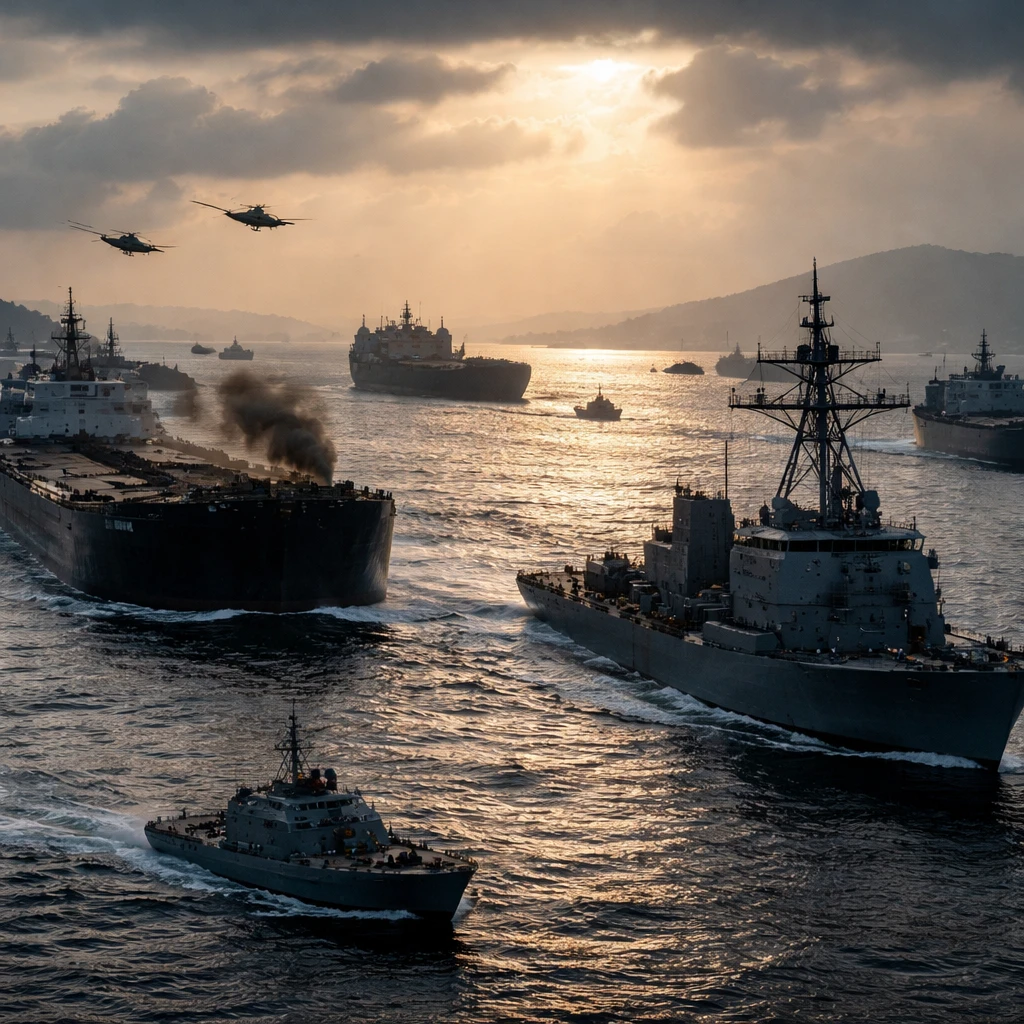
President Donald Trump accused Iran of violating a ceasefire after what he described as gunfire incidents in the Strait of Hormuz that involved attacks on vessels, including a French ship and a U.K.-linked freighter. In a post on Truth Social, the president called the action "a total violation" of the agreement and reiterated that Washington had offered what he called a "very fair and reasonable deal."
Trump warned that if Iran does not accept the offer, the United States could target key Iranian infrastructure. He also said a U.S. delegation would travel to Islamabad to pursue negotiations, with Vice President JD Vance expected to lead that delegation, according to Axios reporter Barak Ravid citing a senior U.S. official.
The president's comments followed statements from Iran's deputy foreign minister, Saeed Khatibzadeh, who told reporters there is no set date for the next round of talks between Tehran and Washington. Khatibzadeh said the two sides must first agree on a framework of understanding before resuming formal negotiations.
Speaking on the sidelines of a diplomacy forum in Antalya, Turkey, Khatibzadeh said the parties were "now focusing on finalising \u2060the framework of understanding between the two sides. We don’t want to enter into any \u2060negotiation or meeting which is doomed to fail and which can be a pretext \u2060for another round of escalation." He added: "Until we agree the framework, we cannot set the date... There \u2060was significant progress made, actually. But then the maximalist approach by the other side, \u2060trying to make Iran an exception from international law, prevented us to reach an agreement," referring to U.S. demands that Iran abandon its nuclear programme.
Khatibzadeh concluded by stressing Tehran's stance on legal commitments: "I have to be very crystal clear that Iran would not accept to be an exception from the international law. Anything that we are going to be committed will be within the international regulations and international law."
Over the weekend the ceasefire was tested amid fresh developments. Reports in the Wall Street Journal, citing U.S. officials, indicated the U.S. military is prepared to board and seize Iran-linked oil tankers in international waters. That reporting followed accounts that Iran attacked several commercial vessels on Saturday and declared control over the Strait of Hormuz.
Those Iranian declarations came after remarks by Iran’s foreign minister on Friday that the strategic waterway was open. News that the strait was open reportedly triggered a strong rally on Wall Street and a simultaneous sharp sell-off in oil markets.
Within Iran, some factions asserted that the United States had broken the agreement by maintaining a naval blockade with U.S. warships while increasing economic pressure on the regime. Those statements underscore divisions in how the accord's implementation is being interpreted and applied by various actors.
The sequence of events - accusations of ceasefire breaches, public warnings from Washington, formal hesitation from Tehran about resuming talks without an agreed framework, and reports of potential U.S. interdiction of Iran-linked vessels - has left the truce fragile. Officials on both sides appear to be setting clear prerequisites for the next steps: the United States with a public offer and threats of targeting infrastructure if rejected, and Iran with insistence on a binding, internationally grounded framework before entering fresh negotiations.
As both sides move through diplomatic and military posturing, the immediate practical consequences have already been felt in markets and shipping lanes. The situation remains fluid while negotiators and military planners prepare for possible next moves constrained by the public positions outlined by their respective governments.
Summary: The U.S. president accused Iran of firing on vessels in the Strait of Hormuz and warned of strikes on Iranian infrastructure if negotiations fail. A U.S. delegation headed by Vice President JD Vance is expected to travel to Islamabad for talks, while Iran says no date is set until a framework is agreed. Reports also indicate U.S. forces may be ready to seize Iran-linked tankers, and market reactions have been pronounced following statements about the strait's status.
Key Points:
- Alleged attacks on commercial ships in the Strait of Hormuz prompted U.S. accusations that Iran breached a ceasefire - sectors affected include shipping, oil, and defense.
- Washington says it has presented a "very fair and reasonable deal" and cautions it could target Iranian infrastructure if talks fail; diplomatic engagement is planned in Islamabad with Vice President JD Vance expected to lead.
- Tehran says it will not set talks until both sides agree on a framework, emphasizing commitments must align with international law; market volatility followed statements about the strait's openness, impacting equities and oil.
Risks and Uncertainties:
- Negotiations could stall if the United States and Iran fail to agree on a framework, raising the risk of renewed military action - a risk for defense contractors and regional stability.
- Reports that U.S. forces may board Iran-linked oil tankers create a risk of escalation at sea, potentially disrupting maritime trade and energy supplies, with implications for shipping and oil markets.
- Competing interpretations of the ceasefire and continued naval deployments risk further breaches or incidents in the Strait of Hormuz, adding volatility to global energy and financial markets.