
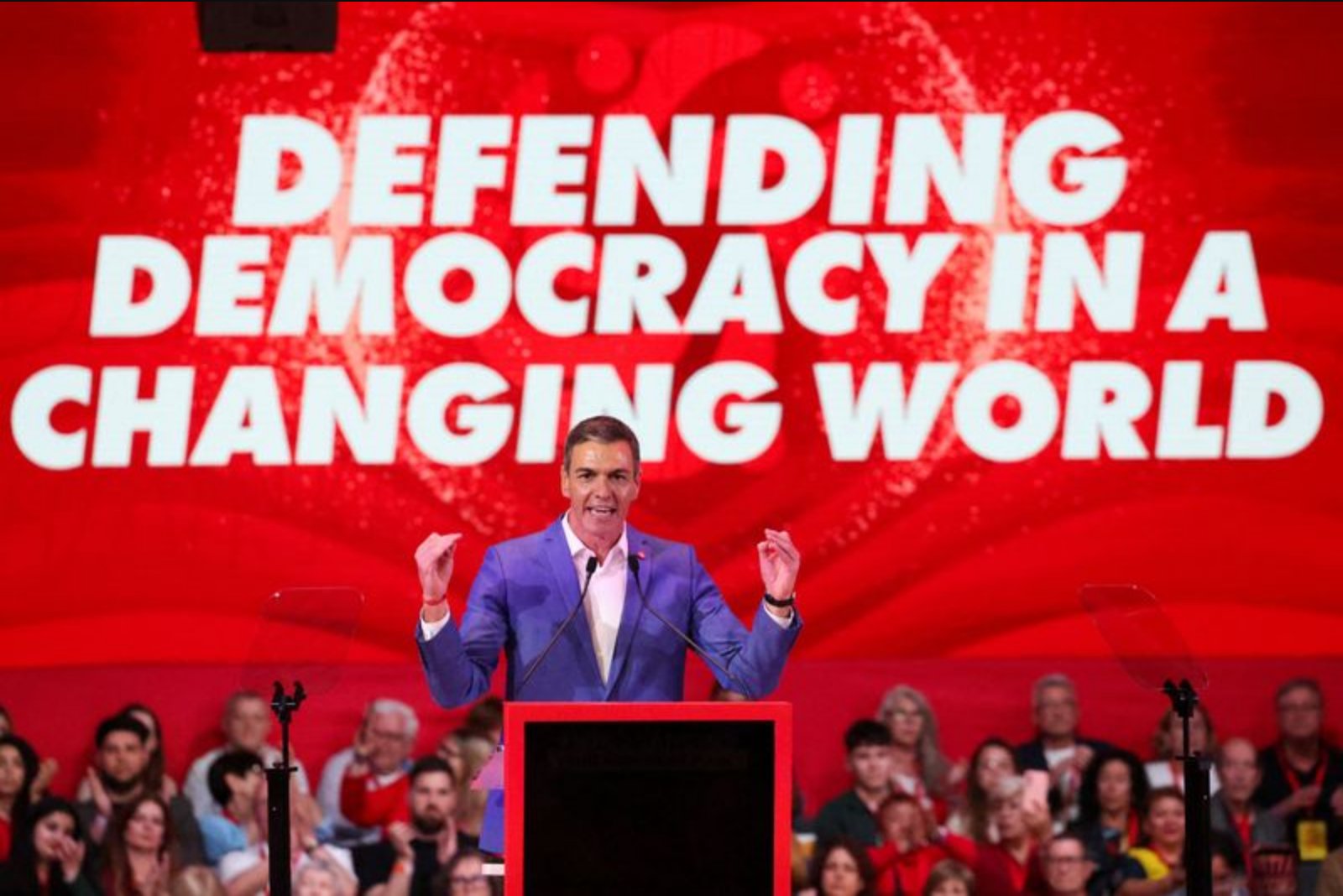
BARCELONA, April 19 - More than 6,000 delegates from over 40 countries met in Barcelona over the weekend to examine how left-leaning parties can halt the expansion of nationalist and far-right forces and reclaim voters who have shifted to the right. Hosted by several left-wing political networks alongside Spain's Socialist Party, the two-day gathering centered on economic grievances, institutional reform and strategies for forming wider transnational alliances.
Organizers and participants framed the summit as an effort to confront what they see as growing authoritarian tendencies worldwide while offering practical approaches to reconnect with electorates whose primary concerns are pocketbook issues. The event drew high-level figures including South African President Cyril Ramaphosa and Brazil's Luiz Inacio Lula da Silva, who used the closing plenary to call for changes to the architecture of international cooperation and to strengthen left-leaning partnerships.
"To be progressive is to defend a reformed multilateralism, where the rules work for everyone," Lula da Silva told a packed auditorium, where supporters waved red flags, wore 'Make Science Great Again' caps and at times chanted Spanish anti-fascist anthems.
Participants said the summit came against a backdrop of electoral and polling developments that offered some encouragement to left-leaning organisers - including a decline in one prominent U.S. figure's polling, the ouster of Hungary's Viktor Orban after 16 years in office and underperformance by the French far-right in municipal races last month. Summit organizers and attendees voiced hopes that these developments might signal a pause or peak in the current far-right advance, though they also stressed that a durable recovery for the left would require addressing immediate voter anxieties.
That focus on everyday economic burdens ran through much of the agenda. Marcus Roberts, chief executive of political strategy consultancy Mandate Research, argued that left-wing parties must prioritize kitchen table issues such as the cost of living to regain traction with voters. He and others pointed to recent polling that suggests citizens are considerably more worried about unemployment, inflation, poverty and inequality than about extremism or perceived moral decline.
An Ipsos survey covering 30 countries, released last month, was cited by participants as evidence that economic insecurity remains the dominant concern for many electorates. Delegates said that rising fuel prices related to conflicts in the Middle East had contributed to shifts in public opinion and to weakening approval ratings for some prominent political figures, creating an opening for progressive economic arguments ahead of electoral contests later in the year.
On economic policy, economist Gabriel Zucman advocated raising wealth taxes on millionaires and billionaires. Delegates noted that higher wealth taxation polls strongly with publics across Europe and the United States, though policymakers in some countries have resisted such measures - delegates specifically referenced rejection of similar proposals by lawmakers in France.
Neera Tanden, director of the Center for American Progress and a former advisor to multiple U.S. administrations, underlined the political stakes of economic hardship with a terse observation: "It's hard for people who can't afford eggs to be concerned about democracy." Echoing that sentiment, Isabel Allende, former president of Chile's Senate and daughter of Salvador Allende, warned that the left must close a gap with ordinary citizens if it hopes to effectively contest the right. "It’s unimaginable to fight against the right if we can’t get closer to ordinary people," she said.
Reforming international institutions was another central theme. Delegates arriving from the Spring meetings of the International Monetary Fund and the World Bank described a similar sense of urgency regarding rebalancing influence in global institutions, while noting that concrete next steps remained unclear. Mariana Mazzucato, a professor of economics who advises governments, observed that existing institutions remain in place even as the underlying dynamics inside them shift. "The institutions are still standing but the logic inside them is shifting," she said, adding that if progressives fail to present a credible alternative framework, another force is likely to occupy that space.
Speakers and policy experts at the summit referenced research indicating a multi-decade rise in authoritarian governments, citing the expansion of conflicts, coups and crackdowns on civic freedoms. They linked these trends to a reorientation by some wealthy democracies away from long-standing foreign aid commitments, a shift participants suggested has occurred in part because domestic electorates have grown reluctant to fund overseas programs while facing cost-of-living pressure at home.
While summit organizers were explicit that the gathering was not designed as a direct mobilization against any single foreign leader, numerous presenters and delegates stressed the need for the left to be proactive rather than wait for changes in U.S. politics. Many speakers echoed a call for middle powers to coordinate more closely, arguing that such coalitions could sustain multilateralism even if leadership in larger powers fluctuates.
Lars Klingbeil, vice-chancellor of Germany and head of the German Social Democrats, pointed to the broad U.S. representation at the summit as evidence of momentum, saying the strong showing of U.S. Democrats signaled growth for the movement. The closing plenary featured American voices visibly and electronically present: former vice-presidential candidate Tim Walz urged attendees not to abandon efforts to support Democrats, and video messages from figures ranging from Bernie Sanders to Zohran Mamdani and Hilary Clinton were shown in support.
U.S. Senator Chris Murphy, who serves on the Senate Foreign Relations Committee, argued that the tactics employed by right-wing actors to undermine democratic norms share common features across countries, and that exchanging experiences can help democratic movements learn how to respond. "The reality is that the tools that the right wing are using to try to destroy our democracy are similar from country to country," he said. "We need to share experiences to understand how we can fight back."
Summary
A multinational left-wing summit in Barcelona convened more than 6,000 participants from over 40 countries to discuss strategies for countering a global upswing in far-right politics. Discussions emphasized addressing cost-of-living pressures, implementing wealth taxes, and reforming international institutions while underlining the need for closer ties between progressive parties and ordinary voters.
Key points
- Economic grievances - Delegates stressed that unemployment, inflation, poverty and inequality are primary voter concerns; addressing them is crucial for the left's resurgence. (Sectors affected: public finance, consumer goods, energy.)
- Institutional reform - Calls were made to change the balance of power in global institutions to make multilateral rules more equitable. (Sectors affected: international finance, development aid, public investment.)
- Tax policy - Advocates at the summit pushed for higher wealth taxes on millionaires and billionaires as a popular policy tool, despite legislative resistance in some countries. (Sectors affected: high-net-worth asset management, public revenue.)
Risks and uncertainties
- Political disconnect - The left's historical distance from everyday voter concerns threatens its ability to mount an effective challenge to right-wing movements, which could prolong political instability. (Market impact: consumer confidence, domestic demand.)
- Unclear institutional roadmaps - While participants called for reform of global institutions, specifics on implementation were not settled, leaving uncertainty over how quickly or effectively change could be realized. (Market impact: international development financing, cross-border cooperation.)
- Authoritarian trends - Data cited at the summit indicate a rise in authoritarian governments, conflicts and crackdowns, which may complicate international coordination and affect geopolitical risk for investors. (Market impact: emerging-market risk premiums, foreign direct investment.)