
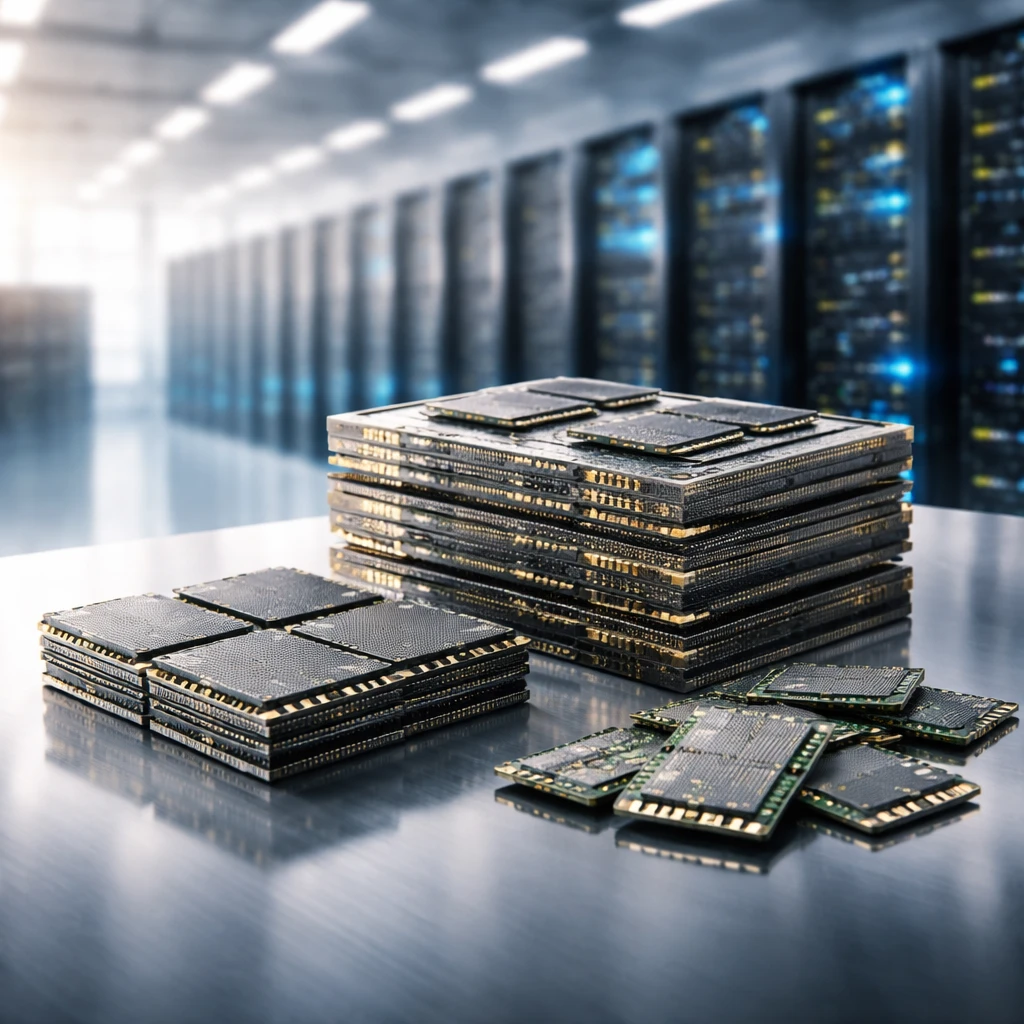
South Korea's two largest memory manufacturers confirmed plans for extensive long-term supply arrangements with leading U.S. technology firms that together total $950 billion, according to a statement attributed to a South Korean presidential adviser.
Under the terms outlined, SK Hynix is expected to commit about $750 billion of memory chips to American companies through multi-year agreements, with Nvidia named among the buyers. Samsung Electronics is set to supply roughly $200 billion of memory products to Broadcom, reinforcing its commercial relationship with a major provider of custom processors and networking gear used in AI data centres.
The timing of the announcements coincided with South Korean President Lee Jae Myung's visit to San Francisco, where he convened an AI summit attended by executives from Nvidia, OpenAI, Anthropic and Broadcom. Senior executives from Samsung, SK Group, Hyundai Motor and Naver were also present for the event. At the summit, President Lee unveiled the San Francisco AI Declaration, which is framed as a vehicle to broaden technology cooperation between South Korea and the United States.
Officials and company representatives described the deals as a response to rising demand for high-bandwidth memory and conventional DRAM, components that are central to AI server architectures. The two South Korean firms together account for a major portion of the global memory market and are therefore central to expanding AI infrastructure worldwide.
In addition to the $750 billion and $200 billion allocations, SK Hynix announced a separate initiative valued at more than $500 billion in collaboration with Nvidia and other partners. That programme is focused on next-generation memory development and the construction of large AI data centres.
As part of related industry plans, SK Telecom Co Ltd ADR intends to build a two-gigawatt facility that will run on Nvidia's Vera Rubin processors and SK Hynix's HBM4 memory. The first phase of that project is expected to begin operations in 2027.
Samsung and SK Hynix have also held discussions about supply accords with Anthropic as AI developers seek more assured access to memory capacity. South Korean officials estimated that U.S. companies account for between 80% and 90% of the demand underpinning the country's planned semiconductor expansion.
Market participants and officials characterized the agreements as deepening the ties between U.S. AI developers and South Korean chip manufacturers at a time when memory shortages have pushed prices higher and prompted technology firms to lock in capacity years in advance.
Sectors affected - semiconductors, AI infrastructure, cloud computing and data centres.