
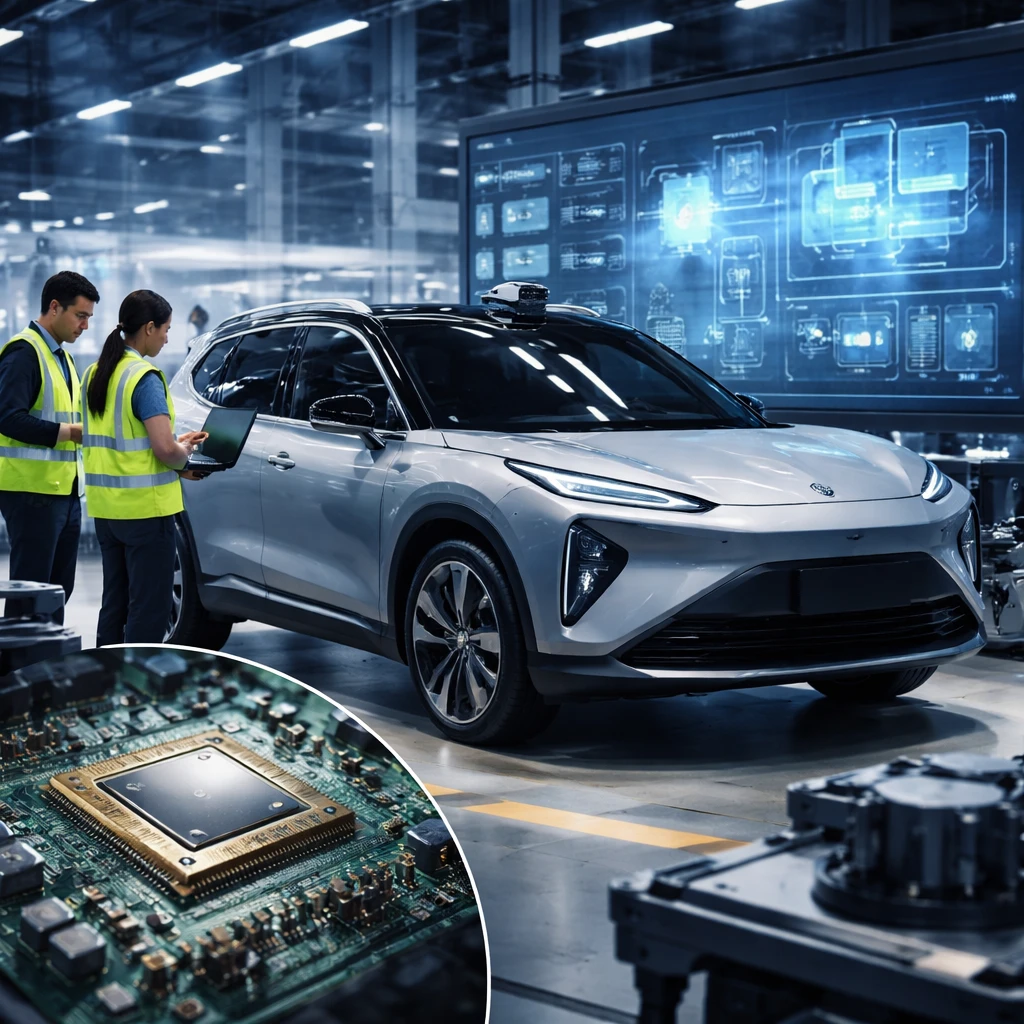
NIO is pursuing an internal chip strategy it believes will sharpen its technological differentiation and eventually improve its margins, Chief Executive William Li said on Friday. The Chinese premium electric vehicle maker is moving to lessen dependence on outside suppliers, including Nvidia, by building silicon that it says is tailored to its own algorithms and sensor architecture.
Li explained that NIO designed its chips so they would be a closer match to the company's software and sensor configurations - a particular focus for AI-related capabilities such as advanced driver-assistance. He acknowledged that Nvidia's automotive chips carry "very high gross margin," and said NIO expects that producing its own silicon could, in time, raise the automaker's overall profitability even though it will incur larger research-and-development expenses up front.
As part of that strategy, NIO has separated its chip division, Shenji, into an independent entity. Li said the new company is open to offering its chips to outside customers, a step that could broaden Shenji's addressable market while allowing NIO to maintain close control over core hardware development for its vehicles.
Li further highlighted two pillars he considers essential to NIO's long-term competitiveness: the company's nanometer-scale automotive-grade chips and a whole-vehicle operating system. He framed those capabilities as central to the firm's ability to compete globally at the premium end of the market.
On the broader market opportunity, Li said the ascent of Chinese electric vehicle manufacturers creates a "significant opportunity" to reshape the high-end and luxury car segments, opening pathways for NIO to position itself as a global premium marque.
Summary
NIO is developing in-house chips and a vehicle OS to align hardware with its algorithms and sensors, reduce reliance on suppliers such as Nvidia, and lift long-run profitability despite higher near-term R&D costs. The company spun off its chip arm, Shenji, which may supply external customers.
Key points
- NIO is building proprietary automotive-grade chips designed to match its algorithms and sensor layout, emphasizing AI and advanced driver-assistance functions - impacting the automotive and semiconductor sectors.
- The firm has spun off its chip unit, Shenji, into an independent company that Li said could sell chips externally - relevant to semiconductors and automotive suppliers.
- Leadership believes a combined hardware-software approach, including a whole-vehicle operating system, is vital to NIO's global competitiveness in the premium EV segment - affecting markets for luxury EVs and AI-driven vehicle systems.
Risks and uncertainties
- Higher upfront research-and-development costs could weigh on near-term profitability as NIO invests in in-house chips - primarily a risk to the company and investors in automotive manufacturers.
- Reducing dependence on established external suppliers such as Nvidia may present competitive and execution challenges that could affect supply chains and semiconductor partnerships.
- The outcome of spinning off Shenji and its ability to win external customers is uncertain; commercial traction outside NIO is not guaranteed and would influence returns to the semiconductor and automotive parts markets.