
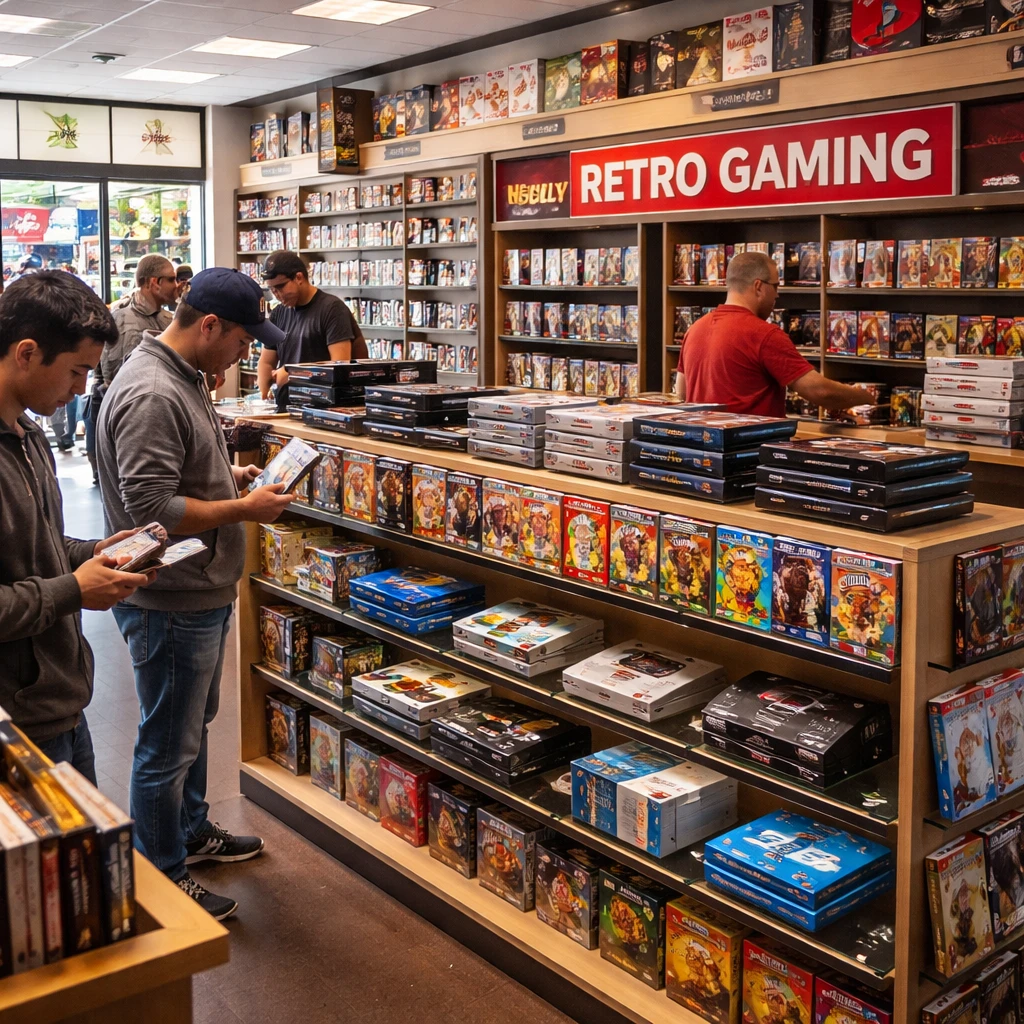
GameStop Corp is expanding a pilot program for vintage gaming by installing dedicated "retro" sections in every U.S. store, with the company saying the build-outs are in progress and should be in place at all locations by early May. The rollout follows what GameStop describes as strong proof points from its initial retro-store experiment and an observed uptick in trade-in activity for older consoles.
The company expects the new sections to stock both hardware and software for legacy platforms, including the Nintendo 64, Wii, and PlayStation 2. GameStop has also reclassified several previously modern systems - the PlayStation 3, Xbox 360, and Wii U - into its "retro" category, and confirmed that change will be reflected in the nationwide expansion.
According to a report cited by the company, the global retro console market is estimated at $3.8 billion in 2025 and is projected to grow to $8.5 billion by 2033. GameStop attributes that trajectory to a mix of nostalgic collectors and players seeking alternatives to rising costs and the increasing prevalence of digital-only console generations.
A GameStop representative framed the strategy succinctly: "Physical gaming isn't dead," the representative said, adding that the pilot offered "consistent and hard to ignore" proof points. The company noted a surge in trade-in volume for legacy systems, calling it a "clear signal" that demand for physical ownership is durable and that this audience "wasn't going anywhere."
The expanded in-store retro sections are intended to capitalize on that demand by providing a retail environment focused on permanent, tangible ownership. GameStop described this as a deliberate use of its cash resources to enter a high-margin secondary market, furthering a strategic pivot toward niche profitability as the broader gaming industry trends to digital distribution and subscription services.
Investor interest has accompanied the move: the company has seen renewed attention from investor Michael Burry, who recently increased his stake and cited the company's capital discipline as a reason for his confidence. GameStop presented the expansion as an example of deploying its cash-rich balance sheet into revenue streams tied to physical products and the secondary market.
GameStop said the in-store approach aims to offer a tactile customer experience that digital storefronts cannot match, catering to collectors who prefer the permanence of cartridges or discs and the ability to trade and own physical copies. "The demand for something you can hold, trade, and own has only grown more pronounced," the company representative said, characterizing a shift in consumer trends back toward analog media.
The company also referenced consumer concern about the subscription-heavy direction of parts of the industry, noting that worries about "digital delistings" - where purchased titles can disappear from libraries due to licensing changes - are contributing to renewed interest in physical formats. GameStop is positioning itself as a destination for players who prioritize permanent ownership over transient digital access.
What this means
GameStop's nationwide retro rollout represents a concentrated retail strategy that leverages the company's physical footprint to serve a segment of the market that prefers physical media. The company is converting observed trade-in activity and pilot performance into a larger plan, while signaling a continued emphasis on capital allocation into secondary-market opportunities.