
Overview
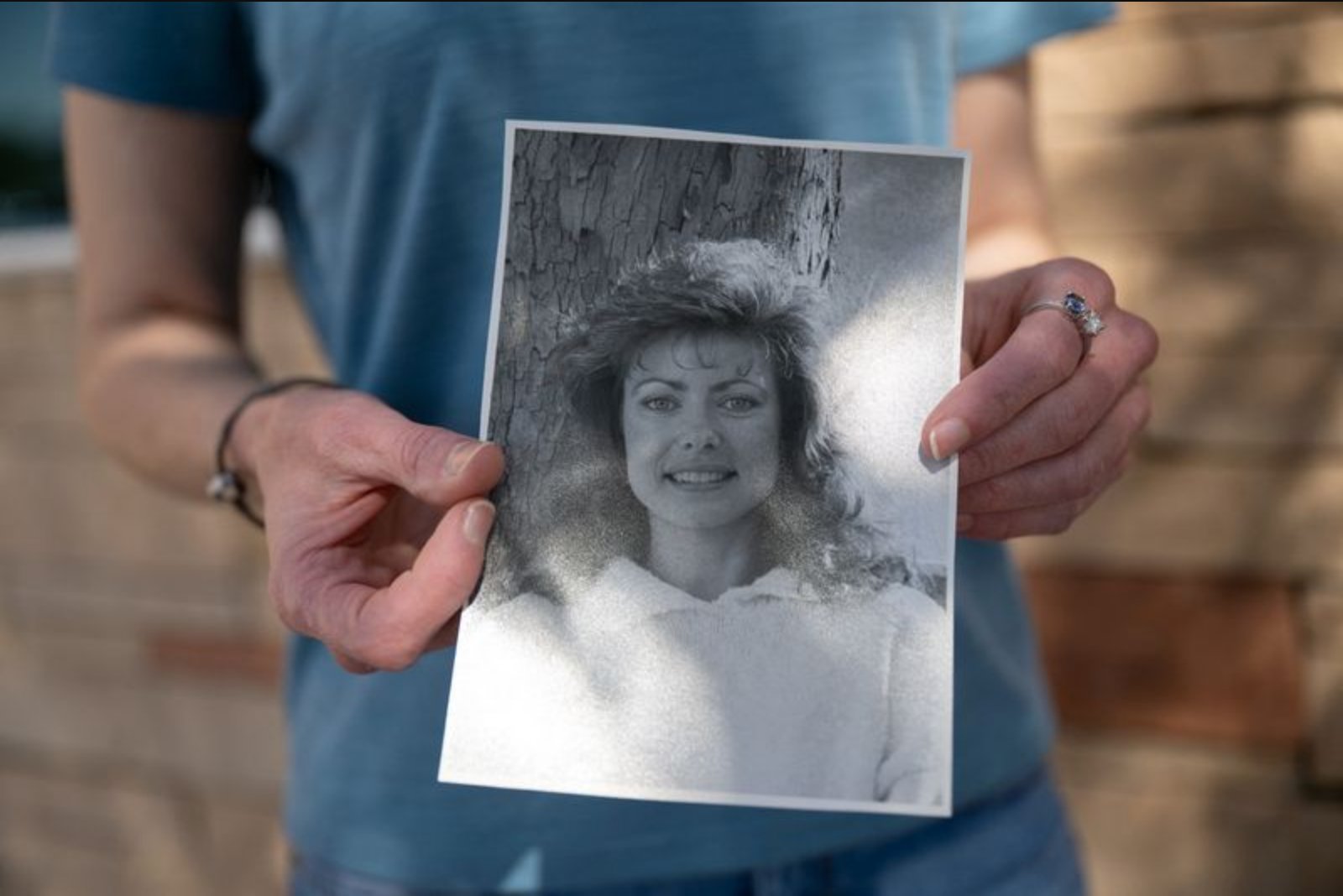
Tammy Blanton spent years taking prescription opioids for what she said were migraines, according to her daughter Mary Anne. Those medications, prescribed by multiple providers and reportedly amounting to more than 200 pills a month during a two-year stretch, left Tammy isolated, unemployed and estranged from family members, her daughter says. A medical examiner later concluded that oxycodone and extended-release morphine, together with alcohol and anti-anxiety drugs, contributed to her accidental death at age 58 in 2017.
When Purdue Pharma sought bankruptcy protection in 2019, Mary Anne Blanton believed her mother’s experience would make the family eligible for compensation. Purdue, which developed and marketed OxyContin and has been widely criticized for its role in the opioid epidemic, acknowledged misconduct and agreed to provide compensation to people harmed by its products. The company and plaintiffs’ lawyers hailed the resulting pact as a significant victory for victims.
But for many claimants, the path to recovery has narrowed considerably. Reuters examined thousands of pages of the bankruptcy record compiled over six years - including hundreds of filings and more than 100 letters from people seeking compensation - and interviewed eight victims and lawyers involved in the case. That review found that the bankruptcy process, while producing a single fund for individuals, ultimately established documentation requirements and deadlines that have left many victims unable to substantiate their claims.
The money and the limits
Across litigation tied to the opioid crisis, more than $57 billion has been pledged in settlements. Much of that money is earmarked for state and local governments. Purdue’s arrangement has been notable because it is the largest to specifically set aside a meaningful sum for individuals who say they were harmed by opioids - about $865 million. That pool represents, in effect, the last major opportunity for individuals to receive payments tied to their opioid injuries from a manufacturer implicated in the litigation.
Yet the fund comes with a significant caveat. Under the bankruptcy plan Purdue negotiated with its creditors, claimants must show evidence that a Purdue-manufactured opioid - rather than a generic made by another company - was the drug that caused harm. That provision reflects Purdue’s position throughout the process: the company has maintained that its liability should be limited to harms directly traceable to its own products.
For victims and their attorneys, that limitation is deeply unsatisfying. They argue Purdue and its owners, the Sackler family, should bear broad responsibility for fomenting widespread use of prescription opioids through aggressive marketing that understated addiction risks. The complaint is that misleading promotion of OxyContin drove demand for prescription painkillers generally, including generics, and that many patients later migrated to illegal drugs when prescription access waned.
How the claim process unfolded
When Purdue first proposed its bankruptcy plan in March 2021, Steve Miller, chairman of Purdue’s board, described the arrangement as "historic" and said it would have "a profoundly-positive impact on public health by directing critically-needed resources to communities and individuals nationwide." Purdue encouraged people who believed they had been harmed to file claims, and nearly 140,000 did so by the September 2021 deadline. The claims process began with a seven-page form that initially did not require detailed documentation.
Many claims were filed by individual sufferers or family members who were ill, destitute or unable to hire lawyers. Some lawyers filed claims on behalf of multiple clients. The bankruptcy then stalled and expanded, becoming enmeshed in appeals and a complex mediation process that produced more than 9,000 court filings and ran for years.
At one stage of the settlement negotiations, an earlier version of the plan allowed people without prescription records to qualify for a $3,500 payment by signing a sworn affidavit attesting they had used the drug. Under that draft, claimants with documentation and more severe harms could be eligible for up to $48,000. After appeals and reworking of the terms, however, the final approach limited payouts to people who could produce records demonstrating they had taken Purdue-made opioids. That change was not aired in open court, according to reporting that later disclosed it.
The documentation hurdle
In May 2025 - nearly four years after the September 2021 filing deadline - a trustee appointed to administer the individuals' fund asked claimants, for the first time, to submit records proving that Purdue manufactured the specific prescription that caused their harm. The trustee imposed a 60-day deadline. The timing of that request, critics say, made its demands particularly hard to satisfy. Medical facilities, pharmacies and insurers commonly retain records for only a few years, and in many states providers are not required to keep documentation beyond mandated minimum retention periods.
Doctors’ notes often list the name of a drug a physician prescribed, but they typically do not record the manufacturer. Insurers seeking lower-cost alternatives have incentives to steer patients toward generics, pharmacies shift suppliers over time, and paperwork can be incomplete or destroyed when clinics close or change hands. These realities mean that, for many claimants, proving a given pill was made by Purdue is effectively impossible years after the fact.
"To me, it’s irrelevant whether Purdue manufactured her specific prescription - it ultimately came from them," Mary Anne Blanton said of her mother. "Purdue told everybody that they were safe and not addictive. They created this mess."
Purdue, in court filings, has described its evidence requirements as flexible, saying it will accept a range of materials - from prescription records to references in other qualifying documents, and even photographs of pill bottles identifying a Purdue manufacturer. The company also said its standards are "far less onerous" than what a plaintiff would need to meet in ordinary litigation.
But many claimants and their families say those options feel hollow in practice. Michele Capozzi-Pollock, whose husband died after years of opioid use, reacted with disbelief when told pill bottles could serve as proof for a claim. "Like I’m going to save 16 years’ worth of prescription bottles," she said. Capozzi-Pollock also reports being told her claim would be denied after failing to respond to a documentation request that was addressed to her husband three years posthumously.
Dramatic rejections and court actions
U.S. District Judge Sean Lane, who is supervising Purdue’s bankruptcy proceedings in White Plains, New York, has already rejected more than 40% of the claims filed. When Purdue asked in January to expunge more than 57,000 claims that did not respond to the trustee’s May 2025 request for documentation, hundreds of claimants submitted letters to the court protesting the proposed dismissals.
Those letters describe not only the practical trouble of obtaining old records, but also widespread confusion about how the settlement and claims process operate. "I am at a loss and do not know what to do," wrote Terry Hughes, an inmate at Huttonsville Correctional Center in West Virginia, in a February 20 letter to the bankruptcy court. Hughes told the court the pharmacy where he filled opioid prescriptions closed years ago.
Michael Galipeau, who has battled opioid addiction for nearly two decades and now counsels others in recovery, filed a claim in 2019 but was informed in January that his submission had been labeled unsubstantiated. He said it was only after poring through a 17,101-page PDF attachment that he discovered the notation: "Claimant failed to provide information to substantiate claim," found on page 3,024. Galipeau attended a court hearing on February 26, where he tried to tell Judge Lane that the documentation requirements were too strict. The judge acknowledged frustrations but ultimately granted Purdue’s request to dismiss nearly all of the 57,000 claims.
When the Reuters report listened to that hearing by phone, the judge's handling of speakers - including many who joined by Zoom - underscored the tension between the human scale of suffering and the procedural demands of bankruptcy law. The court scheduled additional hearings for the spring and summer to consider whether to dismiss tens of thousands of remaining claims.
Individual experiences highlight the disparity
Not every claimant faces the same obstacles. Jill Cichowicz of Richmond, Virginia, whose twin brother Scott died of an overdose in 2017, said she has records showing he was prescribed OxyContin and believes she will qualify for payment. Scott, she said, kept meticulous notes about his medications, and the family retained pill bottles that listed Purdue as the manufacturer - steps the Cichowicz family took that many others could not afford or did not know to take.
"I don’t think the average person that’s battling addiction is keeping, you know, copious records and Excel spreadsheets of everything they’re taking," Cichowicz said. "I think they’re just trying to survive." Her observation underscores a recurring theme in the claims process: those with the resources, organization or foresight to preserve documentation are substantially likelier to qualify for relief than those most deeply affected by addiction.
Blanton’s search for proof turned into a series of dead ends. Tammy’s primary care physician, Mary Anne said, had legally destroyed her medical records. Hospital records often did not list manufacturers. Attempts to obtain records from Arizona’s Medicaid program, which paid for most of Tammy’s prescriptions, were stymied by rules that required proof of next-of-kin status and privacy constraints.
Medication brand history complicates matters further. Purdue developed and initially marketed extended-release morphine under the MS Contin brand and later marketed extended-release oxycodone as OxyContin. Over time, other manufacturers obtained approval to produce generics of those same molecules. So while many victims may have taken the chemical compound Purdue brought to market, showing that the particular bottle dispensed at a given point was made by Purdue is often impossible years later.
Legal tradeoffs and why plaintiffs' lawyers accepted the deal
Plaintiffs' counsel who negotiated with Purdue said they tried to keep claim standards as flexible as possible. Ed Neiger, an attorney who helped represent roughly 30,000 victims, said lawyers pressed for looser proof requirements but clashed with other parties in mediation who demanded evidence akin to what would be expected in a lawsuit. According to Neiger, negotiations reached a point where plaintiffs faced a stark choice: scuttle the settlement and risk losing a global resolution, or accept concessions that narrowed who ultimately could recover.
Neiger contends that even with its flaws, the Purdue settlement still presents a less onerous route to some compensation than a traditional lawsuit against the company or the Sackler family. Individual litigation would likely have required far more extensive proof, carried substantial legal costs and taken many years with no guarantee of success. To date, no individual plaintiff has prevailed in a personal lawsuit against the Sacklers or Purdue over an opioid addiction.
What claimants might receive
Judge Lane has already dismissed more than 40% of filed claims, and many more rejections are possible as the court considers Purdue’s bid to expunge tens of thousands of entries. For those who do clear the documentation bar, recoveries are expected to be modest. In December, Purdue estimated that eligible individuals could receive roughly $8,000 or $16,000, depending on the duration of opioid prescriptions. Those amounts are only estimates; per Purdue, if fewer claimants meet documentation requirements, the average recoveries could increase because the fixed fund would be divided among fewer people.
For millions of Americans affected by opioid addiction, those sums amount to limited restitution for losses that can include health, employment and family relationships stretched over years. For many victims and their families, the payout figures sit uneasily against the scope and scale of personal harm.
Voices of frustration and confusion
When Purdue asked to remove tens of thousands of claims from the register in January, hundreds of people wrote to the court to protest. The letters detail not just the difficulty of obtaining old records but also an underlying bewilderment about how to navigate the settlement bureaucracy. The stories vary - from incarcerated men whose pharmacies closed years ago to family members unable to access government-paid insurance records because of privacy rules - but the common thread is a sense that the process is stacked against ordinary people.
Galipeau, who has transitioned from addiction and legal troubles to counseling others in recovery, described the moment he read the court document that listed his claim as unsubstantiated. He had to search deep inside a massive PDF to find the terse notation, and even after finding it he faced the daunting task of convincing the court the documentation requirement should be relaxed.
At a hearing where dozens spoke by Zoom, Judge Lane recognized the frustration among claimants over what they described as a complex, opaque process. Still, he granted the request to dismiss a large swath of claims when Purdue sought it. Lane declined to comment outside court.
Why records no longer exist for many claimants
The record-keeping practices that underlie much of the problem are straightforward. Medical providers are often required to retain records for only a limited time; clinics close or change ownership; pharmacies change suppliers; insurance programs move files offline or restrict access to protect privacy. In many instances, doctors' notes identify the drug prescribed but not the manufacturer - an omission that now has major consequences for people seeking compensation under Purdue’s criteria.
For Mary Anne Blanton, the legal and administrative barriers became personal roadblocks. She could not obtain key documents from the Medicaid program that paid for most of her mother's prescriptions because of procedural hurdles tied to next-of-kin verification and privacy. Even when hospital records were available, they frequently failed to mention the manufacturer of the opioid in question.
Capozzi-Pollock, whose husband left behind many years of prescriptions, said the administrative burden of chasing documentation, combined with the emotional toll, left her skeptical about participating further in the claims process. "How much time do I put towards this, and energy and money, just to get to the end and then have them say, ‘No, denied’?" she asked.
What remains uncertain
The bankruptcy court has more hearings scheduled to evaluate whether to dismiss tens of thousands of claims that remain unsubstantiated. Those future rulings will determine how many people ultimately qualify for the individual fund and how large any payouts will be. The administration of the settlement has already revealed tradeoffs inherent in trying to resolve mass tort claims through bankruptcy: efficiency and a centralized payout structure can produce faster, broader results, but the process inevitably imposes rigid procedural standards that can work against victims lacking documentation.
For individuals such as Jill Cichowicz who kept records and hired private investigators, the settlement is likely to yield some compensation. For many whose lives were destabilized by addiction - people who may have cycled through multiple prescribers, filled scripts at different pharmacies, relied on cash payments, or simply lacked the capacity to maintain records - the settlement risk is that years of harm will not translate into any payment.
Conclusion
Purdue’s bankruptcy produced a rare fund devoted to individuals harmed by prescription opioids. But the settlement’s late-introduced documentation requirements, the long delay between filing and verification, and the realities of record retention have combined to make that fund inaccessible to many of the people it was meant to help. As the court continues to adjudicate tens of thousands of contested claims, the prospect of meaningful compensation will depend as much on paper trails and procedural technicalities as on the human stories of addiction and loss that prompted the litigation.