
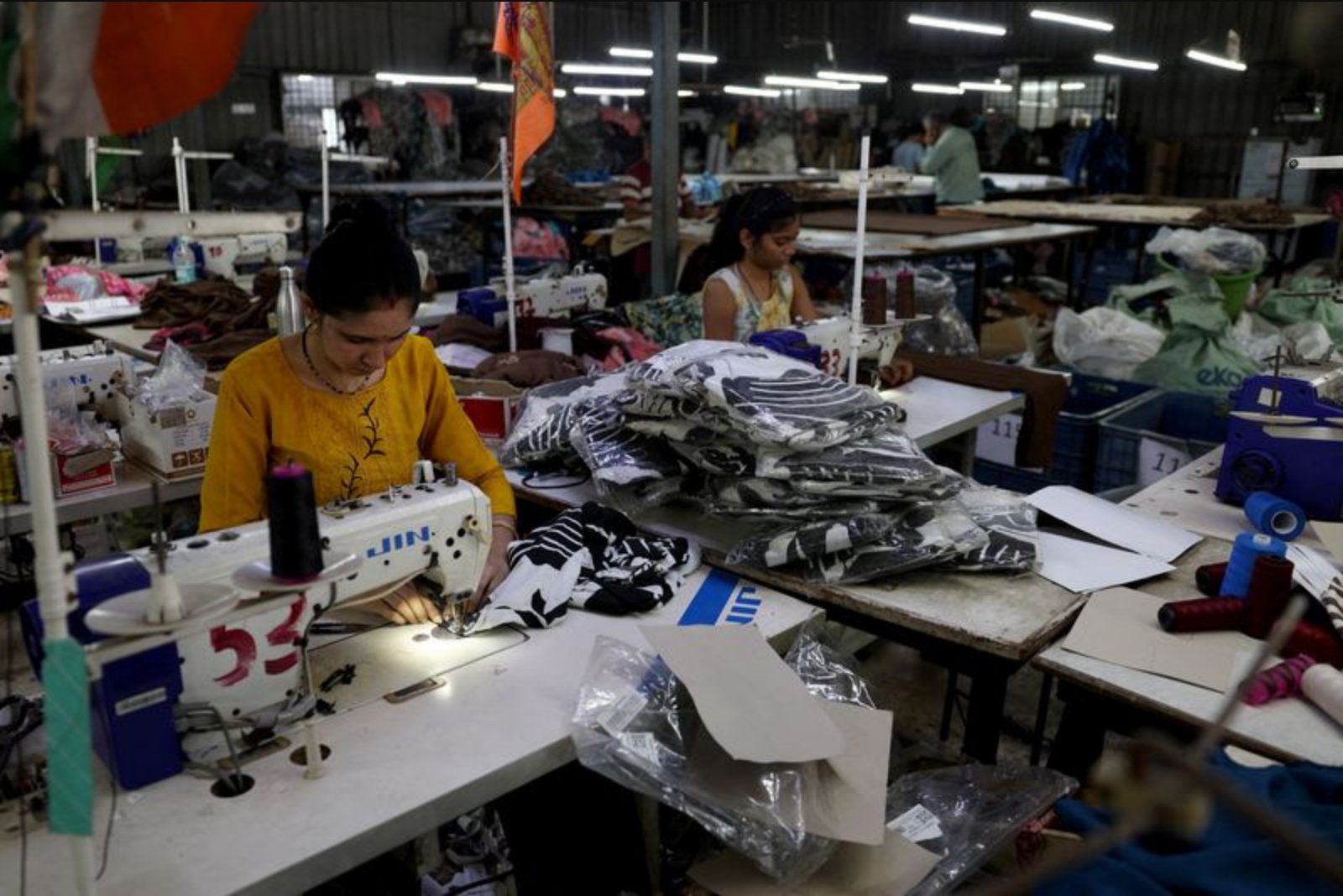
SURAT, India - A surge in fossil fuel-driven input costs following the Iran conflict has rippled through polyester producers and garment makers across India and Bangladesh, squeezing margins and curtailing production in some of Asia's most important textile centres.
Producers of polyester yarn and fabric say they are seeing significant increases in the price of petroleum-derived raw materials, a shift they attribute to both tighter supplies from the Middle East and higher offers from Chinese suppliers for purified terephthalic acid (PTA) and monoethylene glycol (MEG). Filatex, a major polyester yarn manufacturer in India, told Reuters it is paying nearly 30% more for those feedstocks compared with earlier levels, a move that directly raises its cost base for making yarn.
Those higher feedstock prices are being felt across the garment supply chain. Avichal Arya, chief executive of Bindal Silk Mills, which supplies dyed and printed polyester fabrics to a range of global retailers including H&M, Inditex-owned Zara, Target, Walmart and IKEA, said the energy-driven spike has "drastically" increased the cost of the chemicals and dyes his company uses. He also reported a shortage of cooking gas linked to the conflict that has prompted many migrant workers to leave Surat, a western Indian textile hub, further hampering production.
Polyester - a fibre produced from oil derivatives - is ubiquitous in the clothing industry, accounting for 59% of global fibre production and used across garments from athletic wear to dresses. That dominance leaves the fabric chain directly exposed to disruptions in refined petroleum product markets, which have tightened following the closure of the Strait of Hormuz.
Potential impact on retailers
Retailers dependent on polyester-heavy supply chains may eventually face higher procurement costs, although many have some insulation from immediate price moves through forward purchases. British retailer Primark indicated that its spring/summer inventory and a substantial portion of its autumn/winter stock are not affected at present, reflecting prior buying that fixes costs for the short term.
George Weston, chief executive of Associated British Foods, Primark's parent, told Reuters that if purchases were being made today for energy-related inputs, companies would be seeing substantial inflation, but noted that current stocks bought earlier have avoided those instant increases. He added that future exposures are uncertain - prices may fall before some buyers return to the market, or remain elevated.
Industry sources said H&M expects price rises from suppliers in Bangladesh in the coming weeks but has plans to absorb those increases. In a statement H&M said it does not see major production disruptions in Bangladesh and has not observed a noticeable number of supplier requests to adjust orders because of energy costs. Inditex declined to comment on its polyester supply. Target, Walmart and IKEA did not immediately respond to requests for comment.
Many global retailers have shifted substantially toward using recycled polyester produced from plastic bottle waste, a move that could blunt some oil-driven input cost pressure. However, recycled material still represents only about 12% of total polyester production worldwide, limiting the degree to which recycled feedstock can offset price rises across the market.
Production disruptions in Surat
Production in Surat has already shown visible signs of strain. At Radheshyam Textile, roughly half of the mill's 200 industrial looms that weave polyester have been idle since the conflict began in late February. Owner Kaushik Dudhat said the company's daily output, which had been around 10,000 metres per day before the conflict, has dropped to between 3,500 and 4,000 metres per day.
Dudhat said he has stopped purchasing new polyester yarn as the recent price spikes would compel him to lift his own selling prices by roughly 15% - a level he believes his customers, mostly clothing traders, would reject.
Kailash Hakim, president of the Federation of Surat Textile Traders Association, reported that dyeing and printing factories in the city have enlarged weekly shutdowns: many are now closed two days a week instead of one. He warned that if the situation continues, raw material shortages could force factories to halt operations entirely.
Market data from Wood Mackenzie show the price of polyester staple fibre in India climbed from 100 rupees per kilogramme at the end of February to 126.5 rupees per kilogramme a month later. Prices eased modestly after the Indian government reduced import tariffs on petrochemical raw materials, but were still at 120 rupees per kilogramme as of April 9. Prices in China, the largest producer of polyester globally, have also moved higher.
Effects in Bangladesh and on related products
In Bangladesh - where much garment manufacturing still focuses on cotton-based apparel - factories nonetheless face higher costs for polyester sewing thread used in production, and elevated logistics costs due to higher retail fuel prices. In an April 5 letter reviewed by Reuters, thread maker Coats Bangladesh, a unit of UK-listed Coats, notified customers of a 15.5% price increase effective April 15, attributing the rise to a rapid escalation in oil-derived feedstock costs and increased transportation expenses.
Industry representatives in Bangladesh said buyers are becoming more cautious and are re-evaluating risks before placing new orders, a development that may weigh on order volumes. Mohammad Hatem, president of the Bangladesh Knitwear Manufacturers and Exporters Association, warned that buyer caution could translate into lower orders if the situation endures.
Analysts at Wood Mackenzie said prolonged pressure could lead to what they call "demand destruction" - retailers passing higher costs to consumers, who in turn scale back purchases, resulting in lower clothing production volumes.
Wider footwear and components exposure
The squeeze is not limited to apparel. Petrochemical-derived materials such as ethylene-vinyl acetate (EVA) are commonly used in sneakers and other footwear components. U.S. retailers and industry groups have sounded alarms about broad exposure across shoe parts and materials. Matt Priest, president of the Footwear Distributors and Retailers of America, said there is an impact across component types regardless of sourcing location, noting a recent industry report identified 25 petrochemical-based components used in shoes - ranging from synthetic rubber outsoles to polyurethane foam and adhesives.
A Nike spokesperson told Reuters that materials tied to oil do affect product costs, and higher input prices could push retail prices up and complicate demand forecasting for brands.
Outlook
Manufacturers, traders and industry analysts describe a market under immediate stress from higher feedstock and energy prices, operational disruption from workforce movements and increased shutdowns, and potential downstream cost pressure for international retailers that source heavily from Asia. While some retailers are shielded temporarily by forward buying, the industry remains sensitive to the duration and depth of elevated oil-derived input costs.
For the moment, company statements and industry notices signal localized production slowdowns, supplier price adjustments and cautious buyer behaviour rather than widespread order cancellations. However, several industry participants warned that ongoing cost pressure and supply constraints could reduce output and provoke price responses further along the supply chain if market conditions do not stabilise.