
Iranian Foreign Minister Abbas Araqchi reached Islamabad on Friday to confer with Pakistani officials over proposals related to restarting stalled negotiations with the United States, offering a tentative opening to end an eight-week war that has produced heavy casualties and shaken global markets.
U.S. President Donald Trump told reporters on Friday that Iran intends to make an offer designed to satisfy U.S. demands, but he said he did not yet know the specifics. When asked who the United States was negotiating with, Trump replied: "I don't want to say that, but we're dealing with the people that are in charge now."
Iran's foreign ministry spokesperson later posted on X that Iranian officials do not plan to meet with U.S. representatives directly, despite announcements that U.S. special envoys Steve Witkoff and Jared Kushner plan to travel to Islamabad. Instead, Iran said its concerns will be communicated to Pakistan, which is acting as a mediator in the discussions.
Background to the diplomatic activity is a sharp standoff between the two nations: a U.S. bombing campaign and Iran's obstruction of the Strait of Hormuz have left the parties at a costly impasse, with Iran's oil exports largely blocked and U.S. gasoline prices at multi-year highs. Against that backdrop, both sides have taken tentative diplomatic steps.
White House press secretary Karoline Leavitt said that Witkoff and Kushner were scheduled to depart for Pakistan on Saturday morning to engage with Araqchi. Leavitt described recent movements from the Iranian side as progress and said the administration hoped for further developments over the weekend. She also noted that U.S. Vice President JD Vance - who led an earlier, unsuccessful round of talks with Iran this month - is prepared to travel to Pakistan if required.
The White House did not immediately respond to Iran's public statement that its officials would not meet U.S. representatives. Pakistani sources had earlier indicated that a U.S. logistics and security team was already in Islamabad to support potential talks.
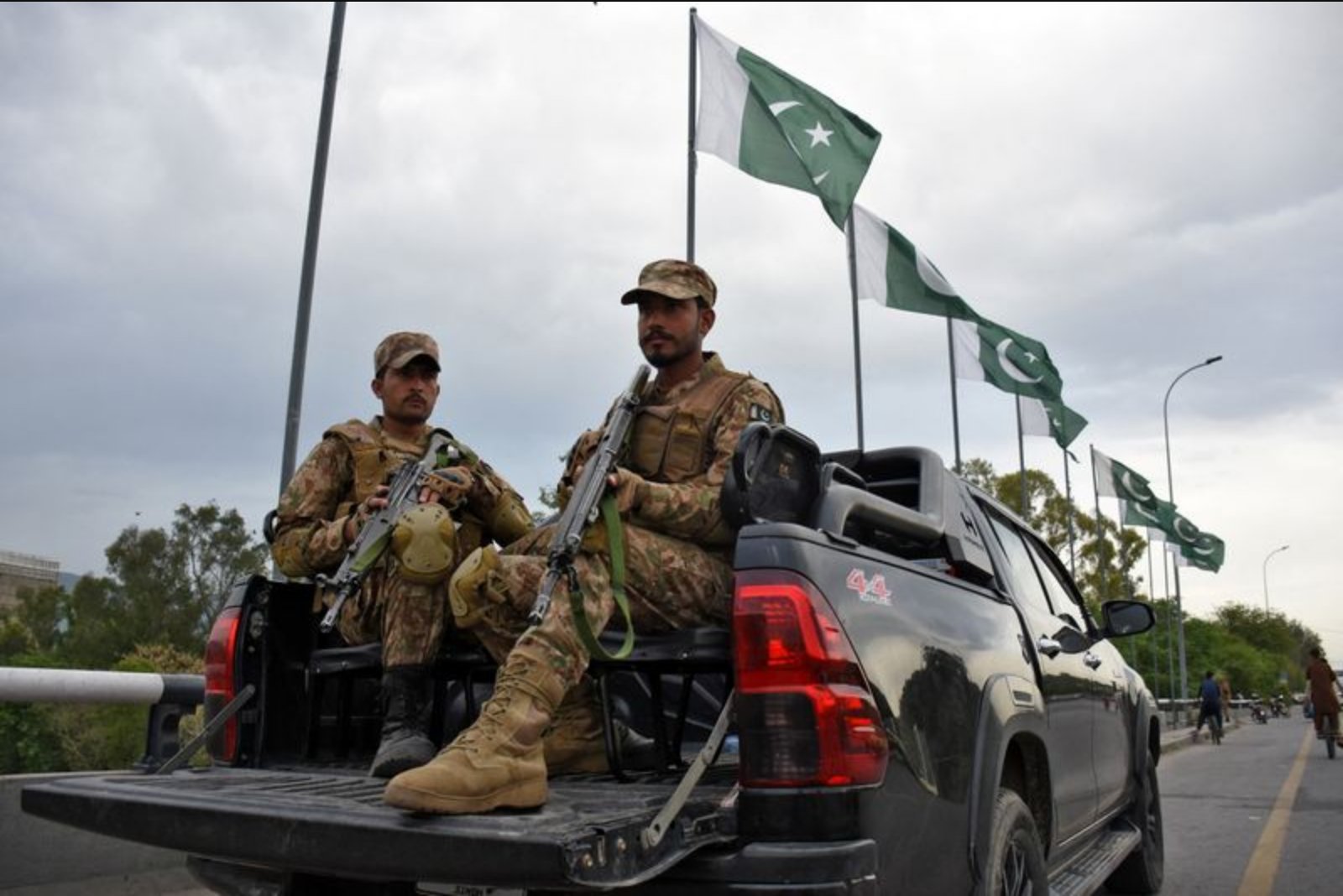
Pakistan's foreign ministry confirmed Araqchi's arrival and media coverage of the city showed a heavy military and paramilitary presence across central Islamabad. Two government sources said Araqchi proceeded directly to a meeting with Pakistani Foreign Minister Ishaq Dar at the Serena Hotel - the same venue where the first round of talks with the U.S. took place.
Qatar's Emir Sheikh Tamim bin Hamad Al Thani conveyed his country's support for Pakistan's mediation efforts in a phone call with President Trump, according to Qatar's state news agency. Araqchi wrote on X that his itinerary includes visits to Pakistan, Oman and Russia to coordinate bilaterally and consult on regional developments. Iran's foreign ministry spokesperson later told state media that the tour would include consultations on the latest efforts to end the war.
U.S. Defense Secretary Pete Hegseth said at a briefing on Friday that Iran had an opportunity to reach a "good deal" with the United States. "Iran knows that they still have an open window to choose wisely," he said. "All they have to do is abandon a nuclear weapon in meaningful and verifiable ways."
Negotiations that had been expected to resume on Tuesday did not occur. Iran said it was not yet ready to commit to attending, and a U.S. delegation led by Vice President Vance did not leave Washington. To allow more time for talks to be reconvened, President Trump unilaterally extended a two-week ceasefire earlier this week.
Markets remained sensitive to the diplomatic signals. Oil prices were volatile on Friday as traders balanced the potential for further supply disruption against prospects for renewed negotiations. Brent crude futures settled at $105.33 a barrel, up about 0.3%, while U.S. West Texas Intermediate futures fell 1% to $94.88.
Parallel to the Iran-U.S. standoff, a separate ceasefire between Israel and Lebanon was extended for three weeks at a White House meeting brokered by President Trump. That conflict, triggered after Hezbollah fired across the border and Israel responded by conducting operations in Lebanon, has run alongside the wider war involving Iran. Tehran has stated that a ceasefire in Lebanon is a precondition for broader talks.
Despite the extension, there was scant evidence that fighting in southern Lebanon had ceased. Lebanese authorities reported two people killed by an Israeli strike, and Hezbollah said it had downed an Israeli drone. While the truce that came into force on April 16 has substantially reduced the level of hostilities, exchanges of fire continued and Israel has maintained troops in what it describes as a "buffer zone" inside southern Lebanon.
Hezbollah lawmaker Ali Fayyad criticized the extension of the ceasefire, saying it was meaningless so long as Israel continued what he described as hostile acts - including assassinations, shelling and demolition of towns in southern Lebanon. Separately, Israel's military reported it had killed six armed Hezbollah members in the area on Friday.
The Strait of Hormuz remains a central flashpoint. President Trump said on Thursday he wanted an "everlasting" agreement with Iran while asserting the United States had an upper hand in the dispute over control of the strait, a critical global energy shipping route. The United States has not yet succeeded in reopening the passage. Since the war began eight weeks ago, Iran has blocked nearly all ships except its own from transiting the strait and this week showcased its control by seizing two large cargo vessels.
Trump also imposed a separate blockade of Iranian shipping last week. Iran has declared it will not reopen the strait until the U.S. blockade is lifted. Shipping data cited on Friday showed only five vessels transited the strait in the prior 24 hours, compared with roughly 130 a day before the conflict began. Of those five, one was an Iranian oil products tanker; none were the large crude supertankers that normally supply global energy markets.
As diplomatic channels remain in motion, a complex mix of military pressure, economic constraints and regional ceasefire conditions continues to shape prospects for a negotiated settlement. The immediate next steps hinge on whether Iran presents the offer President Trump referenced, how Pakistan conveys Tehran's concerns, and whether U.S. envoys follow through on planned travel to Islamabad.