
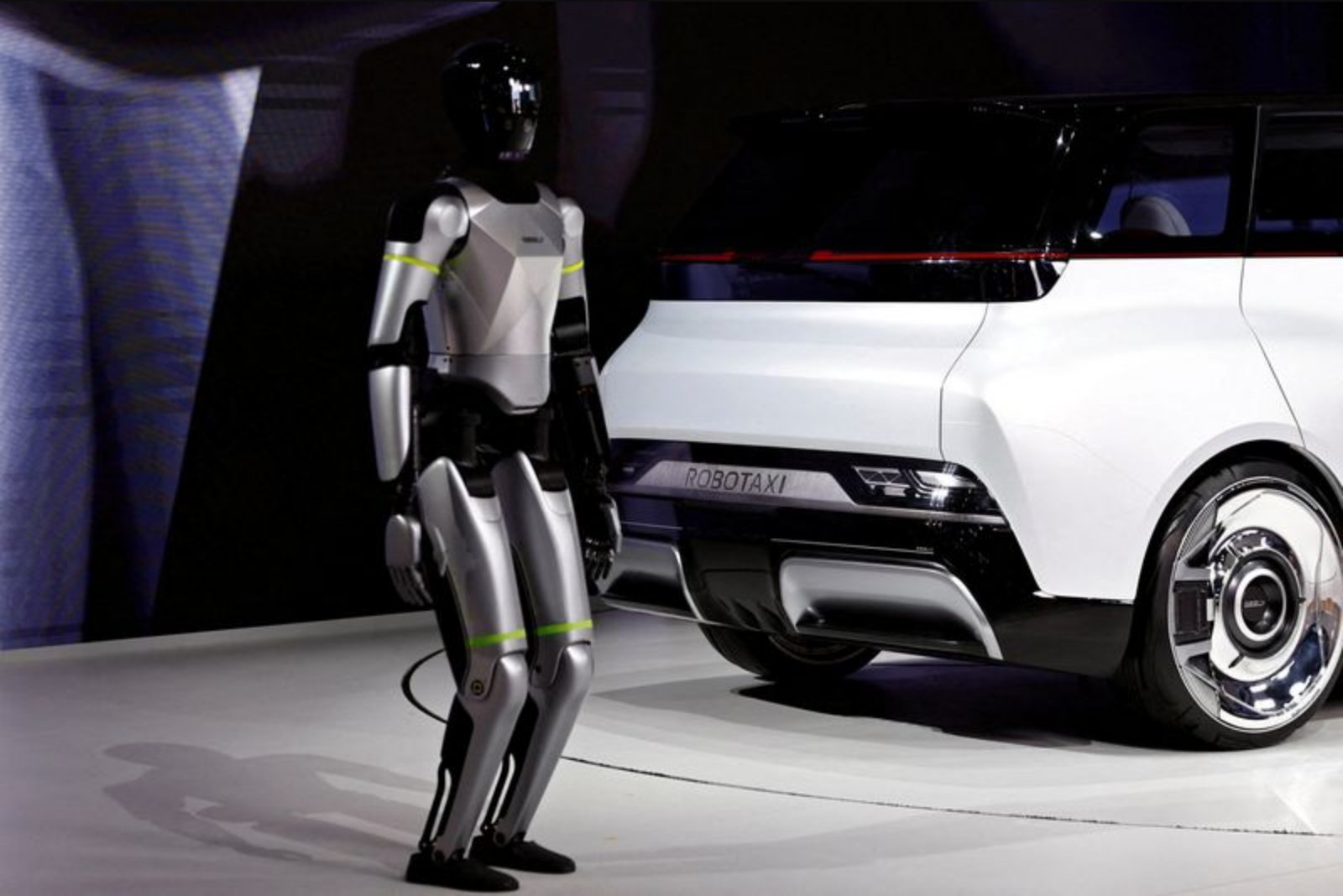
Caocao Inc, the shared-mobility arm incubated by Geely Holding Group, has announced plans to place thousands of its purpose-built robotaxis into service in 2027, according to comments made by its chief executive at the Beijing auto show. The vehicle, marketed as the Eva Cab, is expected to see substantial production, delivery and operational launches that will ramp into 2028, followed by an expansion to a 100,000-vehicle fleet by 2030.
Executives stated the Eva Cab will begin operations in Abu Dhabi, Hong Kong and five mainland Chinese cities next year, with production, delivery and deployment running almost concurrently. That timetable is intended to move Caocao from pilot and limited deployments to larger-scale commercial services within a short timeframe.
The Eva Cab departs from many robotaxi efforts by using a clean-sheet, purpose-built design rather than a modified mass-market car. Its cabin has been reconfigured with simplified storage and the removal of enclosed door pockets, a design choice the company says reduces the likelihood of passengers leaving personal items behind. Leadership also noted the production variants planned for initial deployment would omit luxury interiors and high-power motors, and that the driverless cars would therefore be priced below typical private vehicles, though exact pricing was not disclosed.
Caocao was established within Geely in 2015 and has been positioned as the automaker's core platform for shared mobility and future autonomous fleet operations. The company listed in Hong Kong in June 2025 and reported its first quarterly adjusted net profit in the fourth quarter following that listing.
As the operator of what executives describe as China’s second-largest ride-hailing platform after Didi, Caocao aims to leverage Geely’s global expansion to support its overseas robotaxi push. Company leadership expressed confidence that, with Geely’s backing, Caocao would be among the three to four robotaxi operators remaining in China by 2030.
The deployment drive takes place amid a broader shift by Chinese automakers toward autonomous driving and mobility services as competition intensifies in the domestic market. Another domestic manufacturer, Xpeng, said it expects to produce from the hundreds to the thousands of robotaxis over the next 12 to 18 months. Xpeng’s initial effort will prioritize manufacturing the vehicles, while it seeks operating partners to collaborate on a global robotaxi business.
The move by multiple Chinese manufacturers to diversify into robotaxis sets up direct competition with other purpose-built autonomous vehicles being developed by global automakers. One high-profile rival vehicle cited by industry observers is the Cybercab, which its maker says will see production ramp gradually before scaling sharply and is expected to supplant modified consumer cars as that company grows its driverless fleet.
Sectors affected: automotive manufacturing, shared mobility operations, autonomous vehicle services, and international ride-hailing markets.