
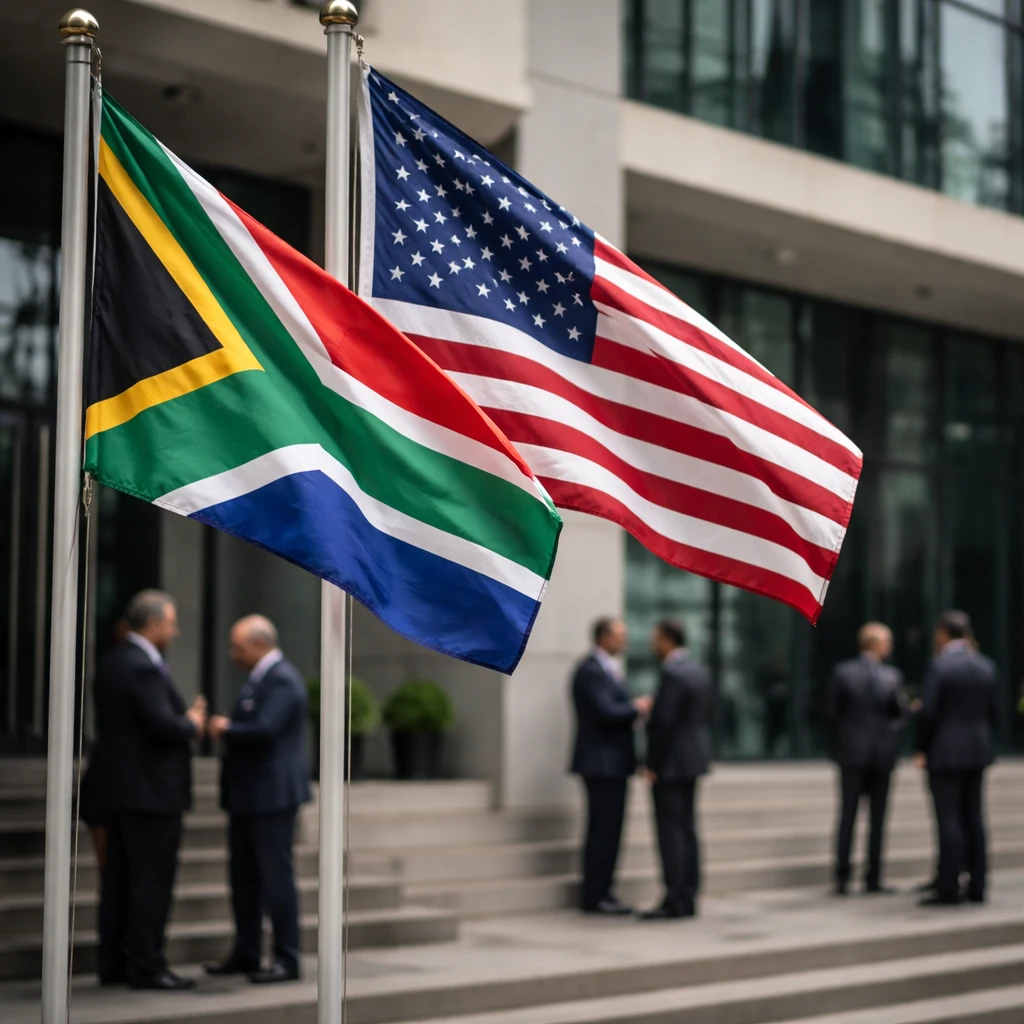
South Africa’s foreign ministry on Wednesday registered concern after Washington unveiled visa restrictions affecting certain South African individuals, a move announced the previous day by U.S. Secretary of State Marco Rubio. In an official statement, the ministry said it viewed the U.S. action as aligning with "the mischaracterisation of South Africa’s domestic policies by fringe groups."
The foreign ministry emphasized that differences between the two countries should be addressed through formal diplomatic engagement rather than unilateral measures. "We maintain that challenges in our bilateral relations with the USA can only be resolved by constructive engagement through state actors on both sides of the diplomatic channel not unilateral acts," the statement said.
The announcement from Washington came amid sustained criticism from former U.S. President Donald Trump. The ministry's statement and subsequent commentary referenced Mr. Trump’s repeated criticism since the start of his second term, saying he has accused South Africa of racial persecution of its white minority - a claim described in South African commentary as false - linked to the country’s affirmative action policies aimed at tackling inequality that has persisted since apartheid.
At the time of the foreign ministry’s response, it was not clear who would be affected by the newly announced visa restrictions. The lack of specificity left open questions about the measures’ immediate targets and scope.
Adding to the tension, the U.S. Ambassador to South Africa posted on X earlier on Wednesday that the visa restrictions were "only the first step in a series of escalatory measures." The ambassador’s comment suggested further actions could follow, though no additional measures were detailed in the public statements referenced in this account.
South Africa’s statement framed the dispute as one that should be handled through diplomatic channels between state actors, underscoring a preference for bilateral negotiations over unilateral initiatives. The government’s formulation also characterized some external commentary about its domestic policies as coming from fringe elements, a point it linked to the U.S. announcement.
For observers and stakeholders, the public exchange highlights a period of diplomatic strain between the two countries and leaves unresolved questions about the practical implications of the visa restrictions announced by Washington.