
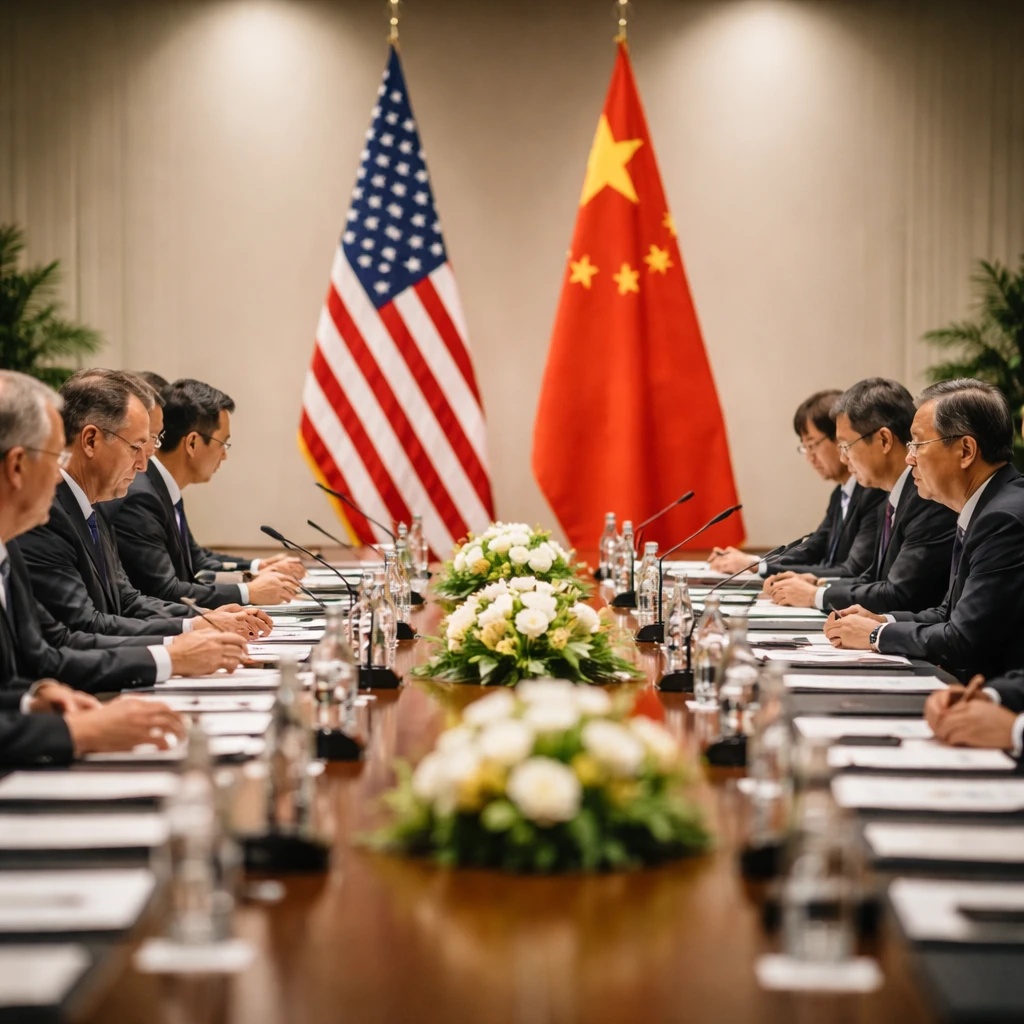
Senior U.S. and Chinese officials are engaged in talks about lowering tariffs on specific goods as both capitals move toward a possible extension of the trade truce between the world’s two largest economies, sources briefed on the discussions told reporters.
Those discussions are said to encompass reductions affecting American energy shipments and agricultural commodities, and are taking place as preparations intensify ahead of a summit between the countries' leaders scheduled for next week. In addition to cuts on U.S. exports, the talks are likely to produce an agreement to reduce duties on Chinese inputs used by manufacturers, according to people familiar with the matter.
People familiar with the negotiations indicated these changes would be implemented under an earlier framework for reciprocal tariff reductions covering roughly $30 billion in bilateral trade. As part of that package, most-favored-nation - MFN - tariff rates would be applied to some items imported from China, the sources said.
On Tuesday, U.S. Treasury Secretary Scott Bessent confirmed he expects to meet this weekend with Chinese Vice Premier He Lifeng as part of the run-up to a leaders' summit set for Sept. 24 in Washington. Bessent made the remark while testifying before the House Financial Services Committee but did not disclose the exact date or location of the planned meeting with He. A separate report cited unnamed people saying the two officials would meet in New York on Sunday.
President Donald Trump has said Chinese President Xi Jinping will visit the White House on Sept. 24 and that a state dinner would be part of the visit. Chinese officials have not publicly confirmed the travel dates.
One report, citing people familiar with the talks, said Washington is offering only a six-month extension to the current trade truce. That limited proposed extension is reportedly driven in part by U.S. concerns that Beijing has not fully met certain commitments on rare earths that were discussed when the leaders met in Busan, South Korea, last October.
Officials and analysts say an extension of the trade truce could remove a potential impediment for a global economy already grappling with multiple pressures, including conflicts in Iran and Ukraine, higher oil prices and renewed inflationary pressures that have lifted borrowing costs worldwide. At the same time, expectations for the leaders' meeting are being tempered by China's ties to Iran and Russia and by ongoing competition between the two countries over advanced technologies, including artificial intelligence.
Bessent additionally said he looked forward to raising sanctions tied to the war in Iran during his discussions with Vice Premier He as the United States increases economic pressure on Tehran.
Personnel expected to participate in or accompany President Xi on a potential U.S. trip were also noted in the reporting. Representatives from state-owned food trader Cofco were cited as possible members of Xi’s delegation, and more than a dozen firms are reportedly being considered to join a CEO delegation, though no final determinations have been announced.
Context and implications
While the exact contours of any tariff reductions remain subject to ongoing negotiations and final approvals, the areas singled out for potential relief - energy, agriculture and manufacturing inputs - point to sectors that could be directly affected if an agreement is reached. The proposed reciprocal plan and the mention of most-favored-nation rates indicate negotiators are working within a previously discussed framework, rather than pursuing an ad hoc arrangement.