
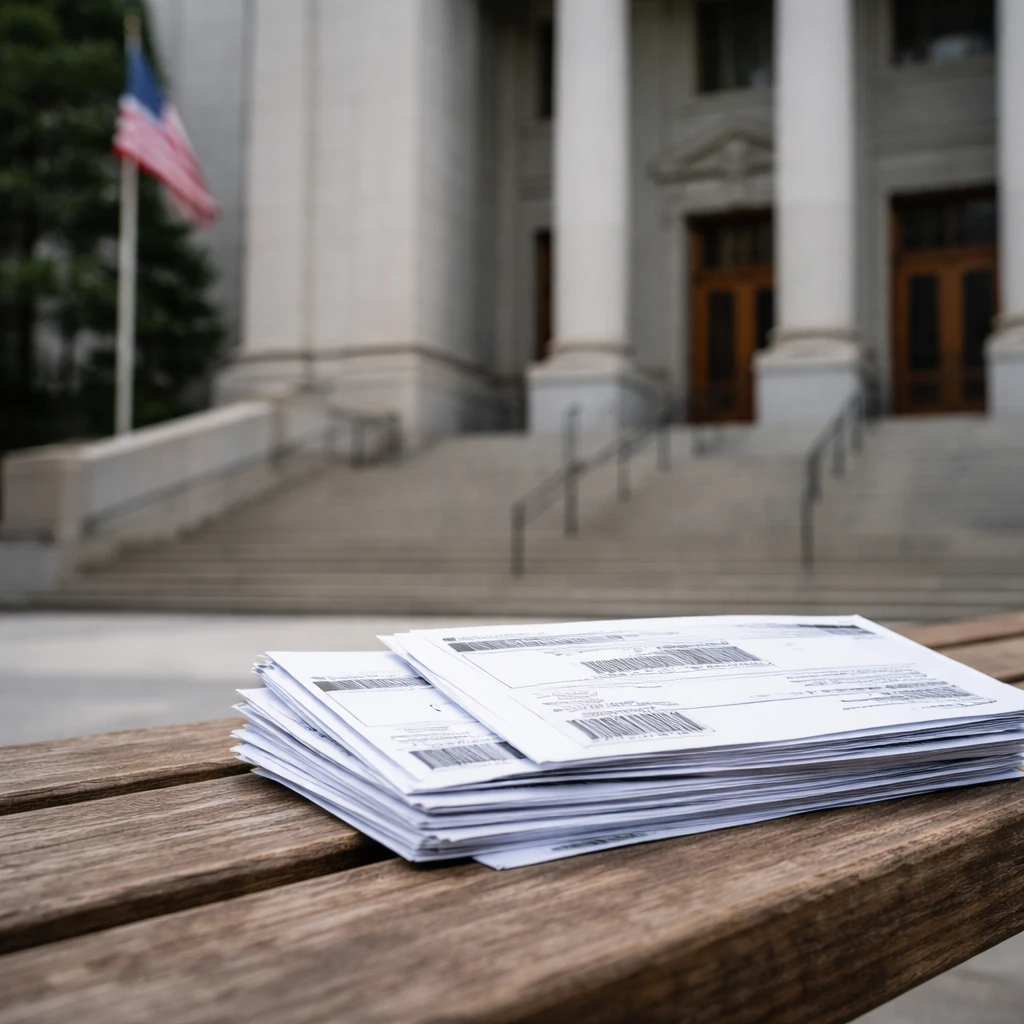
A U.S. appeals court in Boston on Thursday refused to lift a federal judge's injunction that has kept a recent U.S. Postal Service rule restricting aspects of mail-in voting from taking effect before the November congressional elections.
The 1st U.S. Circuit Court of Appeals denied the administration's request to stay the injunction issued last week by U.S. District Judge Indira Talwani. Judge Talwani, a judicial appointee of President Barack Obama, had halted enforcement of the USPS rule after voting rights organizations and a coalition of Democratic-led states filed suit.
The Postal Service adopted the new rule at the direction of President Donald Trump. It requires states to provide the USPS with lists of mail ballot recipients and mandates that all outbound and return ballot envelopes display unique barcodes. Under the rule, the USPS may decline to deliver ballots that fail to meet the new standards or that are linked to voters not appearing on the submitted lists.
The administration had already appealed to the U.S. Supreme Court - which currently has a 6-3 conservative majority - asking it to intervene and pause Judge Talwani's injunction. That request followed the administration's lifting of an earlier injunction that had previously blocked USPS from implementing the contested rule.
In her injunction, Judge Talwani concluded the rule posed a real risk of disenfranchising voters, and that it was likely unlawful because it impinged on the Constitutionally assigned authority of states to administer federal elections. The ruling noted that all 50 states permit some form of voting by mail, with 29 states allowing voters to request mail ballots without stating a reason and eight states conducting their elections entirely by mail.
The rule was issued as an implementation of an executive order signed by the president in March. The move followed years in which the president had advocated for stricter controls on mail voting and publicly asserted, without evidence in this record, that his 2020 election loss was the result of widespread voter fraud.
A whistleblower statement from an anonymous federal official - disclosed on September 1 by U.S. Senator Richard Blumenthal - alleged the Postal Service was rushing to roll out a newly created system that could disrupt the delivery of mail ballots during the election period. That allegation was cited in the plaintiffs' concerns about potential disruptions to ballot delivery.
When seeking relief from the 1st Circuit, the U.S. Department of Justice argued the rule was lawful. The DOJ contended that plaintiffs had relied on a mistaken premise that the Postal Service intended to assume control over federal election administration. According to the department, state election officials would continue to determine who may vote by mail, while USPS's role would be limited to enforcing envelope-design requirements the agency characterized as modest.
Summary of developments:
- The 1st U.S. Circuit Court of Appeals declined to stay a lower-court injunction blocking the USPS mail-in voting rule.
- Judge Indira Talwani had ruled the rule risked disenfranchising voters and likely violated constitutional allocation of election administration to states.
- The administration has sought emergency relief from the U.S. Supreme Court while the high court weighs a related request.