
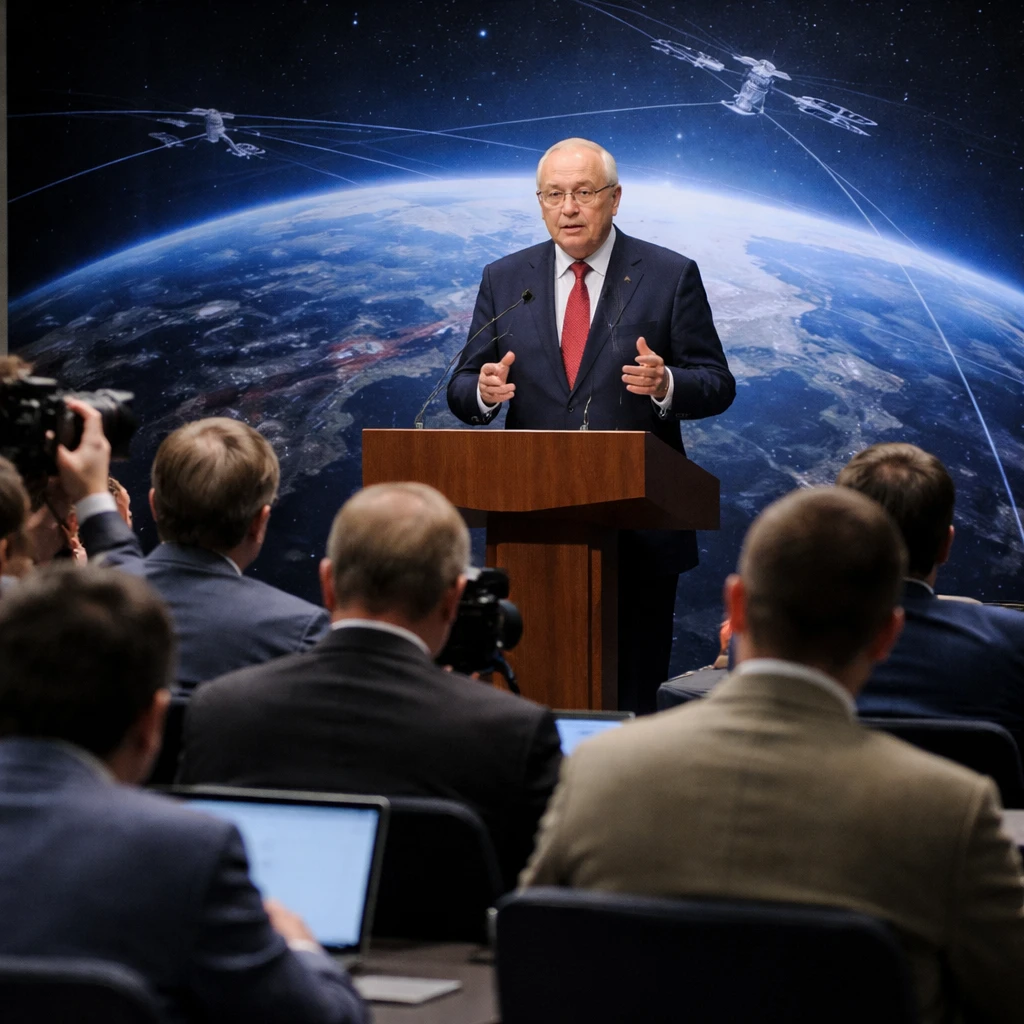
MOSCOW, Sept 16 - Russia says there is still time to prevent an arms race in space by agreeing a legally binding international treaty that would ban the deployment of offensive weapons in orbit, Deputy Foreign Minister Sergei Ryabkov said on Wednesday.
Ryabkov's comments followed a public acknowledgement from the United States earlier this week that the Pentagon is operating weapons in Earth orbit, a development described by Moscow as a landmark moment in the militarisation of space. U.S. Space Force chief Douglas Schiess stated that enlisted members of the Space Force "operate on-orbit weapons that can defend the Joint Force against space-enabled attacks."
At a news briefing in Moscow, Ryabkov said the United States had not notified Russia - which he described as one of the world's top three space powers - about the new weapons capability. He added, however, that the U.S. announcement did not come as a surprise to Moscow.
"This is nothing new to us; we are monitoring all of this, recording it all, and drawing the appropriate conclusions," Ryabkov said, repeating Moscow's long-standing call for a treaty that would rule out the use of force in space or the threat of force against objects in space.
Ryabkov accused the United States and other Western countries, singling out the United Kingdom, of having for many years relied on inflammatory pretexts to avoid moving toward such a treaty. He said these nations search for spurious reasons to resist progress and attempt to shift blame by describing Russian activities as destabilising.
"But we believe that it is not yet too late to create an environment that would preclude an arms race with escalating risks of open conflict in outer space," Ryabkov added.
The Russian deputy foreign minister's remarks underline Moscow's position that international negotiations to prohibit offensive space weapons remain possible, even after the U.S. disclosure of on-orbit capabilities. Ryabkov emphasised monitoring and assessment of developments rather than surprise, while pressing for a binding legal framework to prevent the use or threat of force against space objects.
The dialogues and accusations described by Ryabkov point to continuing diplomatic friction over transparency and restraint in space activities. Russia's proposal, as stated by its deputy foreign minister, is for a treaty that would create legal obligations to avoid the deployment of offensive weapons and reduce the likelihood of escalating conflict beyond Earth.
Context and next steps
Ryabkov framed the issue as one that can still be addressed through international agreement, urging hesitant states to move past scepticism. He suggested that previous resistance from Western nations, and accusations aimed at Russia, have slowed progress toward a formal ban. The Russian position, as communicated in Moscow, is that continued monitoring and legal prohibition are the appropriate means to prevent an arms race and the attendant risks of open conflict in outer space.