
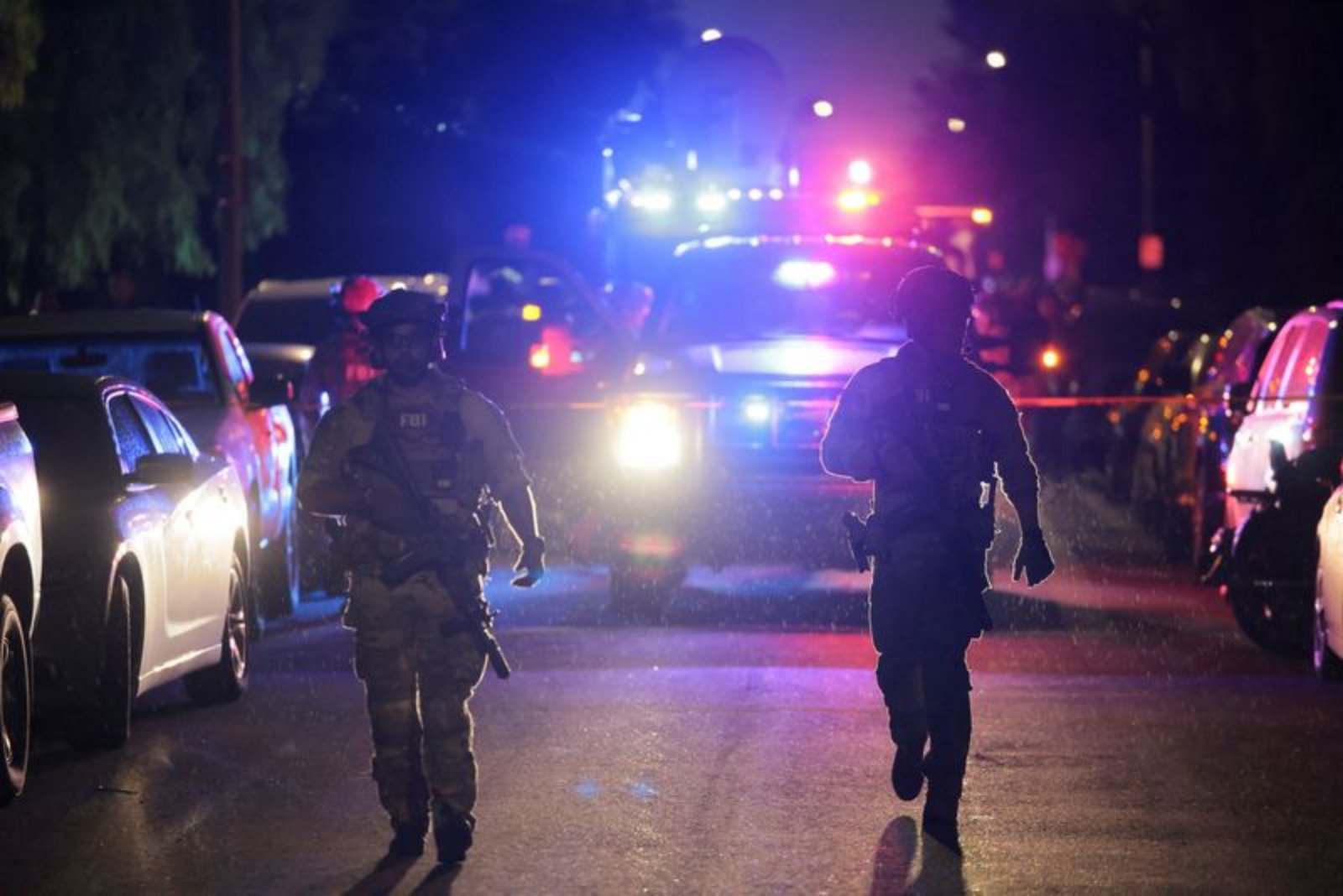
WASHINGTON, April 26 - U.S. security officials are reexamining how they protect the president and other senior officials after a gunman opened fire near the White House Correspondents’ Association dinner at the Washington Hilton, an incident that has raised questions about how the attacker was able to get so close to an event attended by President Donald Trump, members of the cabinet and lawmakers.
Two former Secret Service agents and three senior U.S. officials said federal agents ultimately executed a plan that prevented the alleged shooter from reaching the basement level of the hotel where the president was scheduled to speak. Even so, the fact that some attendees heard shots fired at a Secret Service agent highlighted gaps in the protective posture at the event, according to those officials.
The Secret Service did not immediately respond to requests for comment.
How the suspect reached the venue
Attendees passed through magnetometers or metal detectors to enter the ballroom itself, but the broader hotel was accessible to anyone with a ticket. Several people reportedly attempted to enter using tickets from the previous year, and officials said the California man accused of the shooting appears to have sidestepped even that limited control by checking into the hotel days before the dinner.
Officials said the suspect allegedly sprinted past security while armed with multiple weapons. He was stopped before reaching the basement ballroom, but the ease with which he gained access to the hotel interior has prompted immediate calls for a reassessment of perimeter security at similar large public venues.
Calls to expand the perimeter
Bill Gage, who spent six years on the Secret Service’s Counter Assault Team and now serves as executive protection director for the SafeHaven Security Group, said after-action reviews will likely focus on pushing magnetometers and other screening procedures farther from the event site to enlarge the outer perimeter.
"The Secret Service is going to have to find a way to better secure large hotels that may inconvenience the hotel goers and the hotel," Gage said, adding that coordination around evacuations of other administration officials will also need improvement.
Multiple law enforcement agencies, including the U.S. Marshals and the Diplomatic Security Service, escorted attendees away after the shooting, a response that highlighted how the patchwork of agencies responsible for protecting different VIPs can result in seemingly uncoordinated actions on the ground.
Staggered evacuations underline coordination issues
Video and audio analysis of the incident indicates President Trump was removed from the stage just over 30 seconds after the last shots were fired. Other senior officials took longer to evacuate: Health and Human Services Secretary Robert F. Kennedy Jr. required at least 100 seconds to leave the room, while Secretary of State Marco Rubio and Pentagon chief Pete Hegseth needed around 150 seconds to exit.
Don Mihalek, a former senior Secret Service agent with prior experience securing correspondents’ dinners at the Washington Hilton, said the venue's size and configuration have long presented protection challenges. "I’m sure the service is going to go back and re-look at the set-up there, and probably push out the perimeter some more now, because of what happened," Mihalek said.
President Trump, speaking at an impromptu news conference late on Saturday, described the Washington Hilton as "not a particularly secure building."
Context from earlier threats against the president
Officials note the incident occurred after two assassination attempts on Mr. Trump during the 2024 campaign had already led to stronger security measures around the president. One of those attempts, in July 2024 at a campaign rally in Butler, Pennsylvania, drew criticism of law enforcement for failing to establish an effective security perimeter; the omission allowed a gunman to obtain a clear line of sight and the then-candidate was clipped in the ear.
Comments attributed to the suspect and political reactions
In a written manifesto first reported by the New York Post, the accused shooter criticized the perceived lax security at the event. He wrote that he had "expected security cameras at every bend, bugged hotel rooms, armed agents every 10 feet, metal detectors out the wazoo," and added, "What I got (who knows, maybe they’re pranking me!) is nothing."
Conservative influencers and officials, including acting Attorney General Todd Blanche, posted on X that the shooting demonstrated the need for a permanent ballroom on White House grounds. Supporters of that idea have cited security benefits, while legal challenges over the proposed construction have been playing out in the courts.
In late March a federal judge ordered a halt to construction of a White House ballroom, saying the project would be unlawful without congressional approval; a federal appeals court later stayed that injunction.
Anticipated reviews and incremental changes
One senior U.S. official said a formal review of security around the president and his cabinet is likely, and changes could follow. Another official noted that security for some cabinet members had already been increased when the Iran war began in February, signaling that threat assessments can prompt targeted adjustments.
Officials involved in venue protection said the most immediate lesson will be the need to expand secure perimeters at large gatherings of senior officials and the president, even at the cost of inconvenience to hotels and guests. The trade-off between accessibility to public events and rigorous protection is at the center of the anticipated policy discussion as agencies review procedures in the aftermath of the shooting.
What remains open
Authorities have not publicly detailed every tactical decision made during the response or any specific procedural changes that will be implemented. The review process, according to officials, is expected to examine how screening was managed, how the suspect gained access to the hotel areas, and how multiple protective agencies coordinated the evacuation of high-profile attendees.
Until that review concludes, officials say, lessons will be drawn primarily from the sequence of events: a suspect able to reach interior hotel space, audible gunfire near a VIP-protected event, and staggered removal times for senior figures - all signals that perimeter and coordination adjustments are likely to follow.