
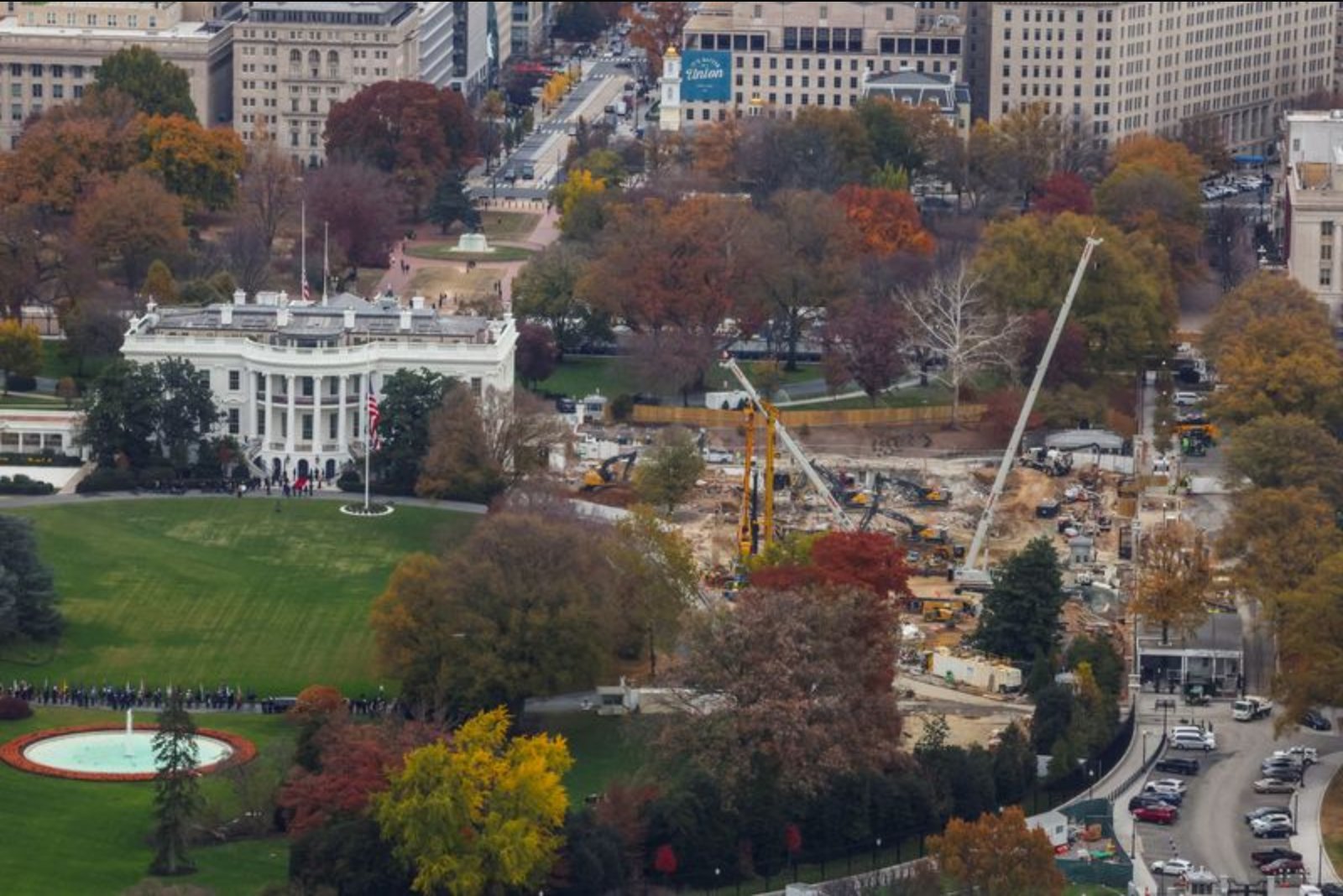
WASHINGTON, April 17 - A federal appeals panel on Friday night allowed the Trump administration to proceed, for now, with construction of a $400 million ballroom where the East Wing of the White House once stood, while the court considers a Justice Department request to suspend a lower court order.
An order from a three-judge panel of the U.S. Court of Appeals for the District of Columbia Circuit temporarily put on hold a preliminary injunction issued by a Washington district judge the previous day. The appeals court said it would hear arguments on June 5 on whether the construction should be halted while the appeal is pending.
The panel's order does not resolve the core legal dispute. The underlying lawsuit, brought by the National Trust for Historic Preservation, contests the Trump administration's authority to demolish the East Wing and replace it with a new ballroom. The appeals court explicitly left the merits of that challenge for later consideration.
U.S. District Judge Richard Leon had issued the preliminary injunction a day earlier, concluding that the ballroom project was unlawful without congressional approval. That decision was temporarily blocked by the appeals court's order as the higher court considers the Justice Department's request for a longer pause while the appeal proceeds.
The National Trust filed its suit in December after the administration removed the East Wing to make room for the ballroom, arguing that neither the president nor the National Park Service had the authority to demolish the historic structure. The organization and the White House did not provide immediate comment after business hours on Friday.
The administration has promoted the ballroom as part of a broader effort to reshape the White House, describing the project as a modernization of infrastructure that will also bolster security. President Trump has called the ballroom a defining addition to the residence and has said the work is funded entirely by private donors.
Context and next steps
The appeals panel's temporary stay allows construction activity to continue up to the June hearing, when judges will hear arguments on whether the lower court's injunction should remain in effect during the appeals process. The order does not prejudge the merits of the National Trust's claim, nor does it resolve the question of whether congressional authorization is required for the demolition and construction.
Legal proceedings are now set to proceed on a schedule that will determine whether the project will continue under judicial supervision or be ordered to stop pending final appellate disposition.