
Politics April 18, 2026 12:14 AM

Appeals Court Temporarily Permits Construction of White House Ballroom, Schedules June Hearing

D.C. Circuit pauses lower court injunction so panel can consider Justice Department request while legal challenge proceeds

By Jordan Park
Appeals Court Temporarily Permits Construction of White House Ballroom, Schedules June Hearing

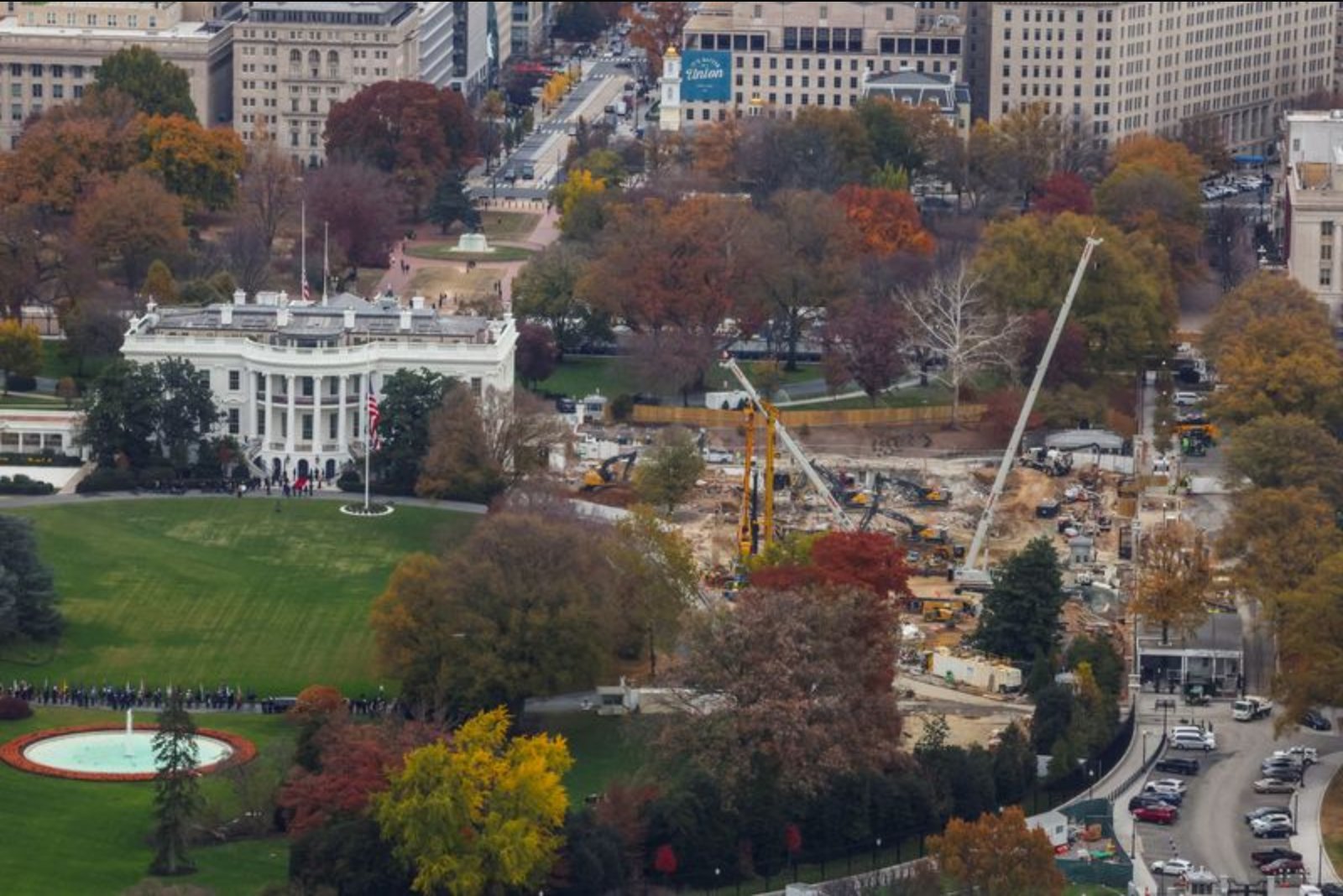
A three-judge panel of the U.S. Court of Appeals for the District of Columbia Circuit on Friday allowed construction to continue on a $400 million ballroom at the site of the White House's demolished East Wing, putting on hold a federal judge's order that had halted the project. The appeals court granted a temporary stay of the preliminary injunction and set arguments for June 5 to decide whether the project should remain paused during the appeal. The order did not resolve the underlying legal challenge to the administration's authority to undertake the construction.

Key Points

  • A three-judge panel of the D.C. Circuit temporarily stayed a district court's preliminary injunction, allowing construction of a $400 million White House ballroom to proceed.
  • The appeals court set oral argument for June 5 to determine whether construction should be halted during the appeal; the order did not rule on the merits of the legal challenge.
  • The lawsuit was filed by the National Trust for Historic Preservation after the East Wing was demolished in December; the district judge had ruled the project unlawful without congressional approval.

A federal appeals panel late Friday granted the Trump administration permission to proceed with construction of a $400 million ballroom on the footprint of the former East Wing of the White House, temporarily suspending a lower court order that had halted work.

The three-judge panel of the U.S. Court of Appeals for the District of Columbia Circuit put the preliminary injunction issued by a trial court on hold while it considers a request from the U.S. Justice Department for an extended pause on that injunction during the pendency of the appeal.

The appeals court scheduled oral argument for June 5 to address whether the construction should be stopped while the appeal is adjudicated. The panel's procedural order did not reach the substantive questions raised by the lawsuit challenging the administration's authority to build the ballroom.

Friday's action temporarily reverses a decision handed down a day earlier by U.S. District Judge Richard Leon in Washington, who had concluded the ballroom project was unlawful because it proceeded without explicit approval from the U.S. Congress.

The legal dispute stems from a suit filed by the National Trust for Historic Preservation last year. In its complaint, the National Trust argued that the president and the National Park Service lacked authority to demolish the historic East Wing to clear the site for the new ballroom. The organization brought suit in December after the administration demolished the structure.

The White House has portrayed the ballroom as a signature addition and part of an effort to reshape the capital. Officials have described the project as a modernization of infrastructure that will enhance security, and President Trump has highlighted that private donors are funding the work.

Both the National Trust and White House representatives did not provide immediate comment in response to requests made after business hours.


Legal posture and next steps

The appeals panel's stay allows construction to continue for the time being while the court evaluates the Justice Department's petition for relief from the district court's preliminary injunction. The June 5 hearing will determine whether that stay should remain in place throughout the appeal or whether work must cease until a final resolution is reached.

The court's order was narrowly procedural and did not decide the merits of the underlying challenge to executive and agency authority. Those substantive questions remain before the judiciary and will be the central issues if and when the appeals court proceeds to full briefing and decision.

Risks

  • Legal uncertainty - The appeals court's order is procedural and leaves unresolved whether the administration had authority to demolish the East Wing and proceed with construction, creating ongoing legal risk for the project. (Impacts: construction, preservation and firms contracted to the project.)
  • Operational disruption - Depending on the June 5 outcome and subsequent rulings, construction schedules and related contracting work could be interrupted or reversed. (Impacts: construction contractors and suppliers, and any firms involved in White House renovations.)
  • Reputational and procedural challenge - The dispute centers on statutory authority and historic preservation concerns, which could affect stakeholder relations and oversight of future White House alterations. (Impacts: historic preservation groups and federal agencies involved in land and property management.)

More from Politics

Federal Judge Denies DOJ Request for Rhode Island’s Non-Public Voter Records Apr 17, 2026 Becerra and Mahan Reach California Gubernatorial Debate Threshold Following Swalwell Exit Apr 16, 2026 Justice Department Expands Interviews in Probe of Ex-CIA Director Over 2017 Russia Assessment Apr 16, 2026 U.S. Senators Tell Taiwan Arms Sales Likely to Be Approved Soon, Urge Faster Defense Spending Apr 16, 2026 BCA Sees Higher Odds of Democratic Senate Win if Energy Shock Persists Apr 16, 2026