
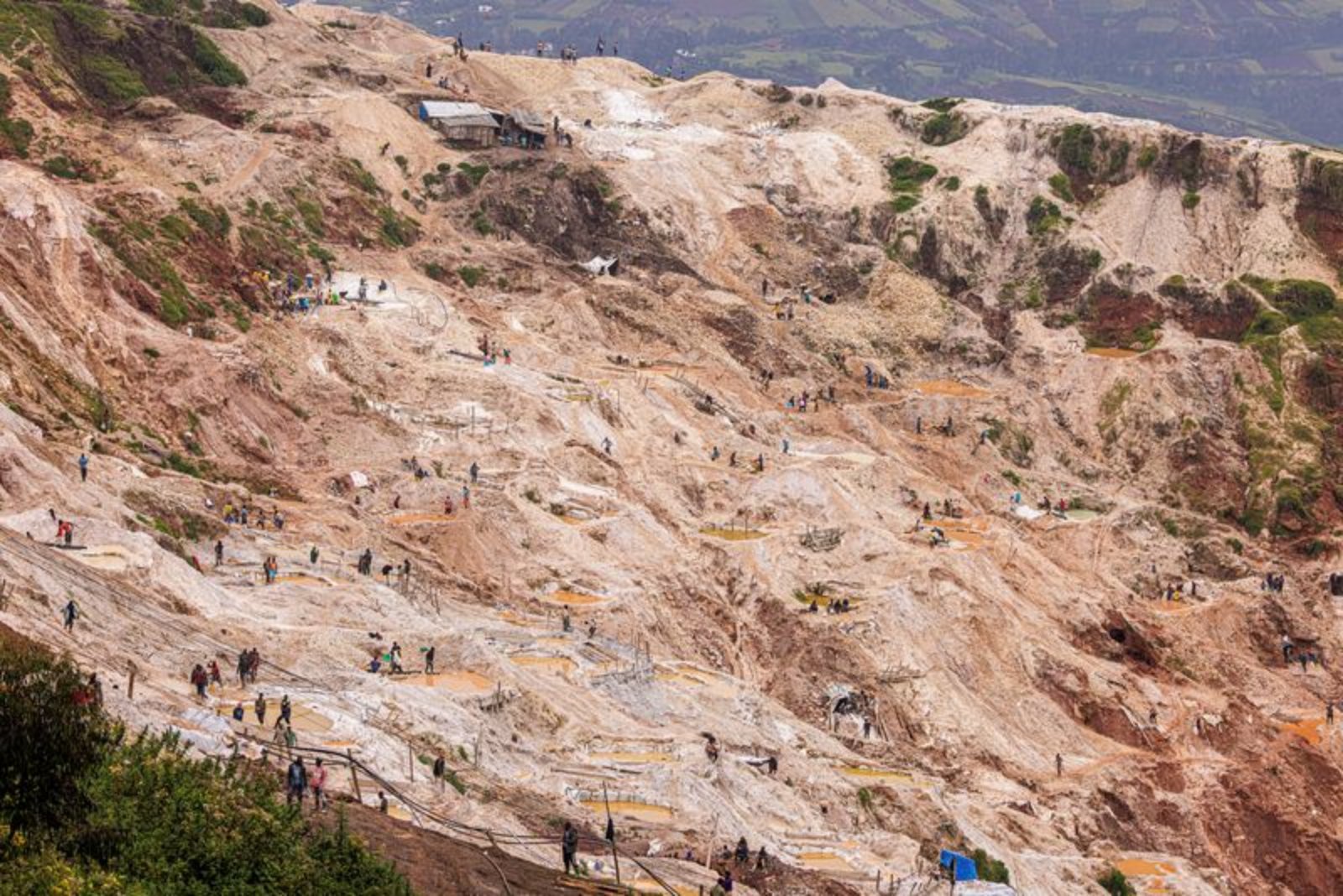
U.S. private-sector interest in mining projects across the Democratic Republic of Congo (DRC) has grown markedly, a State Department official told Reuters, with attention focused on a number of strategic assets that Kinshasa has highlighted for potential U.S. investment. Among the projects on a government-provided shortlist is the Rubaya coltan mine, which sits in a conflict-prone part of eastern Congo and is currently held by Rwandan-backed AFC/M23 rebels.
Earlier this year, the Congolese government provided Washington with a shortlist of strategic mineral assets - encompassing manganese, copper-cobalt, gold, and lithium projects - as part of a minerals partnership intended to attract U.S. capital. The State Department official said the U.S. hopes the partnership will translate bilateral peace and investment arrangements into leverage over critical-minerals supply chains.
The United States has intensified global efforts to secure supplies of strategic minerals for a metals stockpile, aiming to reduce reliance on China and to counter Chinese influence in Africa. As part of that strategy, the State Department is currently soliciting feedback from the private sector on the asset list provided by Congo.
"We have significant interest, yes," the official said when asked about U.S. company inquiries, while declining to identify specific firms because discussions are still taking shape. Both the Congolese government and representatives of M23 did not immediately respond to requests for comment regarding U.S. firms' interest in those mining assets.
Rubaya and tantalum
Rubaya is named on the Congolese list and is notable as one of the world's richest sources of tantalum, a metal refined from coltan ore and used in applications such as capacitors, aerospace components, and certain nuclear technologies. The State Department official said Rubaya remains a point of interest for U.S. companies and others, but emphasized that any commercial engagement must be undertaken in tandem with diplomatic efforts to stabilize eastern DRC.
According to the official, "Rubaya is in many ways in the centre of what is going on in eastern DRC right now. So, the commercial side can't run separate from that." Investments there, the official said, would need to run directly parallel with the U.S.-brokered peace deal designed to end the fighting that has killed thousands in the region.
M23 has publicly criticised the U.S.-Congo minerals partnership as deeply flawed and unconstitutional. An M23 official told Reuters in February that Kinshasa's offer of Rubaya to Washington - despite Kinshasa not exercising control over the site - was intended to draw the United States into military efforts to recover the area for the Congolese government.
First acquisition and investor concerns
In a separate development under the minerals partnership, U.S. firm Virtus Minerals said this month it was working to restart the cobalt and copper operations of Chemaf in Congo, marking what the State Department official described as the first acquisition of operating mines under the agreement. The official characterised that project as foundational for the broader partnership, saying it helps build confidence in the business environment for U.S. and U.S.-aligned private capital.
Investors considering projects in Congo, the official added, are primarily concerned about fiscal stability. The official noted that companies need to be able to explain to shareholders and boards with certainty what the fiscal, regulatory, and tax frameworks will look like throughout the life of an investment.
Implications
The current efforts tie commercial interest directly to diplomatic objectives in eastern Congo, with U.S. officials stressing that resource development and peacebuilding must proceed hand in hand. The precise identity of the U.S. companies engaging on these assets has not been disclosed, and discussions remain in an early phase as private-sector feedback is solicited.
Given the contested control of some listed sites and public objections from armed groups such as M23, the pathway from interest to active investment is contingent on both political progress and the establishment of clear fiscal and regulatory conditions for investors.