
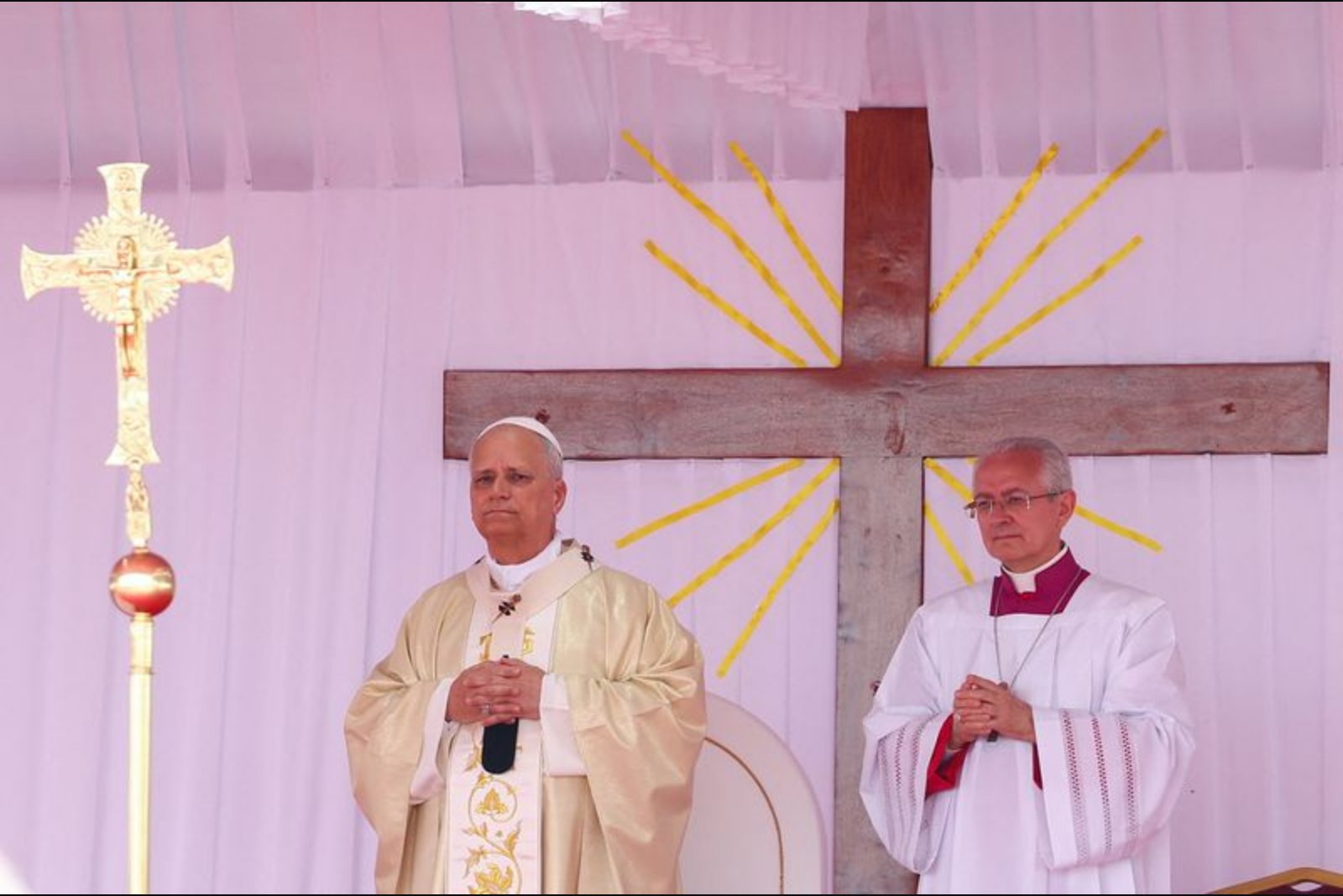
Pope Leo used a Mass in Saurimo, near the border with the Democratic Republic of Congo, to denounce what he described as widespread exploitation and deception of ordinary people by powerful actors.
Speaking on Monday, the pontiff said "many people in the world were being 'exploited by authoritarians and defrauded by the rich'," and warned that such conduct ran counter to the central Christian claim of Christ's resurrection. "Every form of oppression, violence, exploitation and dishonesty negates the resurrection of Christ," he said, connecting moral and social abuses to theological principles.
The comments are part of a noticeably forthright rhetorical approach the first U.S. pope has taken on his current Africa trip. The visit is the third stop on a 10-day programme that includes four countries and 11 cities and towns, covering nearly 18,000 km over 18 flights. The schedule makes it one of the most logistically complex papal tours in recent memory.
Until last May, when he became leader of the 1.4-billion-member Catholic Church, Pope Leo maintained a relatively low public profile. During the Africa tour, however, he has spoken out bluntly on a range of issues including war, inequality and the control of resources. On Saturday he criticised what he called exploitation of Africa's natural resources by "despots and tyrants" and earlier in the tour said the world was "being ravaged by a handful of tyrants."
The pontiff has at times criticised global leaders without naming them, and his more outspoken tone has already drawn the ire of President Donald Trump. Pope Leo told journalists on Sunday that the speeches he is delivering during the tour were prepared weeks in advance and were not aimed directly at the U.S. president. He has also expressed strong criticism of the U.S. and Israeli attacks on Iran, which began on February 28.
Crowds in Angola have greeted the pope enthusiastically. Angola is a heavily Christian country, with roughly 80% of the population identifying as Christian and about half of those as Catholic. Large public gatherings have accompanied his visit: two events on Sunday - a Mass held in a dirt field and a prayer at a site once central to the transatlantic slave trade - attracted an estimated 130,000 people.
Monday represented Pope Leo's last full day in Angola. He is scheduled to depart on Tuesday for Equatorial Guinea, the final nation on the Africa itinerary. There he will meet President Teodoro Obiang Nguema Mbasogo and speak to political leaders. Obiang has held the presidency since 1979 and is noted in the itinerary as the world's longest-serving president.
Equatorial Guinea is described in the trip coverage as one of the region's most repressive countries. The nation's governance record has drawn widespread criticism, while the government itself rejects allegations of human rights abuses and corruption.
Contextual note - The pope's remarks in Angola continue a pattern of direct moral and political commentary on this Africa tour, focused on the human costs of oppression and economic inequality. The itinerary's scope and venues underscore the diplomatic and logistical complexity of the visit.