
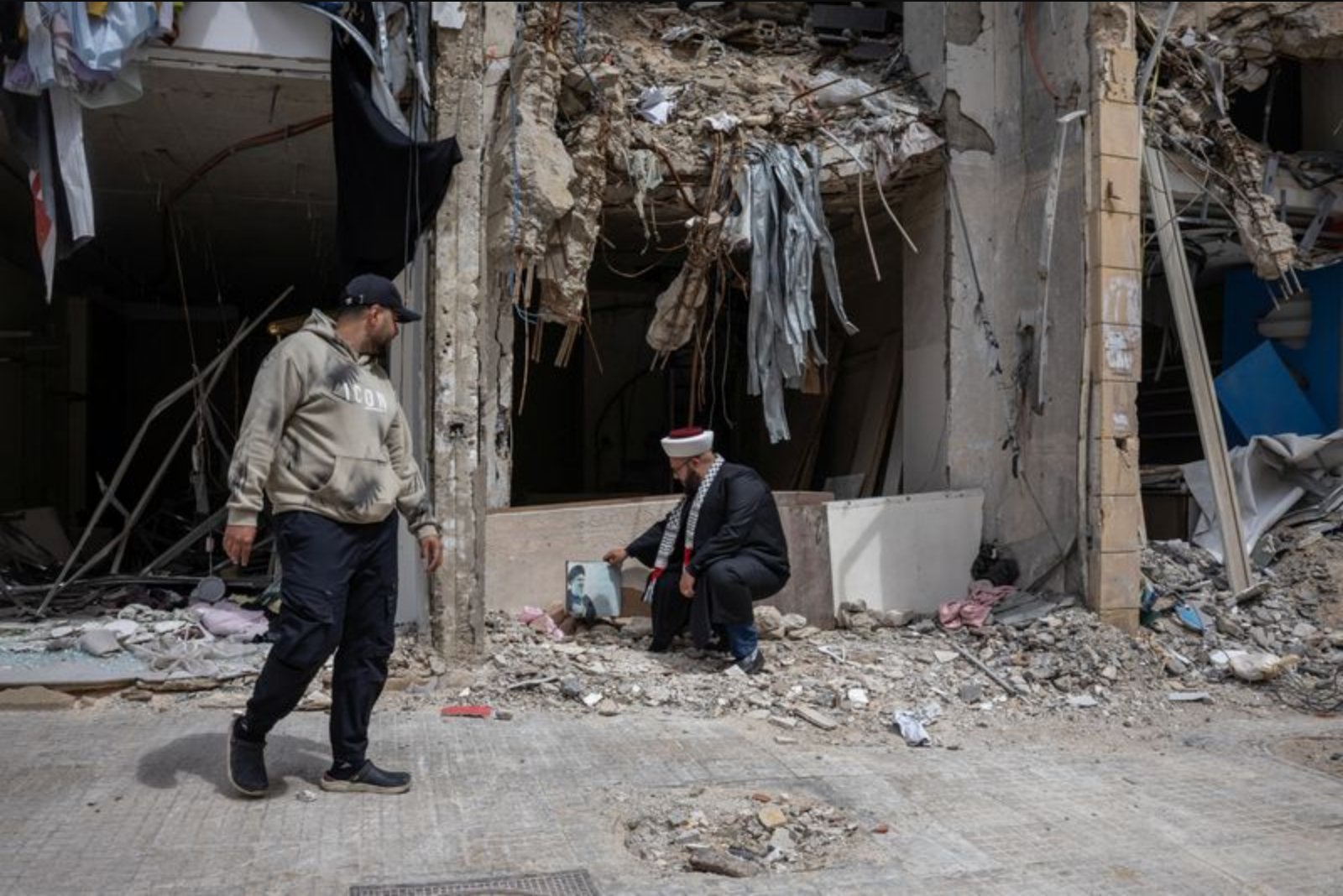
Israel on Monday instructed inhabitants of southern Lebanon to avoid a continuous band of land running along the length of the Israel-Lebanon border and to keep clear of the Litani River area, effectively consolidating its military presence inside Lebanese territory despite a recently implemented ceasefire.
The U.S.-mediated, 10-day ceasefire took effect on Thursday and largely halted the broader hostilities between Israel and the Iran-backed Hezbollah that escalated from the wider conflict involving the United States and Iran. Nonetheless, the truce remains fragile as Israeli troops continue to occupy ground well inside southern Lebanon, stating the deployment aims to form a buffer zone to protect northern Israel from Hezbollah attacks. Hezbollah, in turn, asserts it retains the "right to resist" the Israeli presence.
The Israeli military released a map on social media showing a red line cutting through 21 villages in the south and explicitly advising residents not to move into the area between that line and the international border. The military said its forces were holding positions in the southern sector "in the face of ongoing terrorist activities" by the Iran-backed group.
That map also identified more than 50 additional villages to which residents were told not to return. Separately, the military said civilians were not permitted to approach the area of the Litani River - a watercourse that the military noted mostly flows to the north of the region it had flagged as off-limits.
On Sunday the Israeli military published a comparable map that for the first time delineated its new deployment line within Lebanon. The line, drawn east to west, extends approximately 5-10 km from the border into Lebanese territory and covers an area where the military has conducted operations that included the destruction of villages in the south.
Warnings and combat reports
Senior Hezbollah official Mahmoud Qmati addressed residents of the Hezbollah-controlled southern suburbs of Beirut on Saturday and urged them not to return to their homes because of the danger of Israeli attack. Local councils in southern Lebanon issued similar warnings, saying it was not yet safe for people to return.
In a statement on Monday, Hezbollah said explosive devices that its fighters had previously planted detonated as Israeli military vehicles moved through a southern area on Sunday, destroying four tanks. The Israeli military did not immediately respond to a request for comment on that specific claim.
The Israeli military reported on Sunday that one soldier had been killed and nine others wounded during combat operations in southern Lebanon.
Wider toll and displacement
Lebanon was pulled into a regional war on March 2 when Hezbollah opened fire in support of Tehran, prompting an Israeli offensive. Lebanese authorities say that the offensive has killed more than 2,300 people, including 177 children, and has forced over 1.2 million people to flee their homes.
Hezbollah has not released its own casualty figures. Sources close to the group said that at least 400 of its fighters had been killed by the end of March. Hezbollah has launched hundreds of rockets and drones at Israel; those attacks have killed two civilians in Israel. Israel says 15 of its soldiers have been killed in Lebanon since March 2.
Outlook
The ceasefire has reduced the intensity of open hostilities, but the continued Israeli occupation of southern Lebanese territory and the parallel warnings from Hezbollah and local authorities underscore the fragility of the pause in fighting. The presence of an Israeli deployment line mapped 5-10 km inside Lebanon, combined with conflicting claims and combat reports, leaves the situation volatile and the security of civilians in southern Lebanon uncertain.