
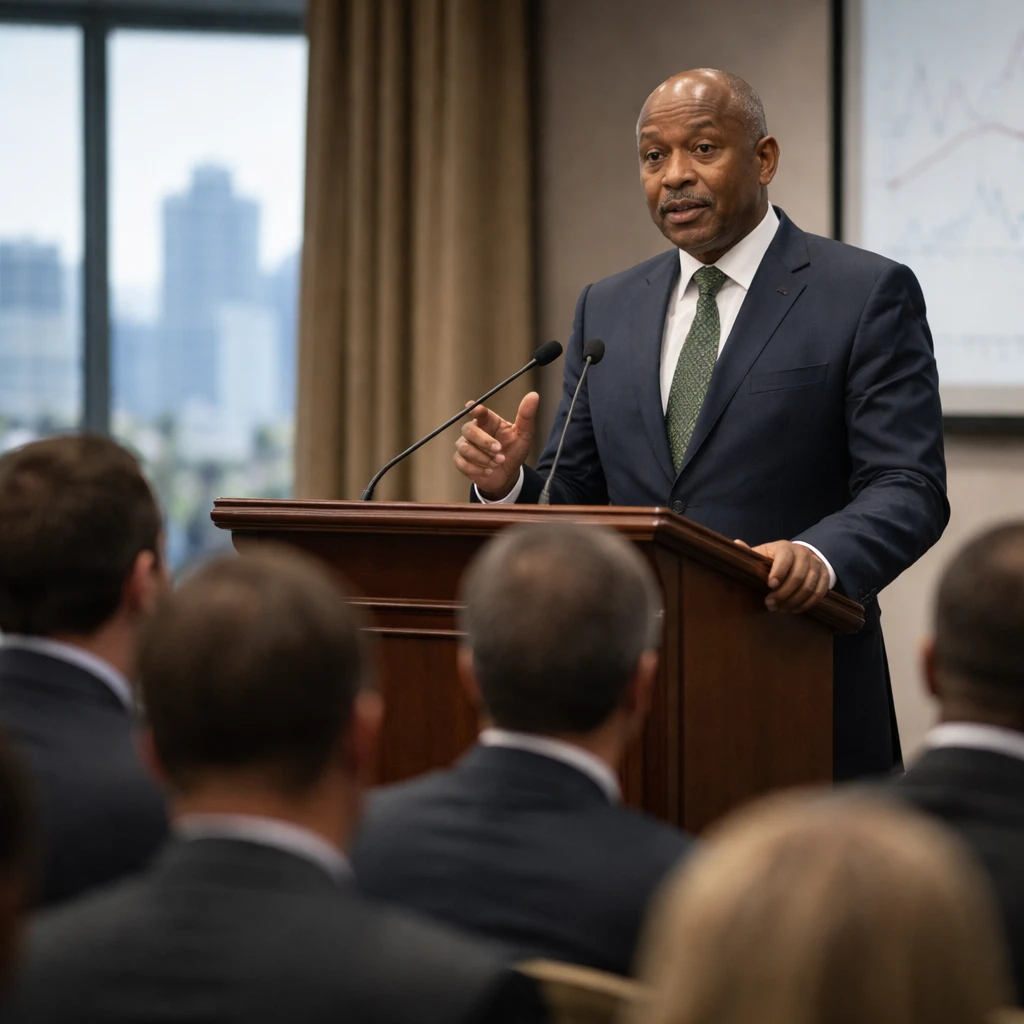
South Africa's central bank said it will work to restore inflation to its 3% target following a recent rate increase, with Governor Lesetja Kganyago defending the decision as essential to prevent temporary energy shocks from becoming persistent inflationary pressures.
Last Thursday the South African Reserve Bank (SARB) raised its key repo rate by 25 basis points to 7%, a move supported by four of six members of the Monetary Policy Committee. The increase follows a rise in headline inflation to 4.0% in April from 3.1% in March, placing inflation at the upper bound of the bank's target range.
The SARB maintains a formal inflation target of 3% with a tolerance band of one percentage point on either side. In its latest outlook the bank adjusted its inflation forecasts to 4.4% for 2026 and 3.7% for 2027.
Kganyago pointed to a Middle East oil shock as a principal driver of recent price increases, saying South Africa - a net importer of oil - has experienced significant fuel price rises related to the Iran war. While the government has taken modest steps to cushion the impact by intervening on the fuel levy, the governor said further effects are developing and warrant a monetary response.
Specifically, the central bank has observed second-round effects emerging from higher oil prices, including spillovers to food costs via rising diesel and fertilizer expenses. The SARB projects core inflation will be around 4% in the first half of next year, reinforcing its view that action is needed to prevent inflation from becoming entrenched.
"By changing rates, we hope to send a clear and credible signal that we will keep inflation under control," Kganyago said in remarks to economists in Johannesburg, adding that the bank would not allow a price spiral to take hold at the expense of the most vulnerable.
Kganyago also dismissed a return to the previous 3-6% inflation target band, saying the bank would not revert to that framework. The next inflation expectation survey is scheduled for release at the end of June.
The SARB's recent actions and forward guidance reflect a focus on preventing temporary supply shocks from influencing medium-term inflation expectations and price-setting behavior. With headline inflation already at the upper edge of the tolerance band and core inflation projected to remain elevated into the next year, the bank has opted for a pre-emptive tightening stance.
Policy makers will be monitoring the inflation expectation survey at the end of June as a gauge of whether their signaling and the rate rise are affecting price-setter behavior and public inflation outlooks.