
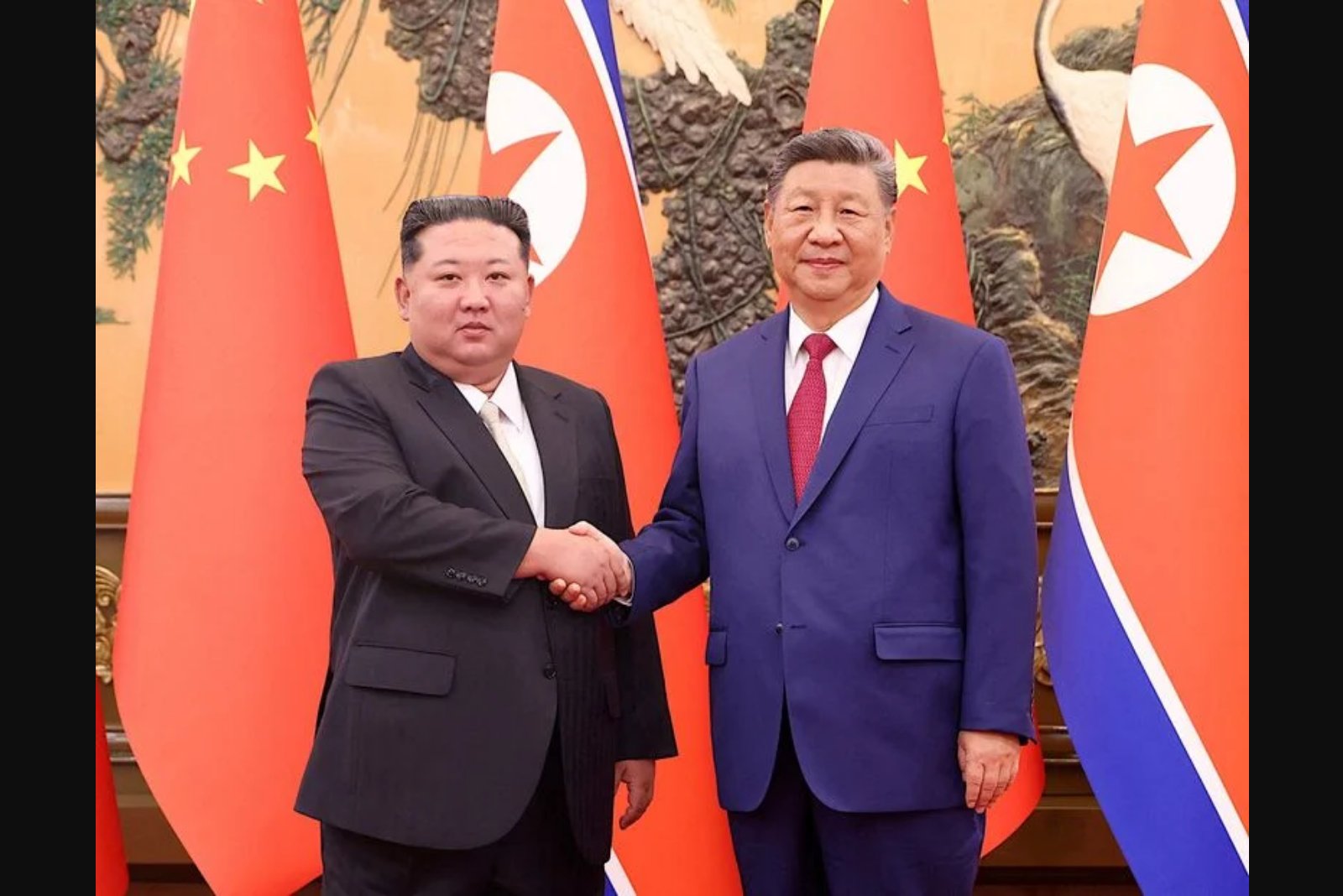
Chinese President Xi Jinping arrived in Pyongyang for a two-day state visit that underscores a closer diplomatic rhythm between Beijing and North Korea at a time when Pyongyang is presenting itself from a position of strength. North Korean leader Kim Jong Un is hosting Xi amid elevated ties with Moscow, an expanding nuclear program and little sign of willingness to pursue substantive engagement with the United States.
The meeting follows a sequence of events that has swept Kim back into the spotlight: he was among the foreign leaders welcomed at a large military parade in Beijing last year, and since then some passenger rail and air links between the two countries have been restored. Observers say the current summit will likely differ markedly from Xi’s previous visit to North Korea in 2019 - a visit that came months after U.S.-North Korea talks over denuclearisation faltered.
Context of the visit
Analysts note that Kim’s external posture has shifted since 2019. He has tightened domestic controls, closed the border to stem departures, deepened cooperation with Russia and accelerated his nuclear program despite international sanctions. Those moves are being played out publicly as Xi arrives, including North Korea’s announcements in the days immediately prior to the summit that it plans to build a 10,000-ton naval destroyer and would reaffirm its status as a nuclear-armed state.
"Having Xi visit Pyongyang is a big deal and the culmination of a good couple of ‘comeback’ years for Kim," said Andrew Gilholm, an analyst at consultancy Control Risks.
North Korea’s recent foreign policy and military posture reflect an effort to balance external partners. Beijing has at times pushed back on Pyongyang’s nuclear tests and publicly urged denuclearisation, yet the two neighbours maintain close ties across political and economic lines. At the same time, support from Russia has created a broader set of relationships that Pyongyang can draw on.
"North Korea is certainly gaining economically from what they’re able to provide militarily to Russia," said John Delury, a senior fellow of the Asia Society. "That actually puts North Korea in a position where they may feel more confident to increase the volume of trade and investment with China."
Economic agenda and limited diplomatic openings
Officials and diplomats expect the summit’s most tangible outcomes to be economic in nature. A regional diplomat familiar with planning for the visit said substantive cooperation is likely to focus on economic matters as North Korea implements a five-year development plan that aims to expand tourism and build additional housing.
Tourism had been a modest but important source of foreign currency for Pyongyang before the pandemic; Chinese visitors made up the vast majority of those tourists. North Korea closed its borders early in 2020 and imposed strict COVID-19 controls that decimated that revenue stream. The first small group of leisure tourists allowed back after the pandemic were about 100 visitors from Russia’s Far East in February 2024, according to Russian provincial authorities and a Western tour guide.
The Chinese market remains central to any revival of North Korean tourism. Restoring passenger rail and air services is one practical sign of reconnected transport links, and the current talks are expected to address how to normalise and expand cross-border economic activity.
Singapore’s foreign minister, after a recent visit to Pyongyang, said North Korea had made economic progress but appeared to have little interest in engaging with the United States or South Korea. That assessment aligns with other signs that Pyongyang is prioritising economic development on its own terms while keeping diplomatic channels with the United States limited.
Inter-Korean relations and regional diplomatic hopes
South Korea’s leadership has signalled it would like China to play a mediating role. South Korean President Lee Jae Myung has asked Xi to assist in reviving dialogue between the two Koreas. Moon Chung-in, a professor at Yonsei University in Seoul and a former national security adviser, said: "Improving inter-Korean relations through the mediation of President Xi Jinping, we are hoping that President Xi would play that kind of role."
Yet, Pyongyang has publicly rejected reunification with South Korea and remains committed to policies that reinforce its sovereignty and security. Those positions reduce the prospects for a rapid diplomatic thaw that would involve significant concessions on Pyongyang’s part.
Red lines and nuclear policy
In the days before Xi’s arrival, North Korean leadership reiterated firm red lines on its nuclear program. Kim called for an "exponential" expansion of the country’s atomic arsenal and the country has signalled continued efforts to increase fissile-material production and the deployment of nuclear weapons.
Yang Moo-jin, president of the University of North Korean Studies in Seoul, said Kim is likely to press on with expanding fissile material production, increasing and deploying nuclear weapons and bolstering the declared legitimacy of Pyongyang’s nuclear deterrent.
Christopher Green, a Korea specialist at Leiden University in the Netherlands, summarized the dynamic: "Kim is emboldened. He feels able to publicly pursue a marked expansion of North Korea’s nuclear arsenal with a confidence that comes from knowing that as long as he doesn’t foment outright instability in the region, Beijing will not try to stop him."
What to watch
- Whether the summit yields concrete economic agreements aimed at tourism reinstatement, infrastructure or housing projects tied to Pyongyang’s five-year plan.
- Any formal commitments or steps that further normalise passenger rail and air services between China and North Korea.
- Statements or actions from Pyongyang that indicate either a slowdown or acceleration of its declared nuclear expansion goals.
As Xi conducts talks in Pyongyang, the summit will serve multiple functions: it is a diplomatic signal of rekindled ties, a potential opening for economic cooperation and a backdrop against which North Korea is publicly reinforcing its strategic posture. Observers will watch for tangible economic measures and for any indication that Pyongyang’s nuclear trajectory has shifted, but the public signals ahead of the visit suggest continuity in Kim’s approach of consolidating strength while selectively engaging with key partners.