
Stock Markets June 7, 2026 03:21 AM

Waymo Keeps Commercial Lead as Tesla Advances Robotaxi Efforts

Barclays research highlights Tesla's progress in driverless rides while Waymo remains the front-runner in scale and commercialization

By Ajmal Hussain
Share
Twitter Reddit Facebook LinkedIn
TSLA GOOGL

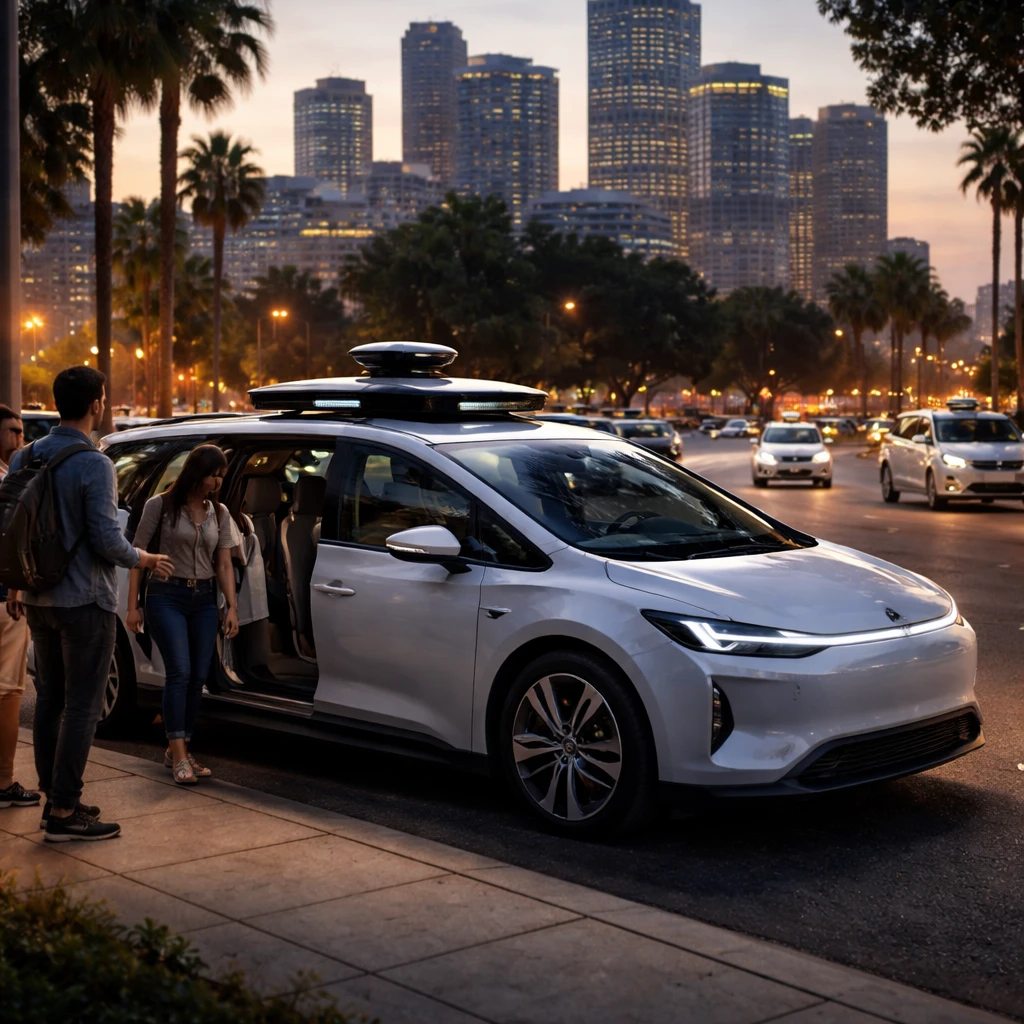
A Barclays note outlines that Tesla is making measurable strides in autonomous driving, expanding driverless robotaxi operations in Texas with an estimated fleet of roughly 30 to 50 vehicles and most rides now operating without safety drivers. Despite that progress, Waymo continues to hold a substantial commercial lead, operating thousands of autonomous vehicles and running paid services across several major U.S. cities. Tesla is pursuing a different, camera-first technical approach and is preparing broader market rollouts and limited production of a purpose-built Cybercab.

Waymo Keeps Commercial Lead as Tesla Advances Robotaxi Efforts
TSLA GOOGL
Summarize with
ChatGPT Perplexity Claude Grok Gemini

Key Points

  • Tesla has expanded driverless robotaxi operations in Texas to an estimated fleet of roughly 30 to 50 vehicles, with most rides now running without safety drivers - impacts automotive and mobility services sectors.
  • Waymo operates thousands of autonomous vehicles and runs commercial services across several major U.S. cities, generating meaningful ride volumes and leveraging a first-mover advantage - affects ride-hailing and urban transportation markets.
  • Tesla favors a camera-and-AI approach over high-cost sensor suites and detailed mapping, and is preparing market rollouts to Phoenix, Miami, Orlando, Tampa, and Las Vegas while pilot production of the Cybercab has begun - relevant to hardware suppliers, vehicle manufacturing, and software platforms.

Barclays research underscores a widening gap between two high-profile players in autonomous mobility: Tesla is progressing on its robotaxi ambitions, but Waymo remains the dominant commercial operator.

According to the note, Tesla has grown its driverless operations in Texas and is believed to be deploying a fleet of roughly 30 to 50 vehicles. The firm has moved past the earliest phases of testing in that market, with most rides now completed without safety drivers present.

Even with those advances, Barclays concludes that Waymo’s lead is sizable. Waymo runs thousands of autonomous vehicles and has established commercial services in several major U.S. cities, producing meaningful ride volumes that create a significant first-mover advantage.

Tesla’s technical approach departs from many of its rivals. Instead of relying on the high-cost array of sensors and dense mapping frequently used by other teams, Tesla emphasizes cameras and artificial intelligence as the backbone of its autonomy stack. Supporters of this strategy say it could reduce per-vehicle costs and enable faster scaling if the camera-plus-AI approach proves robust.

The automaker is also preparing for wider geographic expansion. Management has plans to launch robotaxi services in Phoenix, Miami, Orlando, Tampa, and Las Vegas. Separately, pilot production of Tesla’s purpose-built Cybercab has begun, offering another potential lever for future deployment growth.

Investors are paying close attention to executionary milestones. Barclays highlights several concrete areas that will be watched: expanding fleet size, lifting ride volumes, entering new metropolitan markets, and showing the ability to operate safely at scale. The research note also points out that market valuation for Tesla remains closely linked to expectations surrounding its autonomous-driving prospects.

While Waymo currently holds the commercialization advantage, Barclays observes that Tesla’s lower-cost platform, manufacturing scale, and integrated ecosystem could become meaningful strengths if the company can materially accelerate deployments over coming years.


Contextual note: The analysis reflects the items described in the research note and focuses on operational scale, technical architecture, and near-term execution milestones. It does not introduce additional claims beyond those outlined in the source material.

Risks

  • Execution risk for Tesla in scaling fleets, increasing ride volumes, and entering new markets could slow adoption and affect investor expectations - impacts automotive manufacturing and mobility services investors.
  • Safety and operational reliability at scale remain an uncertainty that could influence regulatory responses and public acceptance - affects urban transportation and insurance sectors.
  • Tesla’s valuation is tied to autonomous-driving progress; setbacks in meeting key milestones could have market valuation implications - relevant to equity markets and technology investors.

More from Stock Markets

Analyst Moves This Week: Value Plays, Activist Triggers and Tech-Driven Upside Jun 7, 2026 Domino’s and Casey’s Take the Lead in the U.S. Pizza Market Jun 6, 2026 Investors Move to Hedging as South Korea’s Stock Rally Sparks Caution Jun 6, 2026 Hollywood Workers Protest Proposed Paramount-Skydance Acquisition of Warner Bros. Discovery Jun 6, 2026 Spirit's Exit Has Trimmed Competition, Lifting Industry Pricing Power and Revenue Prospects Jun 6, 2026