
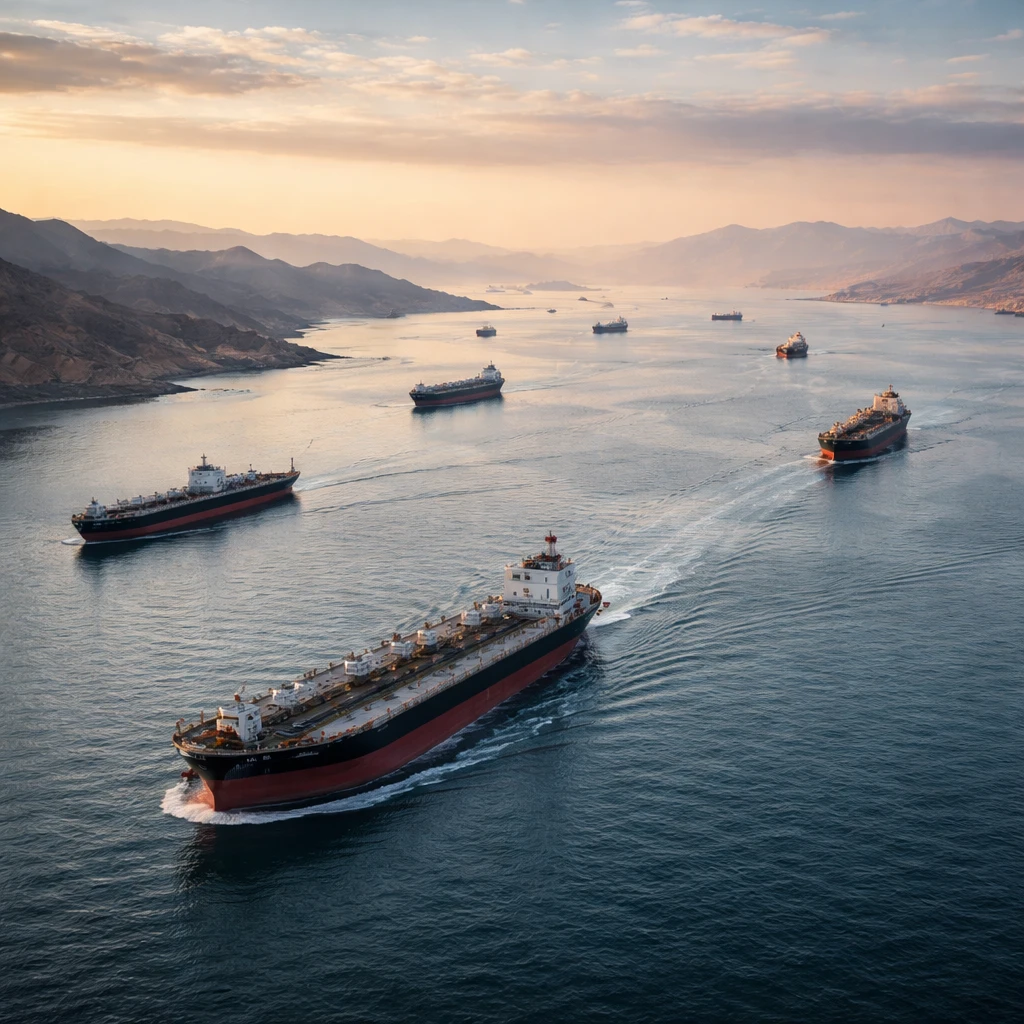
U.S. President Donald Trump said on the sidelines of a Group of Seven meeting in France that the Strait of Hormuz, which has been effectively closed for weeks, is now "partially opened" and would be "completely opened" by Friday when delegations from Washington and Tehran will meet in Switzerland for a formal signing of an interim peace agreement.
Trump told reporters that "Ships are starting to go out now, and on Friday it will be completely opened," linking the expected reopening to the scheduled signing. He added that the text of the framework deal will be released on Friday, although other officials have said it could be made public within two days.
The president and U.S. Vice President JD Vance electronically signed a preliminary version of the deal on Sunday. Vance, who is expected to attend the signing ceremony in Switzerland, told CNBC on Monday that there are still "a lot of very important details to figure out." Details that have been reported include a 60-day extension of an ongoing ceasefire and the lifting of an American blockade of Iranian ports, along with a reopening of the strait.
Markets reacted to the prospect of additional oil flowing back to global supply. Brent crude futures extended a recent slide from peaks above $110 a barrel. By 04:46 ET (09:46 GMT), the Brent contract had fallen 2.5% to $81.11 a barrel.
Not all officials are aligned on timing. The Wall Street Journal, citing senior U.S. officials, reported that normal shipping operations could take up to two weeks to resume, introducing a gap between public expectations and some operational assessments.
The agreement faces political and security complexities tied to wider regional dynamics. Israeli military operations in Lebanon - where Israel has been targeting Iran-backed Hezbollah militants - represent one set of complications. Israeli Prime Minister Benjamin Netanyahu has reportedly been seeking a meeting with President Trump and has expressed opposition to an accord that does not fully dismantle Iran's ballistic-missile capabilities and its network of regional militias.
Israel's Defense Minister Israel Katz has said Israeli forces will not withdraw from southern Lebanon. On the Iranian side, Foreign Minister Abbas Araghchi was quoted on state television as saying: "Without the withdrawal of Israeli forces from the territories they occupied during this war, the war has not fully come to an end," and he warned that further attacks would be considered a violation of the memorandum of understanding.
U.S. officials, according to the Wall Street Journal, have indicated that an Israeli withdrawal from those areas is not a required condition to halt hostilities, underscoring a difference in priorities between some regional actors and negotiators.
The coming days are likely to test the durability of the interim arrangements and the speed of operational rollouts. While the public messaging has been focused on a rapid reopening of a critical shipping lane and an imminent release of framework text, at least some officials and outlets have flagged a more measured timeline for restoring normal shipping traffic.
Contextual note - The developments encompass diplomatic, security and commercial considerations: the timing of any reopening affects oil flows and shipping operations; the text and terms of the memorandum are still being finalized; and regional military actions could condition whether the agreement is upheld in practice.