
Overview
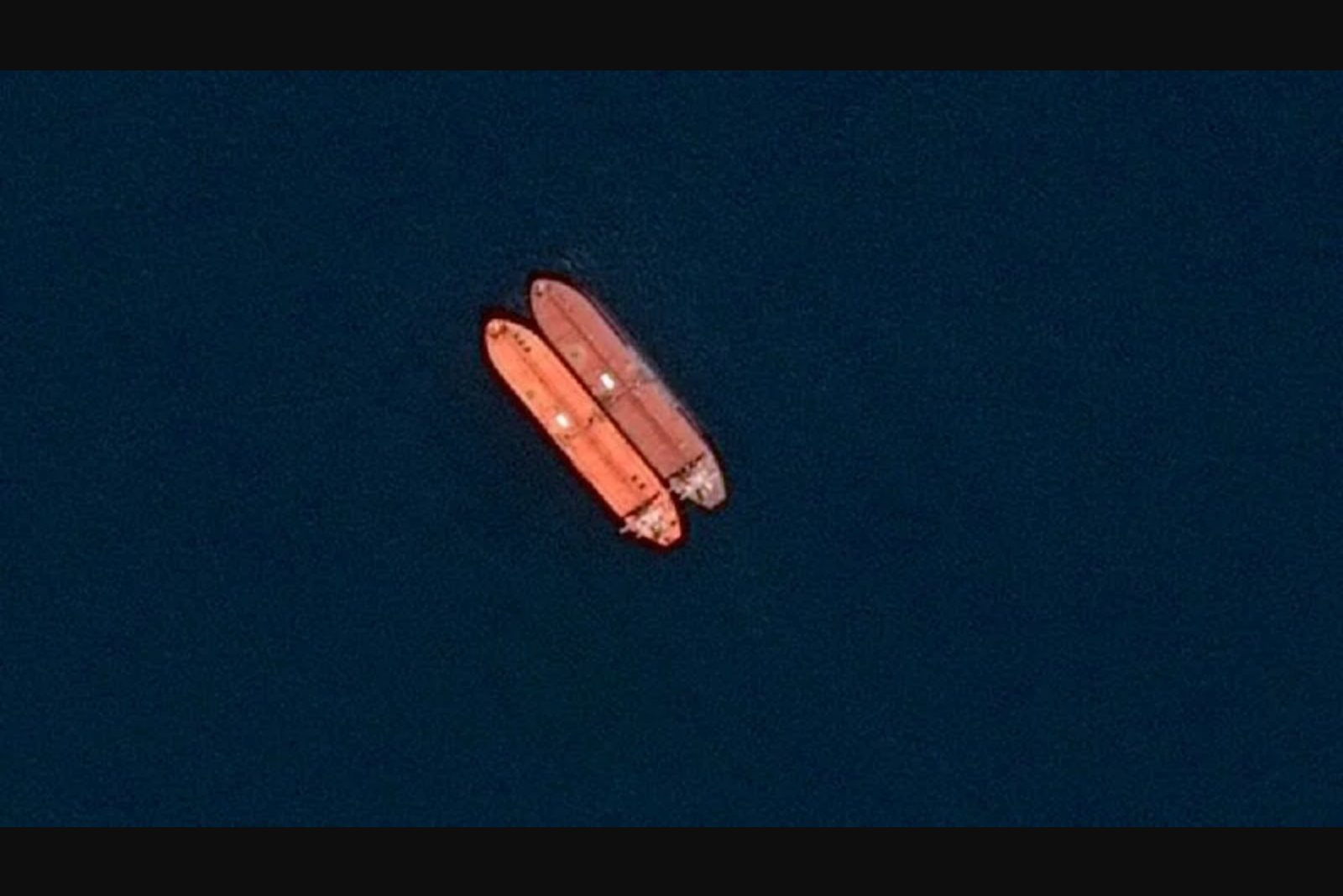
In early May, the United States military began overseeing a covert program that coordinates ship-to-ship oil transfers in international waters near the exit of the Strait of Hormuz. The operation centers on two offshore locations identified by sources familiar with the effort - one off Fujairah in the United Arab Emirates and another off the coast of Sohar in Oman. Satellite imagery and shipping data reviewed as part of the reporting show that the transfers have involved at least 92 ships and that multiple paired transfers have been visible simultaneously at the two spots.
How the operation is run
According to eight people with direct knowledge of the undertaking, the U.S. military exerts operational control over the transfer program. The procedure requires tankers to arrive at a prearranged meeting point before reaching the strait. Once in the designated area, the laden tankers stage departures in staggered windows so they maintain spacing of approximately 3,000 to 4,000 meters from one another. Four sources involved in or familiar with the operation said participating ships switch off transponders and dim their lights while en route.
Waypoints are established to let the U.S. military monitor the movement of vessels taking part. One participant described continuous U.S. observation of the tankers as they progress through the route. When the tankers clear a zone Iran has marked as within its control, they come alongside Very Large Crude Carriers, or VLCCs, to begin ship-to-ship oil transfers that typically last between 24 and 40 hours. After cargoes are moved to the VLCCs, the empty tankers shuttle back through the strait and the loaded VLCCs sail on to their destinations.
Scale and timing
Satellite imagery reviewed between May 2 and June 11 captured multiple instances of paired tankers conducting transfers at the two offshore locations. On June 11, images showed as many as 17 pairs of ships engaged in simultaneous transfers. Reuters counted six pairs of tanker ships clustered together in a small area off Sohar on the day an Apache helicopter was shot down by Iran on June 9.
Using satellite photos and vessel capacity estimates, the reporting calculated that at least 90 million barrels of crude oil and petroleum products may have moved through the offshore network since early May. Shipping and imagery reviews indicate state-owned Gulf tanker fleets and internationally operated vessels have both participated as source and receiving ships. While the volumes moved via this network are substantial in absolute terms, they remain small relative to pre-war traffic through the strait, which averaged about 20 million barrels per day.
Tools used to enable the operation
Sources said the United States has employed aerial and maritime drones, helicopters and extensive surveillance to support participating vessels. Six sources with direct knowledge described the U.S. role as providing aerial surveillance, compliance screening and monitoring rather than direct naval escort. Satellite images and shipping data from LSEG and Kpler showed repeated rendezvous between tankers operating in the area during the same period.
Four sources told reporters that two crew members of an Apache helicopter were rescued by a drone boat after the Apache was downed by Iran on June 9. Four sources, including a former U.S. official familiar with the downing, said the Apache had been involved in the mission, although Reuters was not able to independently verify the Apache’s specific role in the transfers. A U.S. defense official stated that no Central Command forces are taking part in an offshore ship-to-ship oil transfer operation when asked for comment.
Participants and compliance screening
The receiving side of the offloading is dominated by international tanker operators. Shipping records show companies such as Greece-based Dynacom Tankers Management among those that have maneuvered to transport oil through the area since the war began. In remarks at a shipping conference on June 1, Dynacom’s founder referenced efforts to ensure freedom of navigation and hinted at creative approaches to moving cargoes through the strait without elaborating on specifics.
Sources said companies seeking access to the U.S.-managed system must undergo a compliance review before being allocated transit windows. Two preliminary compliance documents reviewed by reporting required operators to provide full geospatial tracking histories, complete beneficial ownership disclosure, cargo documentation and consent to cargo testing. If approved, participating vessels receive transit windows and remain in contact with the U.S. Navy’s Naval Cooperation and Guidance for Shipping office in Bahrain during their voyage.
State-owned fleet activity
Emirati exports accounted for a substantial share of the ship-to-ship transfers based on shipping records. Six sources indicated that the UAE’s state-owned oil company, ADNOC, has been among the most active participants in the U.S.-led transfers. The Kuwait Oil Tanker Company was also active, with TankerTrackers.com data showing around 2.3 million barrels were siphoned from one of its ships off Sohar on June 6, a day identified as particularly busy for transfers. That cargo’s receiving ship, Sea Ruby, was subsequently spotted off India’s southwest coast and headed for China, where the cargo was expected to be discharged.
Requests for comment to the UAE government, ADNOC and the Kuwait Oil Tanker Company went unanswered.
Security environment and Iranian actions
The offshore transfer locations lie near the area Iran has drawn boundaries around via the Persian Gulf Strait Authority, a body Iran established to administer the Hormuz Strait. Iran has warned that ships not complying with its directives risk attack by drones and missiles from the Islamic Revolutionary Guard Corps. The port of Fujairah has itself been struck repeatedly during the period the U.S.-led transfers were underway.
Over the recent period of hostilities, Iran effectively closed the Strait of Hormuz, a choke point through which roughly a fifth of global oil consumption typically passes. That effective closure created a major global energy supply disruption and has contributed to inflationary pressures worldwide, according to the reporting. In the context of the conflict, vessels transiting on the opposite side of the strait have been subject to Iran’s own system of island checkpoints, diplomatic arrangements and, in some cases, fees, as described in earlier reporting on Iran’s escorting procedures.
Over a recent weekend, the maritime risk management group Vanguard reported an "unknown projectile" struck a tanker off Oman. Vanguard said the crew were safe, that there was some leakage from the cargo, but no environmental damage. Vanguard did not indicate whether the affected tanker was participating in a ship-to-ship transfer.
Operational risks and industry concerns
Industry and security sources warn that the transfer approach is both risky and inefficient. One maritime security analyst involved in reviewing the reporting said the operation exposes participating ships to potential Iranian attacks, noting that it is impossible to predict when Iran might decide to deploy drones or even gunboats to prevent ships from transiting the strait.
Shipping industry officials told reporters that the system imposes additional hazards because vessels often operate with transponders switched off and lights dimmed, and they travel at night at speeds that complicate maneuvering. A maritime security source said there is a paucity of reliable data because companies are not reporting via the standard reporting centers, increasing the risk of collisions between vessels operating under reduced visibility and communications.
Although Iran has used ship-to-ship transfers for years to mask the origins of exports and evade sanctions, Iran typically operated one pair at a time to limit detection and because its prewar export volumes were relatively small. The U.S.-led operation, by contrast, has enabled mass transfers, which sources said better protect Gulf producers from attacks and allow crude, condensate and petroleum products to reach international buyers.
Scope and limits of the transfers
Review of satellite imagery and shipping data indicated repeated rendezvous and mass offloads involving state-owned Gulf tanker fleets and international operators. While the operation has moved tens of millions of barrels since early May, the volumes remain modest relative to the historic daily passage of about 20 million barrels through the Strait of Hormuz.
Commenting on the broader implications, Michael Froman, president of the Council on Foreign Relations, wrote in a note that it is ironic the United States is adopting techniques pioneered by other states and so-called "dark fleets" to keep crude moving, referencing the long-standing practice of operating without transponders. Those practices have been used by nations to evade U.S. and U.N. sanctions, he said.
Official responses
Requests for comment from Iranian authorities about the offshore transfer operation produced no response. The White House referred queries to Central Command. A U.S. defense official said when asked that no Central Command forces are participating in an offshore ship-to-ship oil transfer operation. Multiple sources said U.S. support has consisted of surveillance and compliance monitoring rather than direct participation in the physical transfers.
Outlook and final observations
Those involved stressed that the approach is an interim measure. One senior fellow who reviewed the investigation described it as a temporary solution amid exceptional circumstances and cautioned against viewing it as a permanent fix. The transfer operations have allowed Gulf producers to continue moving cargoes to market despite the Iranian-defined closure of the strait, but they expose tankers and crews to elevated security risks and operational hazards. The long-term viability of the program and whether geopolitical developments or announced frameworks will alter the transfers remains unclear based on the available information.
Sources
This article is based on eyewitness accounts, statements from sources with direct knowledge of the operations, satellite imagery, and shipping data reviewed by reporters.