
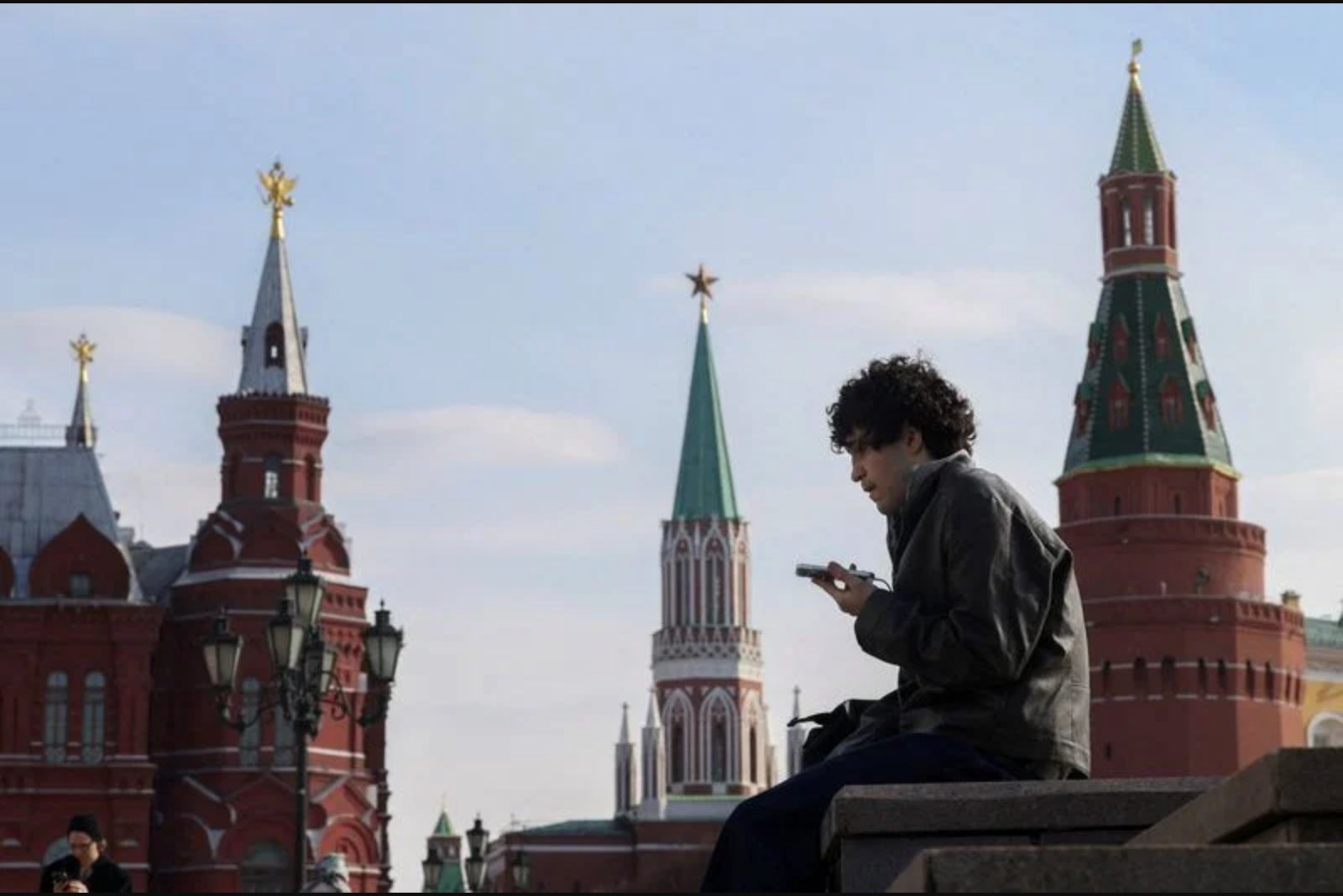
In a modest Moscow cafe known for its reliable Wi-Fi and good coffee, a 41-year-old interior designer moves through a routine that has become common for many Russians this year: she connects to a virtual private network to use WhatsApp to message friends overseas - a service that is blocked inside the country - then disables the VPN to buy a domestic rail ticket on a website that refuses connections routed through such tools. After completing that transaction she takes a second handset from her bag to check messages on MAX, the state-backed messenger now widely promoted by authorities.
Her approach - frequently turning VPNs on and off, carrying multiple phones and segregating apps between devices - illustrates how citizens are adapting to an intensifying push by the Kremlin to shape internet access and encourage use of domestic digital services. The phenomenon has become more visible since the government broadened controls earlier this year, restricting access to popular foreign platforms and prompting users to adopt increasingly elaborate technical workarounds.
How people are coping
For many Russians the strategy is practical and manual: use a VPN when they need to reach blocked international services, switch it off when accessing domestic sites that block VPNs, and keep a separate phone strictly for state-backed apps that users worry could be monitored. The routine is time-consuming, sometimes awkward, and for some carries a sense of unease about privacy on state-approved platforms.
"Of course this is all a huge pain in the backside, but what else can we do?" the designer said, asking to be identified by a single name because of the sensitivity of the matter. "You get used to it and spend your days turning VPNs on and off, toggling between different messengers and switching between different virtual countries or phones to use the apps and websites you need."
Concerns about privacy on government-promoted apps are widespread enough that some users quarantine MAX by installing it on a separate device. Warnings from Kremlin critics and warnings issued by some Western tech firms about potential tracking have made at least some people treat the state-backed app cautiously, a position its owner, VK, denies.
Surge in VPN use
Virtual private networks operate by routing a user’s internet connection through servers located outside the country, allowing access to services otherwise blocked by national controls. The rush to install such tools has been sharp: in March there were 9.2 million downloads of the five most popular VPN services from the Google Play store in Russia - about 14 times the number for the same month a year earlier, according to data cited by the Russian daily Kommersant, which in turn quoted Digital Budget, a Moscow-based consultancy that tracks online behaviour.
Sarkis Darbinyan, an internet freedom activist living in Lisbon who has been designated a "foreign agent" by Moscow, said the scale of the increase was unprecedented. "We’ve never seen this kind of take-up rate before," he said.
Official justification and political context
Officials say the tightening of internet controls is necessary amid what they describe as an existential confrontation with the West over Ukraine. Kremlin spokesman Dmitry Peskov has argued that security concerns sometimes require restrictions, and has also indicated that once threats subside the measures will be rescinded. He said that when the perceived threat is removed, the restrictions will be lifted. At the same time, President Vladimir Putin instructed the government in April to avoid an exclusive focus on bans and restrictions, calling such single-mindedness counterproductive.
The controls have coincided with other pressures on public mood - rising prices, tax changes and fatigue over the war - and these factors are believed to have contributed to a fall in the president’s approval ratings. According to state pollster VTsIOM, approval slipped from 75.1% in February to 65.6% in April; subsequent figures put it at nearly 67%, the lowest reported since the full-scale invasion began in 2022.
Service disruptions and economic effects
The restrictions and enforcement actions have not been purely symbolic. They have at times interfered with financial services, transport and online commerce. Since last year the FSB security service has ordered telecoms to switch off mobile internet for extended periods in regions across Russia, citing concerns that Ukrainian attack drones might use mobile networks for navigation. State regulator Roskomnadzor has also been blocking or slowing access to a growing list of apps and websites it says host illegal or extremist content.
In a notable episode in March, Moscow experienced a near three-week disruption that affected internet services and drew complaints from senior bureaucrats who rely on platforms such as Telegram to coordinate electoral get-out-the-vote efforts for the ruling United Russia party. The disruption coincided with other measures restricting VPN users: in April, government offices, banks and significant online retailers, following instructions from the regulator, began preventing visitors with VPNs enabled from reaching their websites.
That move had measurable commercial impact. Digital Budget reported a 10% drop in internet traffic for Wildberries, Russia’s largest online retailer, linking the decline to the stricter blocking of VPN users. The consultancy also noted that when customers cannot open a product page because a site blocks VPNs, many simply abandon the purchase.
Practical consequences extended beyond e-commerce. When navigation services faltered in Moscow in March, delivery drivers working for Flowwow, an online flower and gift marketplace, resorted to using vendors’ Wi-Fi to download directions to customer addresses, according to the firm’s logistics head. Sales of paper maps in the capital more than doubled during the shutdown, Wildberries data showed.
Public reaction and adaptation
Public sentiment is mixed. Interviews near Moscow’s Bolshoi Theatre with a small sample of office workers and passers-by found roughly half expressing irritation with the digital environment; others said they had adapted and did not need to use VPNs. According to Denis Volkov, director of the Levada Centre - itself listed as a "foreign agent" by authorities - most Russians do not feel compelled to undertake extra steps for internet access because available domestic services are sufficient for their needs.
The Levada Centre’s data also records a marked increase in self-reported VPN use: 23% of respondents acknowledged using a VPN in 2022; that number rose to 36% this year. Younger, tech-literate adults have sometimes paid for VPN subscriptions on behalf of older relatives or built bespoke VPNs for family use, while many prefer to rely on apps and sites that work without such tools.
Officials and insiders responding
Even prominent pro-regime figures have been conspicuous in their continued use of VPNs. Russia’s special envoy Kirill Dmitriev regularly posts on X, an overseas platform that is inaccessible from within Russia without a VPN. These visible examples underline the practical limits of enforcement and the ongoing cat-and-mouse dynamic between users and regulators.
Roskomnadzor has taken steps to restrict access to hundreds of VPN services, forcing users to hunt for new downloads or alternative offerings to stay connected. In some cases people who prefer not to risk exposure install state-backed apps only on separate devices, and some government insiders reportedly remove microphones and cameras from phones carrying the MAX app as an additional precaution.
One unnamed source put the logic plainly: "Even if you’re not up to any mischief, nobody wants the FSB reading your messages."
Softening of public messaging and regulatory pauses
With public irritation mounting, the Kremlin has recently moderated the tone and offered assurances that mobile internet shutdowns are temporary. Plans that would have required mobile providers to charge customers for exceeding 15 gigabytes of foreign data in a month - a measure aimed at limiting VPN use - were postponed in May, Russian media reported, with officials indicating the requirement would likely be introduced after the parliamentary vote.
Putin has also instructed the government and the FSB to coordinate to keep critical services functioning, explicitly mentioning healthcare platforms and online payments as priorities for uninterrupted access.
Outlook and everyday reality
Despite official steps to reassure the public, people who spoke to reporters expressed little expectation that their digital lives will become significantly easier in the near term. For many, the layered approach of VPNs, multiple devices and selective app use has become a normalized daily routine.
"In Russia, we have a saying: Nothing is more permanent than the temporary," the interior designer said.
The patchwork of restrictions, workarounds and economic consequences is shaping behaviour across sectors that rely on steady digital connectivity - notably banking, transport logistics, online retail and healthcare platforms - and it has introduced operational friction for businesses and consumers alike. Where services block VPN users, browsers time out and sales are lost; when mobile internet is suspended, logistics networks improvise. These disruptions have fed into public frustration ahead of a parliamentary election in September, according to comments from Kremlin-friendly opposition groups, prominent bloggers and business figures.
For now, the result is a pragmatic compromise: users keep alternate channels to foreign services available while using state-sanctioned platforms for official and domestic interactions, even if that process sometimes feels cumbersome and invasive.
Key takeaways
- Many Russians are using VPNs, multiple devices and isolated apps to maintain access to blocked services while complying with domestic site restrictions.
- The surge in VPN downloads and site-level blocks has had measurable economic effects on e-commerce traffic and logistics operations.
- Authorities have signalled both a desire for tighter controls and some sensitivity to public irritation, delaying certain measures until after the upcoming parliamentary election.